
A transit authority's predictive-maintenance pilot succeeded at a single depot, and leadership is considering scaling it to every depot. What should be established before proceeding with enterprise-wide scaling?
Select an answer to reveal the explanation.
Short Explanation
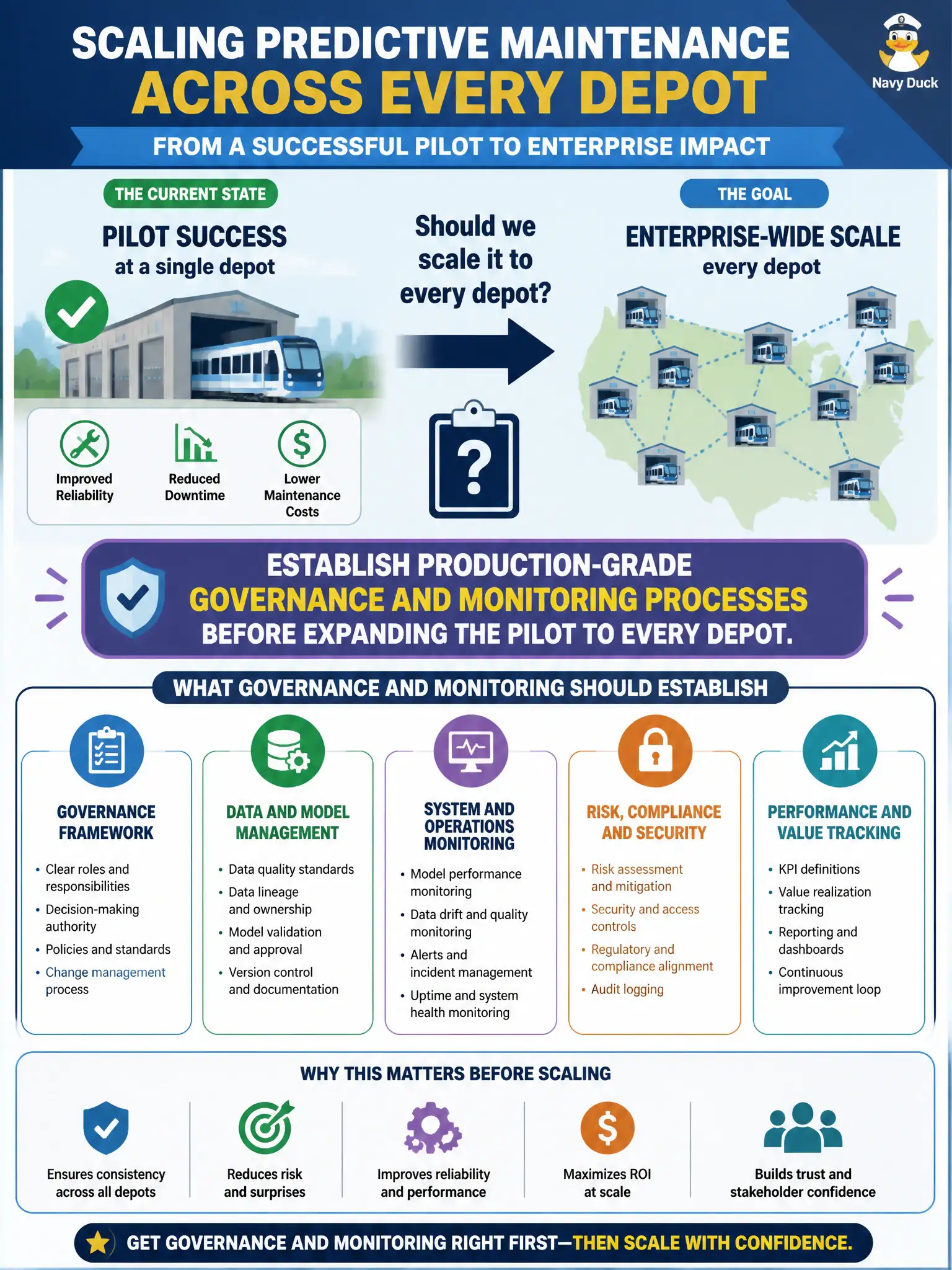
One depot going smoothly is a promising sign, not a finish line. Before spreading the system everywhere, put real production-grade oversight and monitoring in place, scale multiplies both the benefits and the blind spots.
Full Explanation
Production-grade governance and monitoring account for the increased complexity, failure surface, and stakes that come with scaling beyond a single, closely-watched pilot site, matching the expectation that scaling requires formalized oversight. Treating single-depot success as proof of enterprise readiness ignores that pilot-scale monitoring is typically closer and more forgiving than conditions across many sites running in parallel. Keeping the original pilot's lightweight monitoring unchanged underestimates how scope expansion multiplies the volume and variety of situations the system encounters. Deferring governance until after full deployment inverts the risk sequence, discovering gaps only once they've already affected every depot instead of one. Scope caveat: governance requirements should scale with deployment footprint, not stay fixed at pilot-era levels. Operational check: confirm monitoring dashboards and alert thresholds are defined for every depot before rollout, not just the original pilot site.