
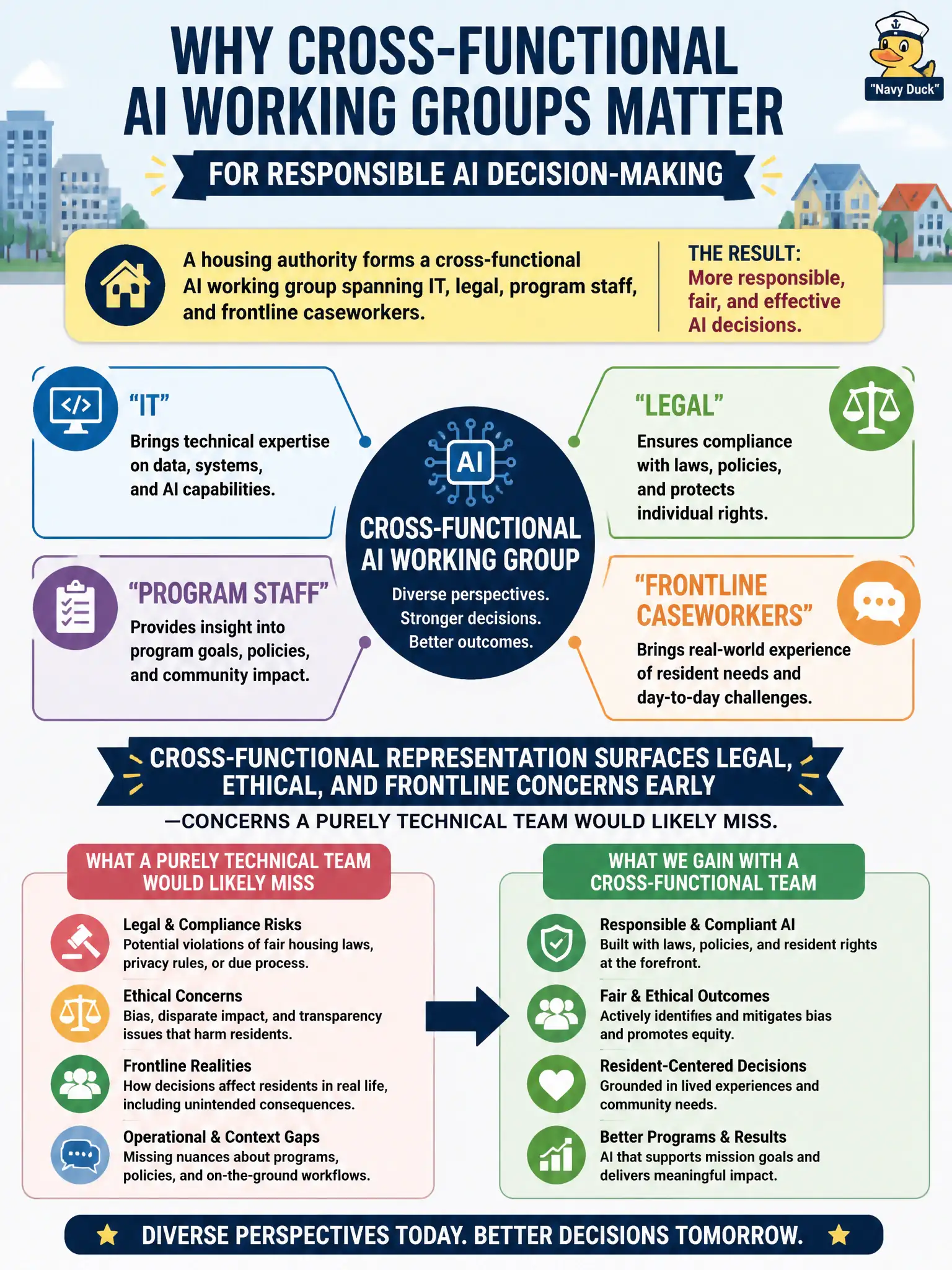
A housing authority forms a cross-functional AI working group spanning IT, legal, program staff, and frontline caseworkers. Why does this composition matter for responsible AI decision-making?
Select an answer to reveal the explanation.
Short Explanation
One department can only see the picture from its own window. Bring legal, frontline, and technical voices into the same room, and the blind spots each group would've missed alone get caught before they become problems.
Full Explanation
Cross-functional representation combines domain-specific risk awareness, legal compliance, frontline operational reality, technical feasibility, so decisions account for concerns a single-department view would overlook, which is why governance bodies benefit from diverse accountability. Reducing the group's value to procurement speed misunderstands its actual function in surfacing and resolving risk before deployment, not accelerating paperwork. Centralizing the final call in IT alone treats an organizational and ethical question as a purely technical one, reintroducing the blind spots the working group exists to prevent. Framing inclusion as symbolic PR undervalues the substantive input frontline and legal staff provide on feasibility, fairness, and compliance that a technical review would not catch. Scope caveat: cross-functional groups still need clear decision rights, or diverse input can stall action instead of improving it. Operational check: confirm the working group's charter specifies who holds final sign-off, not just who gets consulted.