
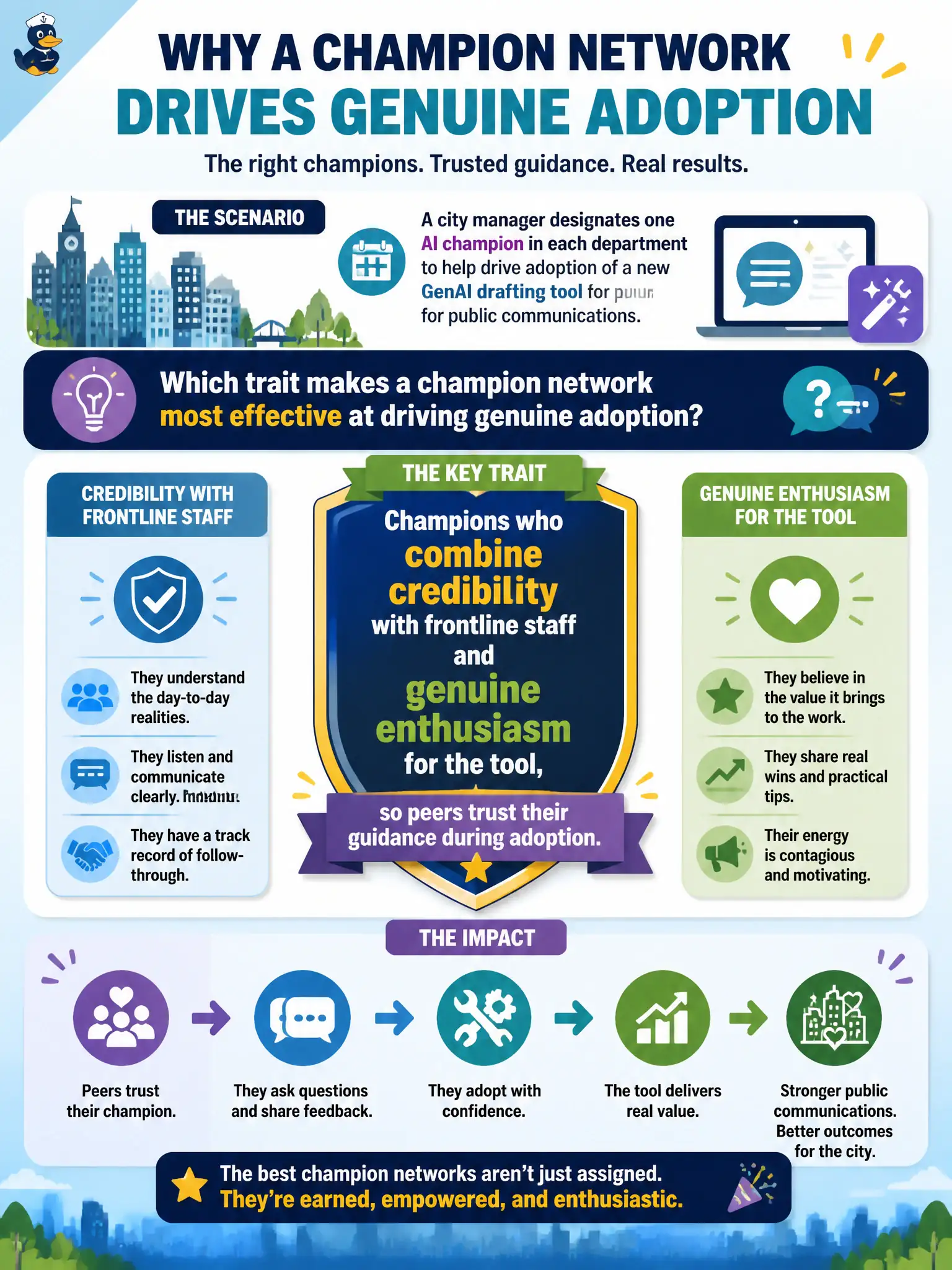
A city manager designates one AI champion in each department to help drive adoption of a new GenAI drafting tool for public communications. Which trait makes a champion network most effective at driving genuine adoption?
Select an answer to reveal the explanation.
Short Explanation
Think of an AI champion less like an IT technician and more like the neighbor everyone trusts for advice. Adoption spreads through credibility and enthusiasm, not through knowing which buttons to click. Pick people staff already listen to, and the tool follows their lead.
Full Explanation
Champion networks work through peer influence, staff adopt new tools faster when someone they already trust vouches for them and shows genuine enthusiasm, which is why credibility and relationship matter more than any single technical skill. Selecting champions solely for technical fluency confuses configuration skill with persuasive influence, a great configurator can still fail to move skeptical colleagues. Choosing by seniority substitutes organizational hierarchy for genuine peer trust, which is a weaker lever for voluntary adoption than a real working relationship with frontline staff. Making quota enforcement the champion's core duty turns a trust-building role into a compliance function, which tends to produce grudging compliance rather than genuine buy-in and can damage the champion's credibility with peers. Scope caveat: champion networks complement, but don't replace, formal training and governance. Operational check: track whether staff bring questions to champions voluntarily, a sign the relationship, not a mandate, is driving adoption.