
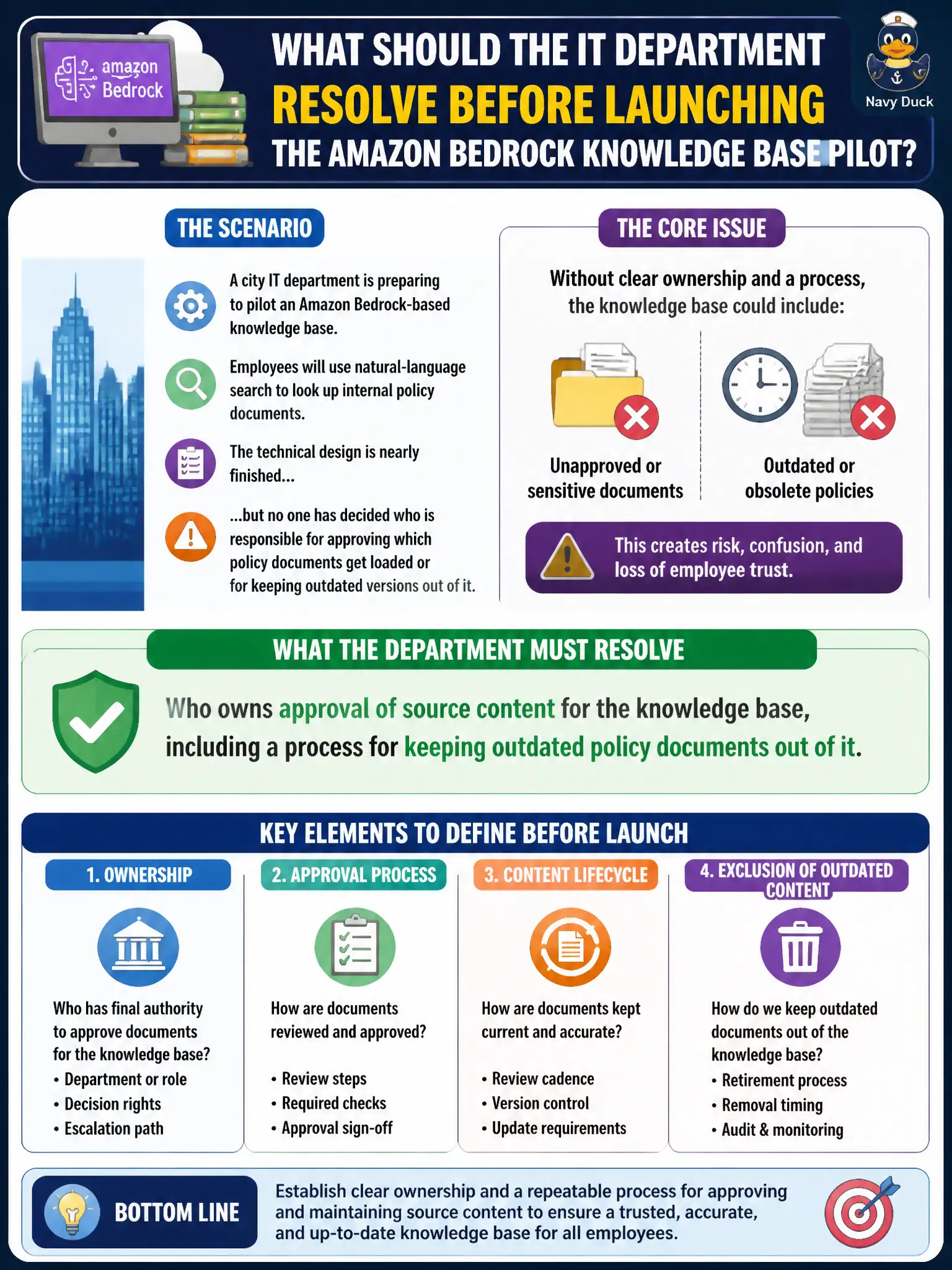
A city IT department is preparing to pilot an Amazon Bedrock-based knowledge base so employees can look up internal policy documents through natural-language search. The technical design is nearly finished, but no one has decided who is responsible for approving which policy documents get loaded into the knowledge base or for keeping outdated versions out of it. What should the department resolve before launching the pilot?
Select an answer to reveal the explanation.
Short Explanation
A knowledge base is only as trustworthy as what's feeding it, and right now nobody's guarding the door on which policy documents get in or when old ones get pulled out. That's a content ownership question, not a model or rollout question, and it needs an answer before employees start trusting whatever the tool tells them. Skip this step and you've built a very confident-sounding way to hand out outdated policy.
Full Explanation
A knowledge base built to answer employee questions from internal documents is only as reliable as the source content behind it, which makes data ownership a foundational requirement rather than a downstream detail. The scenario states the technical design is nearly complete but no one has assigned responsibility for approving what gets loaded or for removing outdated material, which means the pilot could launch citing superseded policy with full confidence and no way to catch the error. Debating which foundation model generates the answers addresses a technical configuration choice, but that choice does not matter if the underlying documents feeding it are wrong or stale. Deciding how many employees can access the pilot is a rollout-scope decision that can reasonably follow content governance rather than precede it. Drafting internal marketing copy for the announcement is a communications task disconnected from whether the tool's answers are actually correct. Establishing content ownership means naming a specific role or small group accountable for reviewing submissions, approving updates, and retiring outdated documents on a defined schedule. A scope caveat: this ownership decision is a governance requirement independent of which specific managed service hosts the knowledge base. An operational check: ask who would be notified the next time a policy document is revised, and confirm that person has authority to update the knowledge base accordingly.