
A municipal utility wants to publicize its AI-driven outage-prediction capability, which has measurably reduced average restoration times compared to nearby investor-owned utilities. How should the utility frame this for competitive positioning purposes?
Select an answer to reveal the explanation.
Short Explanation
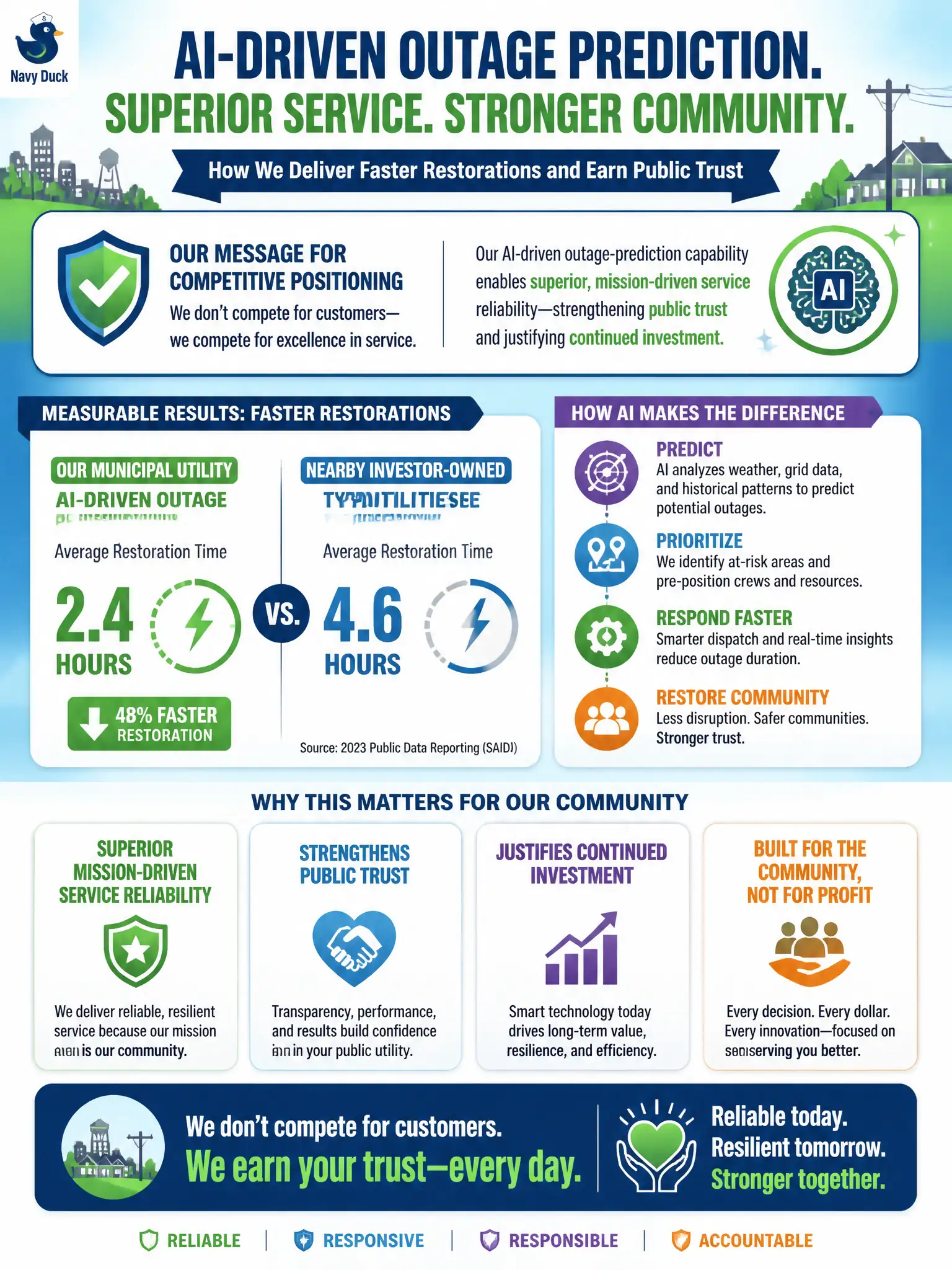
Think of a public utility less like a company chasing new customers and more like a hospital proving it's the safer place to get care: the payoff isn't stealing patients, it's earning trust from the community it already serves. Faster outage restoration becomes a mission-reliability story that justifies rate decisions and continued investment, even without a sales pitch attached.
Full Explanation
Competitive positioning for a public utility looks different from a private-sector business because the utility isn't fighting to win customers away from rivals, it's building the case that its mission-driven service delivers measurably better outcomes than the regional alternative, which strengthens public trust and supports future investment decisions like rate cases or bond approvals. Framing this as a traditional product-launch marketing campaign misapplies a customer-acquisition model to a monopoly service territory where residents don't choose their utility provider, so the messaging goal is trust and accountability rather than conversion. Concluding the utility should expand outside its territory confuses a service-quality data point with a market-entry decision, which involves entirely separate regulatory, financial, and operational considerations unrelated to outage-prediction performance. Withholding the claim from residents ignores that public accountability is itself a legitimate form of positioning, since transparent performance reporting to the people who fund the utility through rates and taxes is part of its mission. A scope caveat worth noting: this kind of comparative claim should be framed carefully around service-reliability metrics rather than implying private-utility customers could switch providers, since they generally cannot. A concrete check: verify the restoration-time comparison uses consistent outage-severity categories before publishing it as a mission-advantage claim.