
A housing authority has used AI to significantly shorten application-processing times compared to neighboring housing authorities with longer waitlists. Which way of communicating this to stakeholders best translates the operational improvement into a comparative positioning claim?
Select an answer to reveal the explanation.
Short Explanation
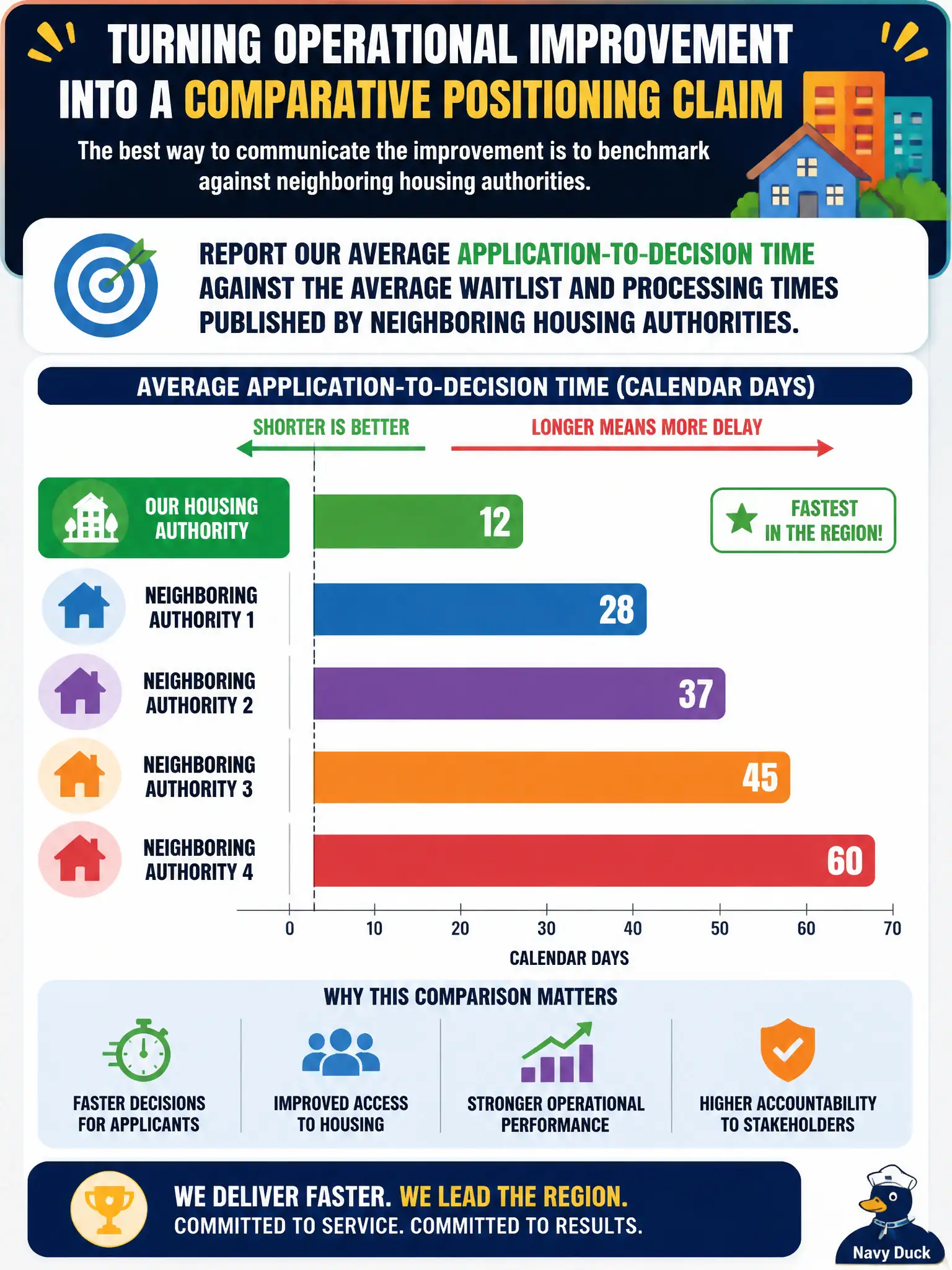
Think of it like two DMVs bragging about wait times: the one that gets you in and out faster wins the comparison, not the one with the fanciest software list. The strongest stakeholder message here is the actual application-to-decision time measured against what neighboring authorities publish. That's the number that turns a technical upgrade into a real service-advantage story people can act on.
Full Explanation
Turning an operational AI improvement into a comparative positioning claim requires a metric that stakeholders and applicants can directly compare across organizations, and application-to-decision time measured against neighboring authorities' published figures does that cleanly. It ties the AI investment to a tangible resident benefit, faster access to housing assistance, and frames the authority favorably relative to peers facing longer waitlists. Counting deployed AI models describes internal technical scope but tells stakeholders nothing about whether applicants are actually served faster. Reporting licensing costs describes spending, and by itself a cost figure does not demonstrate improved service and could raise questions about value for money. Staff training completion is a useful internal readiness indicator, but it measures preparation rather than the resident-facing result that makes for a compelling comparative claim. One caveat for the exam: a positioning claim like this holds up only if the comparison uses consistently defined time windows, so a strategist should confirm both authorities measure from the same starting point, such as application submission, before publishing the comparison.