
A 311 program is establishing a monitoring cadence for a GenAI assistant to catch harmful or inaccurate responses before they reach residents. What approach should the program adopt?
Select an answer to reveal the explanation.
Short Explanation
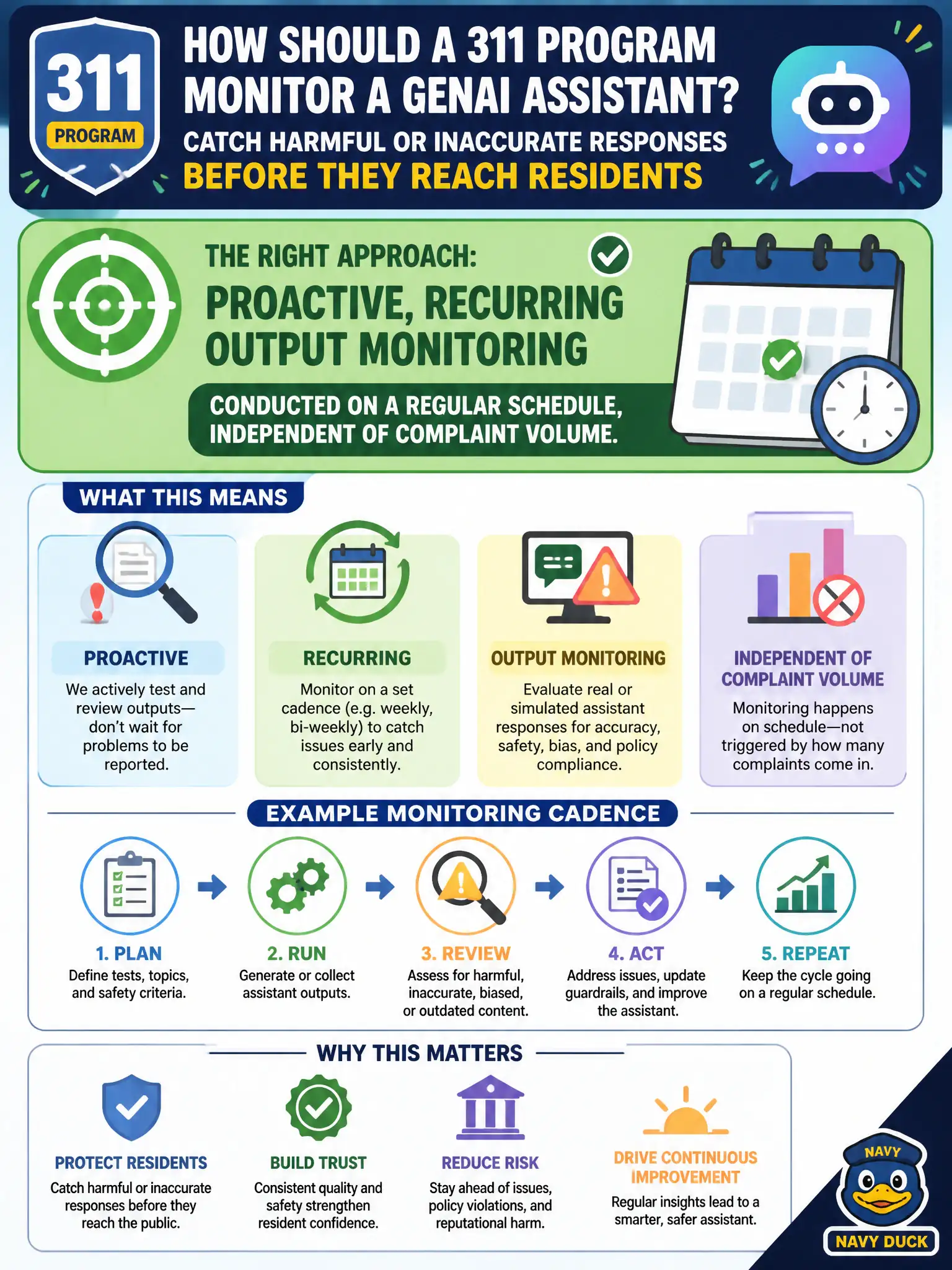
Waiting for residents to complain means the bad answer already went out the door. Catching problems before they reach residents means someone's actually looking at outputs on a regular schedule, not waiting for the phone to ring. Proactive beats reactive every time harm is on the line.
Full Explanation
Proactive monitoring means the 311 program reviews a sample of the GenAI assistant's actual outputs on a recurring schedule, independent of whether any resident has complained, so problems are caught before they compound or reach a wide audience. Relying solely on resident complaints inverts the intended safeguard; by the time a complaint arrives, at least one resident has already received a harmful or inaccurate response, which is exactly the outcome monitoring is meant to prevent. A one-time review during the pilot phase captures only the assistant's behavior at a single moment and provides no visibility into how outputs may change as usage patterns, underlying models, or edge cases evolve after launch. Waiting for a formal media inquiry ties monitoring to reputational damage that has already begun, which is far too late in the risk timeline to count as prevention. A scope caveat: proactive monitoring still needs defined criteria for what counts as harmful or inaccurate, or reviewers will apply inconsistent judgment from one sampling period to the next. A concrete operational check is to require a documented log of sampled outputs, review findings, and any corrective action taken, reviewed on a fixed recurring schedule such as weekly or monthly.