
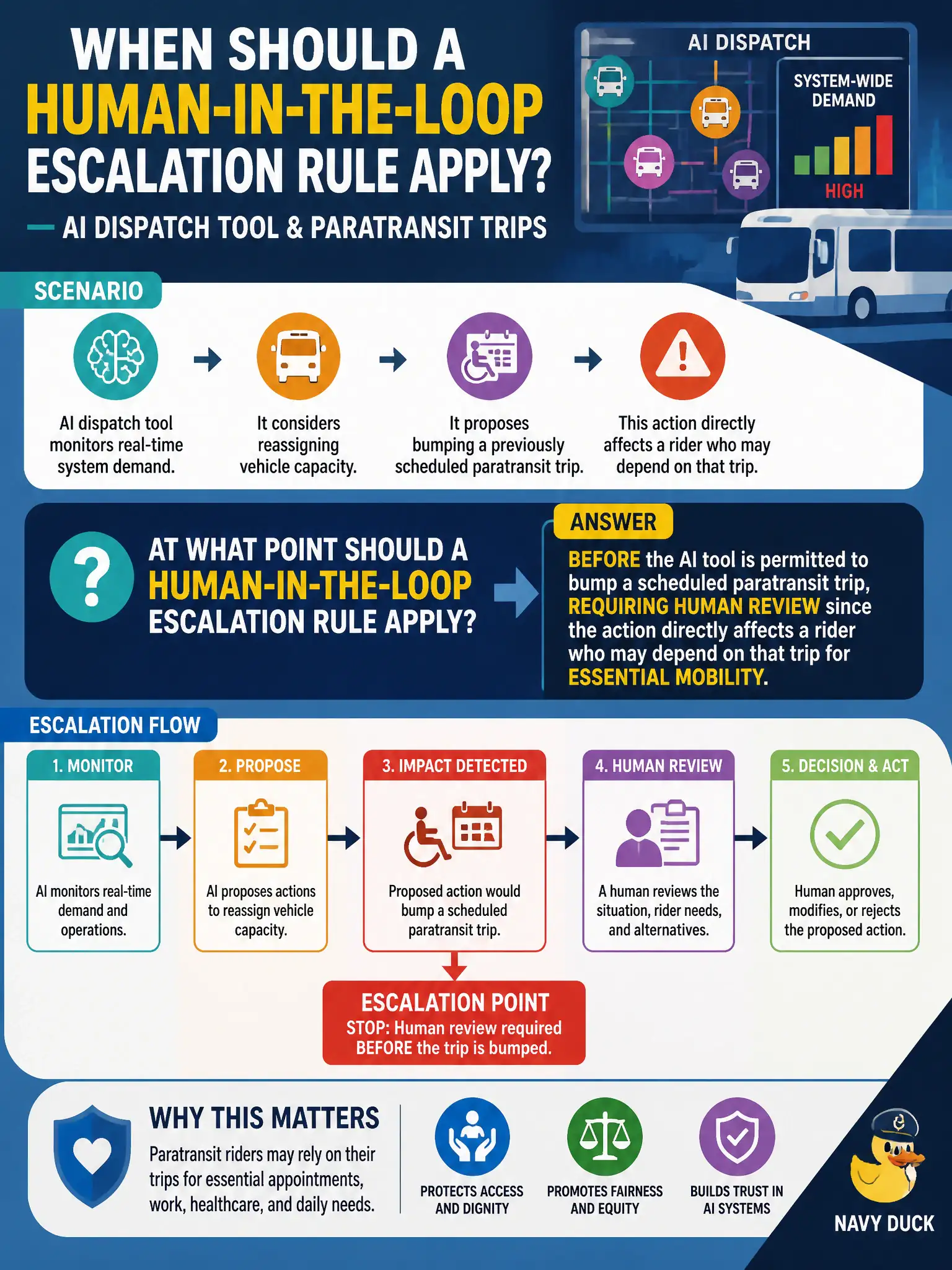
A transit authority is deploying an AI dispatch tool that can reassign vehicle capacity in real time, including bumping a previously scheduled paratransit trip to accommodate higher system-wide demand. At what point should a human-in-the-loop escalation rule apply?
Select an answer to reveal the explanation.
Short Explanation
Think of it like an airline that can bump economy seats to rebook a full flight, except this passenger may have no other way to get to a dialysis appointment. When an automated decision could take away a vulnerable rider's only scheduled ride, that's exactly the moment a human needs to step in before the system acts, not weeks later when the damage is already done.
Full Explanation
Effective human oversight design places escalation at the point where an AI decision materially affects a vulnerable individual, which for this dispatch tool is the moment before a paratransit trip, often a rider's only reliable transportation option, gets bumped. Requiring human review at that decision point lets a person weigh factors the model may not fully capture, such as a medical appointment or a rider's documented mobility constraints, before the reassignment takes effect. Waiting for a pattern of complaints to accumulate turns human oversight into damage control rather than prevention, meaning multiple riders could already have missed essential trips before anyone intervenes. Setting a numeric threshold before triggering review treats each individual bumped trip as acceptable collateral up to an arbitrary count, which ignores that even one bumped paratransit trip can be a serious hardship for the rider affected. Fully automating the decision to preserve efficiency prioritizes system throughput over the safeguard that responsible AI governance specifically exists to provide for higher-stakes, individual-impact decisions. A scope caveat: this escalation requirement should apply specifically to paratransit and similarly vulnerable-rider contexts; general fixed-route capacity shuffling with lower individual impact may reasonably tolerate more automation. A concrete check: confirm the dispatch system is configured to hold, not execute, any paratransit reassignment until a human dispatcher confirms it.