
You use a generative AI system to produce artwork for a commercial campaign. What is a key legal consideration you should evaluate?
Select an answer to reveal the explanation.
Short Explanation and Infographic
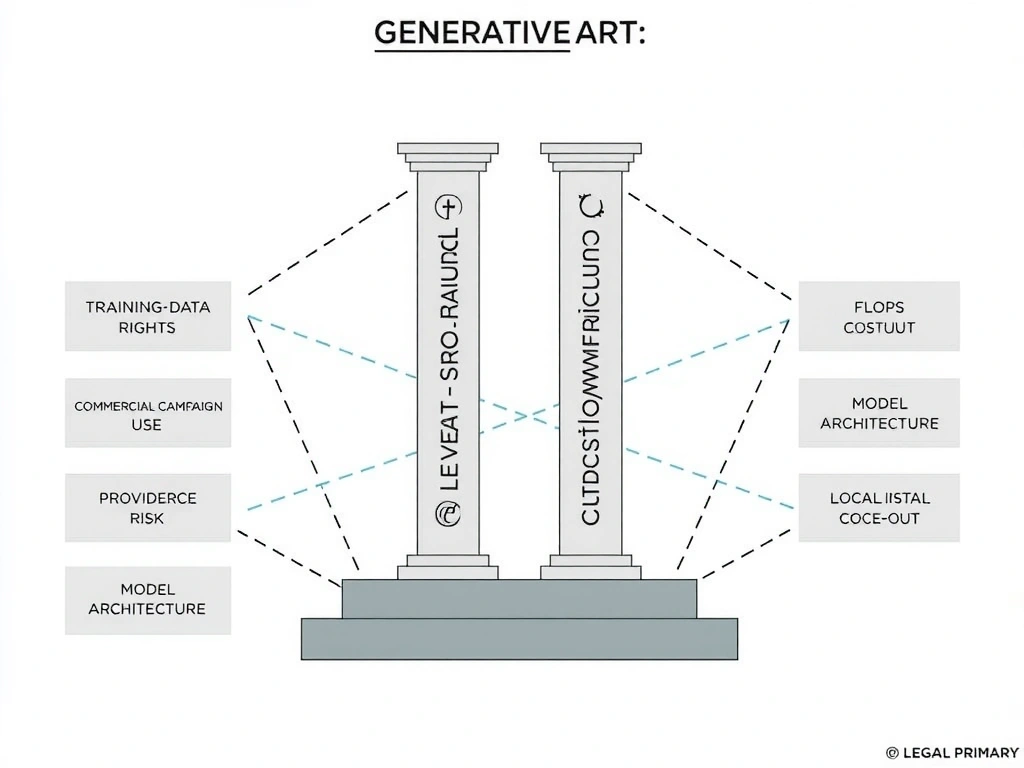
Okay, picture this: marketing wants campaign art from a generative model by Friday. Fun—until legal walks in. They are not asking how many FLOPs you burned, which fancy architecture you used, or whether it runs on your laptop. They want IP clarity. Who owns the output? Was training data licensed? Could the image mimic a living artist's protected style in a risky way? Terms of service for the tool? Here's the deal for the exam and the real world: intellectual property rights on generated content and training data are the key legal consideration. Think of it like buying stock photos—you care about the license, not the camera brand. Flag the trap: techy options sound smart but miss the law. Get the rights story straight before you publish. Got it? Sweet.
Full explanation below image
Full Explanation
Generative AI for creative work sits at the intersection of technology capability and intellectual property law. Organizations using models to produce commercial art must consider rights related to training data—whether works were licensed, scraped under disputed theories of fair use, or restricted by provider terms—and rights related to outputs: who owns them, whether they are eligible for copyright protection under current rules, whether they infringe existing works, and what warranties or indemnities a vendor provides. Contract language, regional law, and platform policies can all change what a marketing team may safely publish, resell, or claim as exclusive creative property.
The correct answer focuses on intellectual property rights covering both generated works and training data. That dual lens matches real legal review: upstream training provenance and downstream commercial use of outputs. Teams often involve counsel early, review acceptable-use and ownership clauses in the model provider agreement, keep records of prompts and versions for auditability, and avoid deliberately targeting protected distinctive styles when risk is high.
Counting floating-point operations addresses cost and efficiency, not legal entitlement to use or monetize content. Model architecture—transformers, diffusion models, and so on—matters for quality and workflow but does not answer ownership or infringement questions. Ability to run locally on a workstation is an infrastructure and privacy preference that may reduce some operational risks yet still leaves IP questions about training sources and commercial rights unresolved.
Practical governance pairs legal review with technical controls: content provenance metadata where available, similarity checks against known catalogs when appropriate, clear human authorship and editing policies for marketing assets, and escalation paths when outputs resemble third-party brands or artists. Exam memory aid: for generative art legality, think rights and licenses first; compute, architecture, and laptop deployability are secondary engineering topics. Responsible teams treat IP assessment as a release gate comparable to brand safety, not an afterthought after a campaign is already live. Staying current with evolving case law and vendor terms is part of ongoing compliance, because generative media law continues to develop across jurisdictions.