
Your legal operations team wants an LLM to condense multi-page vendor agreements into readable digests for executives. Which prompting approach is most appropriate for that summarization job?
Select an answer to reveal the explanation.
Short Explanation and Infographic
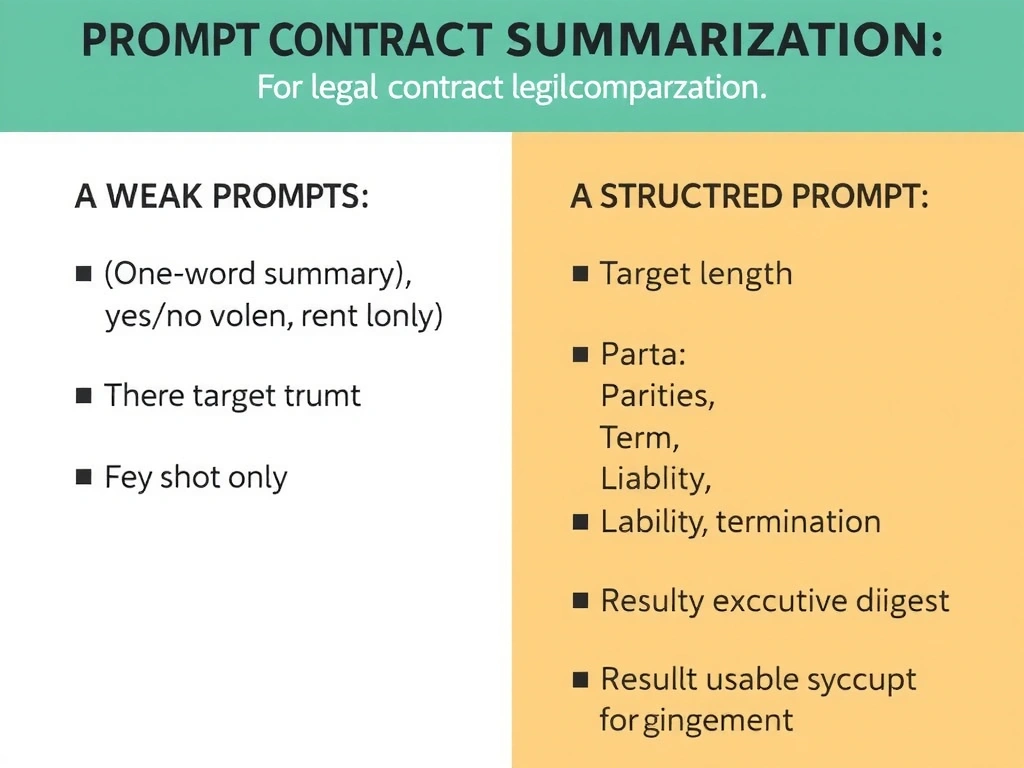
Okay, let's dive in. Your boss drops a stack of vendor contracts and wants digests by end of day—not a riddle, not a yes/no. Here's the deal: LLMs follow the map you give them. Tell the model how long the digest should be and which pieces matter—parties, term, liability, termination, renewals—and you get something an exec can actually use. Think of it like briefing a junior analyst: if you just say "sum it up," you'll get whatever they notice first. One-word answers and true/false prompts are exam traps that skip the substance. Few-shot alone without length or topic guardrails is incomplete. Structure the ask. Got it? Sweet—carry that into every prompt-engineering question.
Full explanation below image
Full Explanation
Summarizing long legal contracts with a large language model is a constrained generation task, not open-ended chat. The model needs explicit guidance about output form and content priorities so that critical clauses are retained and noise is reduced. A well-structured prompt typically states the role or goal (produce an executive-ready digest), the target length or format (for example, bullet points under a word limit), and the mandatory coverage areas such as parties, effective dates, payment terms, liability caps, indemnification, data-protection obligations, termination rights, and renewal mechanics. Those constraints reduce ambiguity, improve consistency across documents, and make review easier for non-lawyers who still need accurate highlights.
Asking for a single keyword fails because legal risk lives in multi-clause detail; extreme compression discards obligations and exceptions that drive decisions. Framing the interaction as a yes/no or true/false question answers a classification-style query, not a summary, so stakeholders still lack a structured walkthrough of material terms. Providing a few-shot example can improve tone and layout, but examples alone do not guarantee completeness if the prompt never specifies length or required sections—the model may mimic surface style while omitting indemnity, SLA remedies, or auto-renewal language. Best practice therefore combines clear instructions with optional examples: define length and key points first, then illustrate the desired format if needed. Additional safeguards for production use include instructing the model to flag uncertainty or quote clause identifiers rather than invent terms, and human legal review before reliance. For exam purposes, match the technique to the task: structured, length-aware, content-specified prompting is the right first-line approach for contract summarization.