
What is the main purpose of the sigmoid activation function in neural networks?
Select an answer to reveal the explanation.
Short Explanation and Infographic
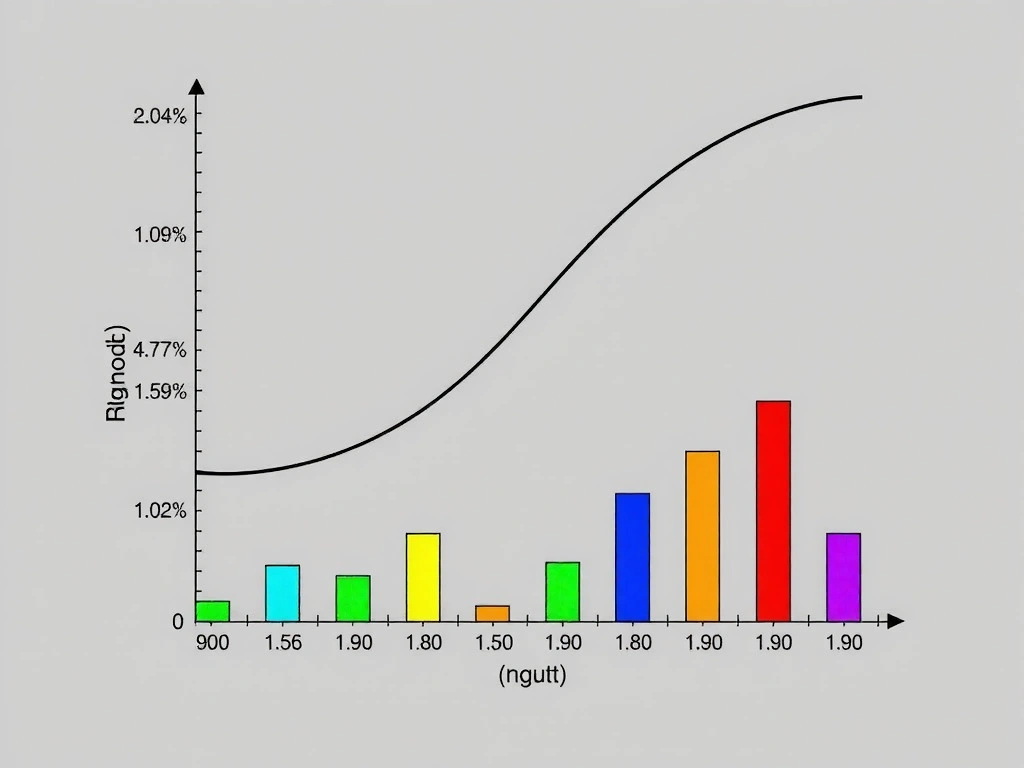
Here's the deal: sigmoid takes any real score and gently folds it into a number between 0 and 1. Perfect when you need a yes/no probability or a soft gate. Think of a dimmer switch, not an on/off breaker—and not a pizza slicer that shares probability across ten classes (that's softmax). Boss wants "will this user churn—yes or no?" Sigmoid on the last unit is classic. Exam trap: mixing sigmoid with softmax or with input normalization. Land the takeaway: nonlinearity + (0,1) squash for binary or gates. Trust me on this—you'll see it constantly.
Full explanation below image
Full Explanation
The sigmoid, or logistic, activation applies the function one over one plus e to the minus z to a real-valued pre-activation z. The result always lies strictly between zero and one, approaches zero for large negative inputs, and approaches one for large positive inputs. That smooth S-shaped curve introduces nonlinearity so stacked layers can approximate more complex functions than a single linear transform could. Historically, sigmoids appeared widely in hidden layers of multilayer perceptrons. Today, rectified linear family units dominate most hidden layers because deep stacks of sigmoids saturate and gradients vanish. Sigmoid remains standard for binary classification outputs, typically paired with binary cross-entropy, and for gating units in long short-term memory and gated recurrent architectures that must softly open or close information flow.
Sigmoid does not keep networks linear. If every stage were linear, depth would collapse mathematically into one linear map and hierarchical feature learning would be lost. Softmax, not sigmoid, is the usual choice when classes are mutually exclusive and must form one probability simplex that sums to one. Independent sigmoids can model multi-label settings where several labels may be true at once, but that is different from a single multiclass distribution. Input normalization such as standardization to zero mean and unit variance, or min-max scaling, is a data pipeline step applied to features. It should not be confused with a neural activation applied to neuron pre-activations inside the model.
Practical notes for implementation and exams include using numerically stable loss implementations that combine sigmoid with binary cross-entropy carefully, preferring softmax for single-label multiclass heads, and preferring modern hidden nonlinearities unless a gate specifically needs a unit-interval squash. Saturation of sigmoid for large magnitude inputs is a classic cause of slow learning when misused in deep hidden stacks. A compact triad of memory aids helps: sigmoid yields one soft probability or gate; softmax makes classes compete across many labels; standardization fixes the features, not the activations. That triad prevents the most common examination mix-ups about the purpose of the sigmoid activation function in modern neural network design.