
Why do practitioners add a kernel function when training a support vector machine (SVM)?
Select an answer to reveal the explanation.
Short Explanation and Infographic
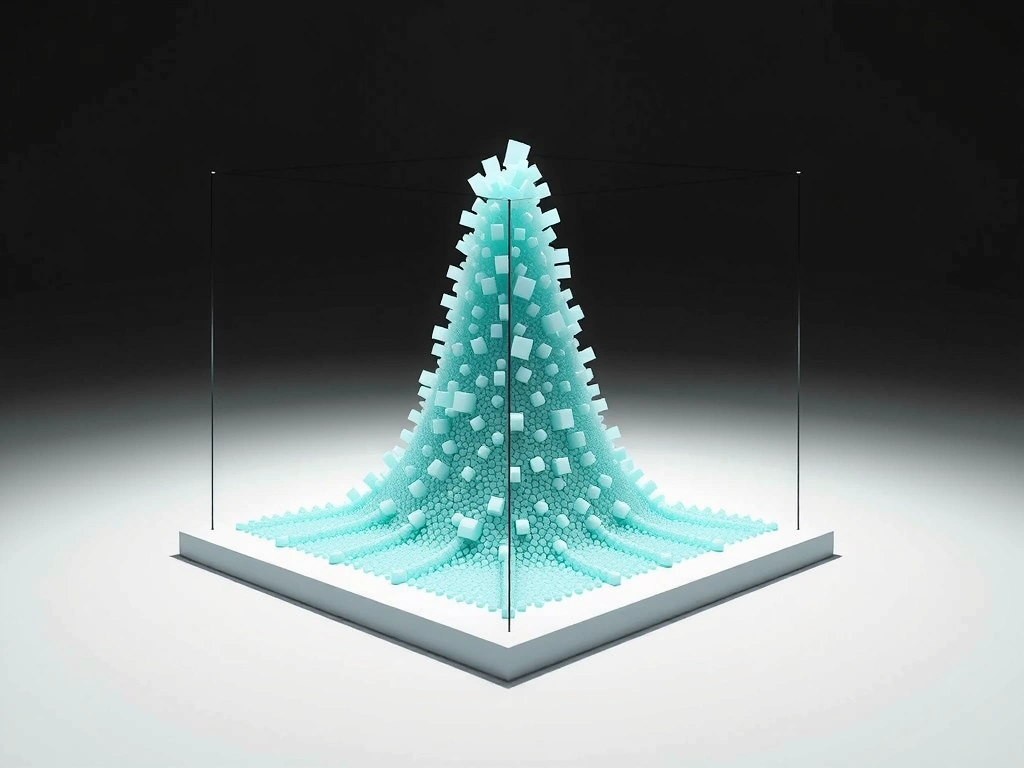
Here's the cool thing about SVM kernels. In the original plot, classes might swirl so no straight line can cut them. The kernel pretends—mathematically—you lifted the points into a roomier space where a flat hyperplane works, which looks curved back home. Think of two rings of dots: messy on the table, cleanly stacked if you could pop one ring up. Exam trap: saying kernels exist to force pure linear raw-space problems, shrink dimensions, or cluster unlabeled points. Nope. Kernels unlock nonlinear decision boundaries via the kernel trick. Radial basis and polynomial—know the idea more than every formula. Land that mapping story and you're set.
Full explanation below image
Full Explanation
A hard-margin or soft-margin linear support vector machine seeks a maximum-margin hyperplane in the space where features are represented for classification. Many real tasks are not linearly separable in the original coordinates that arrive from feature engineering. Class boundaries curve, exclusive-or like patterns appear, or higher-order interactions dominate the true decision surface. Kernel functions address this limitation by implicitly mapping inputs into a higher-dimensional feature space, sometimes infinite-dimensional, in which a linear separator corresponds to a nonlinear boundary back in the original input space that humans plot. Popular choices include polynomial kernels and the radial basis function kernel used widely in practice. The kernel trick evaluates inner products in that feature space through a kernel function without explicitly constructing huge mapped feature vectors, which keeps computation tractable while expanding representational power for hard problems.
Saying that a kernel's main purpose is to perform linear classification only on already linearly separable raw data misses the educational point of the technique. The linear kernel already covers that simpler case, while nonlinear kernels exist specifically to go beyond raw-space linear separability when a straight cut fails. Kernels are also not dimensionality-reduction tools in the usual sense of the phrase. Methods such as principal component analysis reduce dimensions for compression or visualization, whereas kernel maps increase expressive capacity even when the dual optimization formulation stays manageable for solvers. Clustering is a different problem class entirely from margin-based classification. Algorithms such as k-means group unlabeled points by similarity, whereas support vector machines use labeled examples to define margins and identify support vectors that determine the decision boundary used at inference time.
In practice, kernel choice and regularization parameters such as the soft-margin penalty C and the radial basis width parameter strongly affect underfitting and overfitting and must be selected with careful validation. Feature scaling often matters because distance-based kernels are sensitive to feature ranges that differ by orders of magnitude. Very large training sets may favor linear support vector machines, kernel approximations, or other model families when wall-clock training time dominates project constraints. Conceptually for the exam, remember that a kernel support vector machine places a linear separator in a transformed space so the induced decision surface can be nonlinear in the original space. Maximum-margin reasoning still applies, but the geometry becomes richer through the kernel mapping that makes hard nonlinear problems tractable with the same elegant margin framework.