
After deployment, when should overfitting be treated as a serious problem for an AI model?
Select an answer to reveal the explanation.
Short Explanation and Infographic
Here's the deal—overfitting is the model that aced the practice quiz because it memorized the answer key, then bombed the real exam. Training metrics look amazing; live traffic looks rough. That's when you should worry, especially after deploy when unseen is every new customer. Underfitting is the other mess: too simple, bad even on training. Long training time? Not the same thing. I remember watching a model with perfect train accuracy quietly fail every seasonal shift. Exam wants that train-versus-unseen gap. Regularize, validate properly, watch production drift. Land the takeaway: big generalization gap means overfitting. Got it?
Full explanation below image
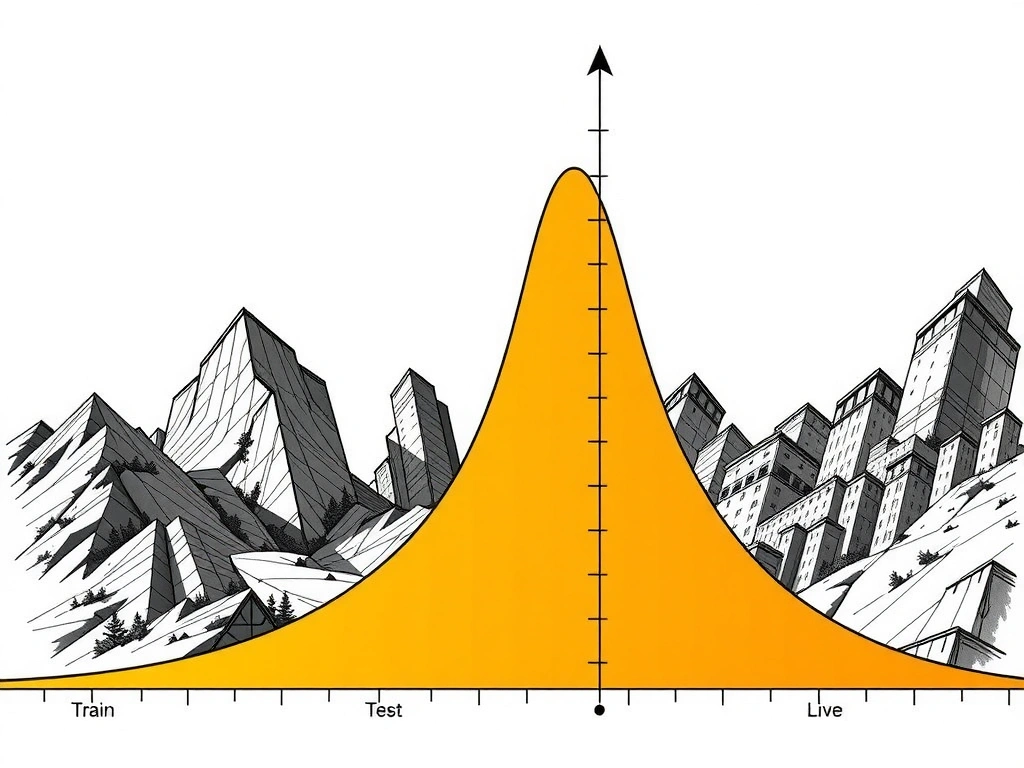
Full Explanation
Overfitting occurs when a model captures noise, spurious correlations, or dataset-specific artifacts instead of stable relationships that transfer to new data in the wild. The operational red flag is a material gap between performance on data the model has already optimized against, including the training set and sometimes an overly reused validation set, and performance on truly unseen samples such as holdout tests, time-based future splits, or live production traffic after launch. After deployment, that gap becomes a business risk because confident offline scores fail to deliver the online metrics stakeholders expected from offline experiments and slide decks.
Low training accuracy is not overfitting in the standard diagnosis framework. It usually indicates underfitting, insufficient model capacity, weak features, label noise, or training that has not converged to a good solution. A model that is too simple to capture the complexity of the data is the textbook underfitter, showing high bias on both training and test sets at once. Training duration alone does not diagnose fit quality in a reliable way. Large models on large datasets can train slowly yet still generalize well, while tiny models can overfit small noisy sets surprisingly quickly if they memorize idiosyncrasies of individual rows.
Mitigations include collecting more representative data, applying regularization such as weight decay, dropout, and early stopping, choosing simpler or constrained architectures when appropriate, using data augmentation for suitable modalities, running cross-validation for honest model selection, and monitoring for train versus serving skew in features. Ensemble methods and careful checks for feature leakage also help prevent inflated offline scores that collapse later. In production, track offline to online consistency, slice metrics by important segments, and retrain when distribution shift appears, because shift can look like overfitting even when the original model was reasonable on the old distribution. For assessments, associate overfitting with excellent training results paired with significantly worse results on new data, and keep underfitting and raw compute cost in separate mental buckets so you diagnose the right failure mode under pressure.