
In responsible machine learning practice, what is a model card?
Select an answer to reveal the explanation.
Short Explanation and Infographic
Pay close attention here—this one shows up when governance folks walk into the room. A model card is the plain-language nutrition label for a model: what it's for, how it was tested, where it falls down, and what ethical issues you should care about. It's not the weight file, not a fancy accuracy heatmap, and definitely not a badge on your lanyard. Imagine shipping a risk model without telling the business about demographic gaps—yeah, that's how incidents start. On the exam, pick the structured overview of performance, limits, and ethics. Document it, share it, update it when the model changes. Nice and clean.
Full explanation below image
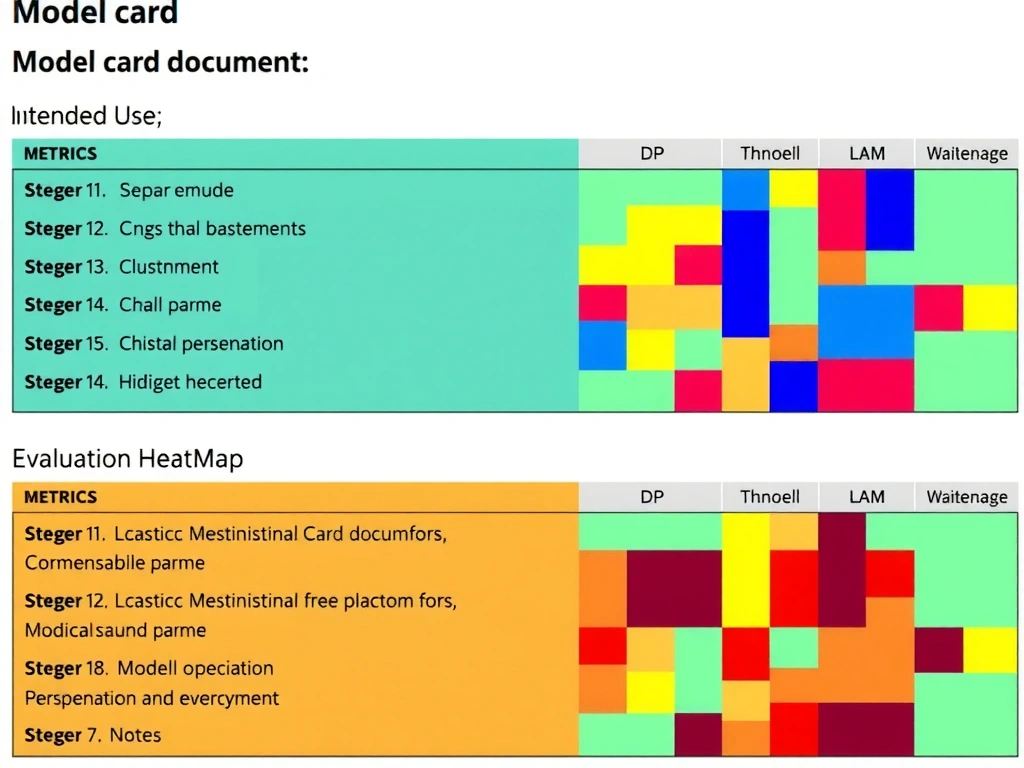
Full Explanation
A model card is a standardized documentation format popularized in the research and industry responsible AI community for communicating essential facts about a machine learning system to developers, product owners, auditors, and affected users. Typical sections cover model details and version identifiers, intended use cases and explicitly out-of-scope uses, training data characteristics, evaluation metrics broken down by relevant subgroups when possible, ethical considerations such as fairness risks and misuse potential, and known limitations or failure modes that operators should watch. The goal is transparency and informed deployment decisions, not replacing the model binary or serving as a substitute for the trained parameters themselves in a serving stack.
Confusing a model card with architecture storage is a common mistake on both exams and projects. Checkpoints, ONNX exports, and container images hold parameters and runtime graphs for serving inference traffic. They do not narrate intended use, population coverage, or ethical caveats that a reviewer needs before approval. Visualization tools that display accuracy heat maps or attention patterns are complementary evaluation artifacts, but they are not model cards either. Physical cards or badges for people are irrelevant to the MLOps meaning of the term and function as pure distractors on certification items about documentation practices.
In practice, model cards sit alongside datasheets for datasets, system cards for multi-component pipelines, and formal risk assessments used in compliance reviews. They support handoffs between data science and product teams and monitoring plans after release into production. Good cards are living documents rather than one-time slide decks. When you retrain, change decision thresholds, or expand the served population, you should update metrics, limitations, and ethical notes so the document stays truthful. They should avoid marketing spin and report negative or subgroup results as carefully as headline accuracy numbers. For high-stakes domains, pair cards with access controls, bias testing protocols, and incident response procedures. Exam takeaway remains simple. A model card is structured documentation of performance context, limitations, and ethical considerations, not the model weights, not a single accuracy map, and not a physical identification badge for engineers.