
An HR team deploys an AI system to rank job applicants. Which ethical issue is most tightly linked to this kind of hiring automation?
Select an answer to reveal the explanation.
Short Explanation and Infographic
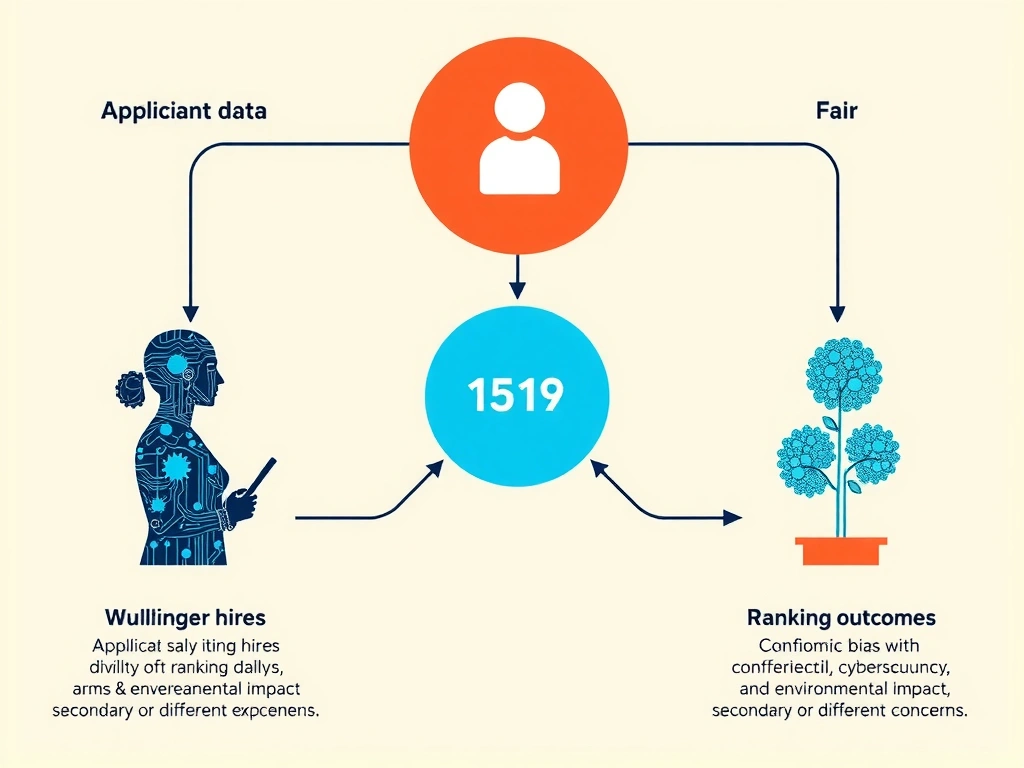
Okay, let's dive in. Your boss rolls out an AI screener so hiring "goes faster"—and suddenly resumes from one school or zip code keep rising to the top. That's not a fluke; that's algorithmic bias. Think of it like this: the model is studying last decade's hire/no-hire decisions. If those decisions already tilted unfairly, the model learns the tilt and automates it at scale. Pay close attention here, because the exam trap is grabbing privacy or cybersecurity. Those are real, but the question is asking what ethical concern is most associated with AI in recruitment—and that's unfair, biased outcomes. Confidentiality and carbon footprint don't capture the core justice problem. Got it? When you see hiring + AI, bias should light up first.
Full explanation below image
Full Explanation
Automated recruitment tools score, rank, or filter candidates using patterns learned from historical hiring data, resumes, assessments, and sometimes proxy signals such as education or tenure. The ethical concern most tightly associated with this use case is algorithmic bias: systematic differences in outcomes across groups that are not justified by job-related merit. If past hiring reflected biased human judgment, underrepresentation, or structural inequity, a model that optimizes for those historical labels can reproduce and amplify the same patterns—often at higher volume and with a veneer of objectivity.
Bias can enter through training data, feature choice, label definition ("successful hire"), sampling, and deployment thresholds. Proxies for protected attributes may leak into features even when protected fields are removed. The practical result can be disparate impact: lower selection rates for certain demographic groups despite equal qualification. That is why fairness audits, bias testing, human oversight, and documentation of decision criteria are central to responsible HR AI—not optional polish.
Data confidentiality is important in any HR pipeline, but it addresses unauthorized access and privacy rather than whether the ranking itself treats groups equitably. Cybersecurity risk is likewise domain-general: any online system can be attacked; it is not the distinctive ethical signature of recruitment AI. Environmental impact of large-scale training is a legitimate sustainability topic, yet it is not the primary ethical critique of applicant-ranking systems.
Underlying principle: automated ranking of people inherits and can amplify historical inequities, so bias is the distinctive ethical risk. Best practice audits disparate impact, documents features and labels, and keeps humans accountable for hiring decisions. Memory aid: for AI in hiring, ask who gets screened out unfairly before who can see the data or whether the model is secure. Fairness and bias sit at the center of ethics discussions for automated recruitment; other risks matter but answer different questions.