
A support team wants a model that labels customer tickets as positive, negative, or neutral based on the wording of each message. Which NLP task is this?
Select an answer to reveal the explanation.
Short Explanation and Infographic
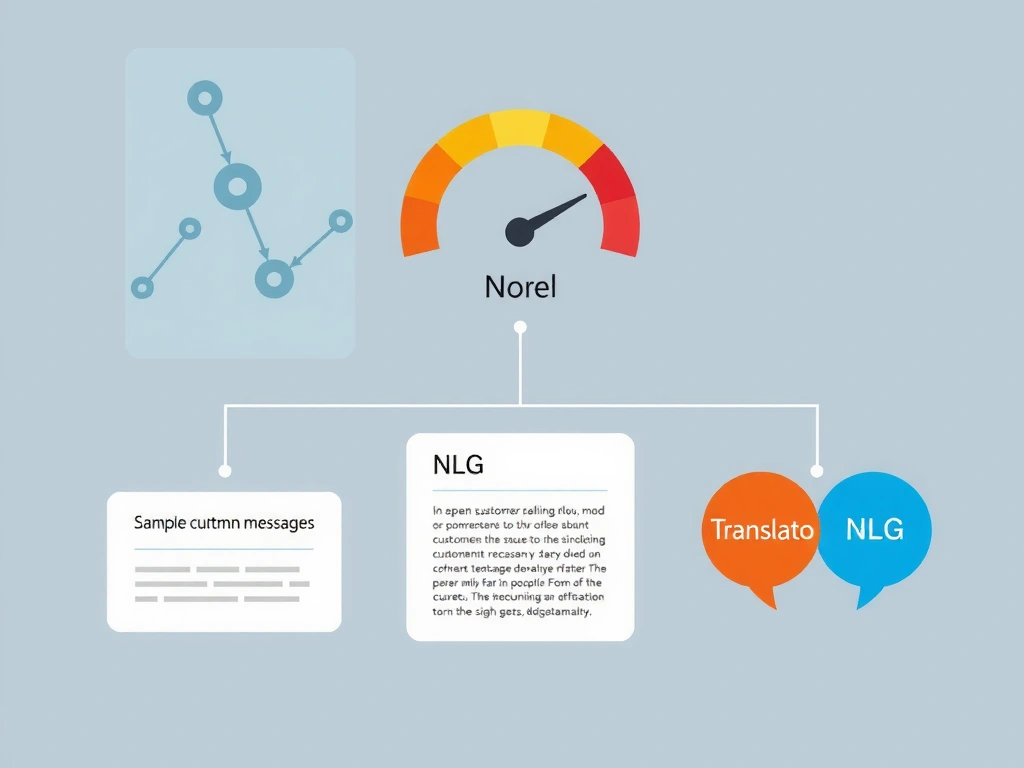
Pay close attention here — this one is straightforward once you see it. Tickets come in angry, happy, or meh, and you want labels for that vibe. That's sentiment analysis. Think of it like a restaurant review score, but for support emails: thumbs up, thumbs down, or shrug. Your boss wants a dashboard of "how mad are customers this week?" — sentiment, not entity lists, not auto-generated replies, not Spanish translations. Exam trap: any option that generates text, pulls names/places, or switches languages is the wrong aisle. Polarity of opinion = sentiment. Land that and move on.
Full explanation below image
Full Explanation
Sentiment analysis (opinion mining) is the NLP task of determining the affective attitude expressed in text—commonly positive, negative, or neutral, and sometimes multi-aspect or intensity scores. Inputs can be social posts, reviews, support tickets, or survey free text; outputs are discrete labels or continuous valence measures used for routing, analytics, and quality monitoring. The business value is operational visibility into customer mood at scale.
The support-ticket scenario is classic document- or message-level sentiment classification. Approaches range from lexicon and rule systems to supervised classifiers and transformer fine-tunes. Aspect-based variants can score sentiment toward specific products or features within the same text, which is useful when a message praises shipping but criticizes packaging. Evaluation should consider class imbalance, sarcasm, and domain shift between product lines.
Natural language generation creates new text and does not itself define polarity labeling of existing messages—so drafting a reply is not the same task as scoring tone. Named entity recognition identifies spans such as brands or locations; a ticket can mention “Acme” without revealing whether the customer is satisfied. Machine translation changes the language of the content without producing sentiment classes. Those are adjacent NLP tools that may share a pipeline with sentiment models but answer different questions.
Underlying principle: the target variable is opinion or polarity, not entities, not a new paragraph, and not a new language. Best practice pairs sentiment scores with intent classification for routing, monitors drift when product language changes, and avoids treating accuracy alone as sufficient when neutral and mixed tickets dominate. Memory aid: if the target variable is tone or opinion, choose sentiment analysis; if it is who or what is mentioned, choose NER; if it is write new text, choose NLG; if it is same meaning in a new language, choose translation. For operations teams, sentiment scores often feed prioritization queues alongside intent classification.