
A water-utility script pages Intersight server inventory filtered to chassis tagged “lift-station.” On page two the code drops the tag filter and calls a different collection URL that still has a next link. What must the next-page request preserve?
Select an answer to reveal the explanation.
Short Explanation
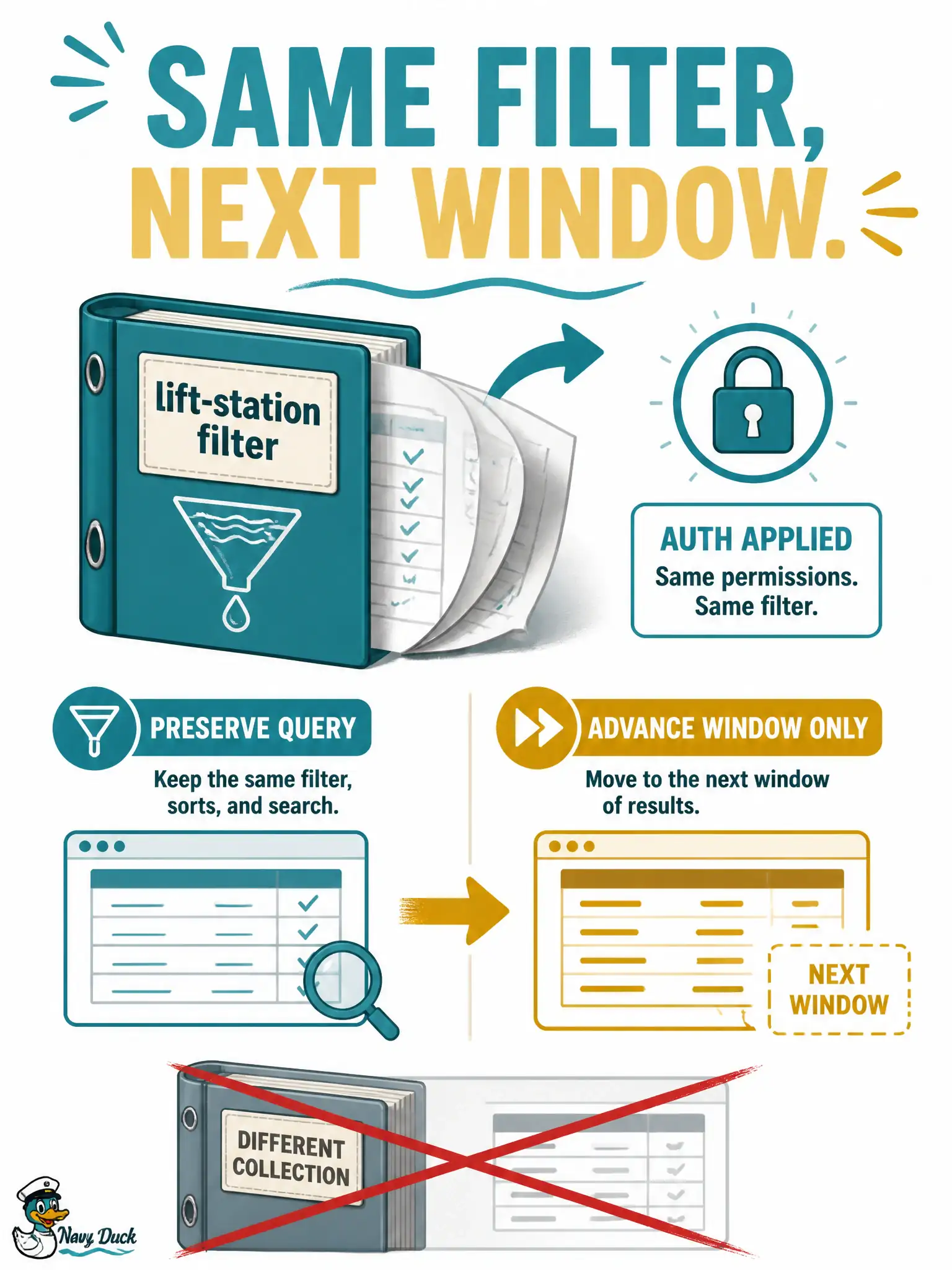
Next page means the same search, later window—like flipping pages in one filtered binder, not grabbing a different binder. Keep the collection, filters, and credentials; only the cursor or offset moves.
Full Explanation
Paging Intersight chassis tagged lift-station is one filtered walk across a single collection: each subsequent request must hit the same collection URL shape, keep the tag and related filters, and reuse the same authentication material. Only the window—cursor, offset, or server-provided next URL—advances. Dropping the filter or switching collections on page two builds a different result set while still looking like “pagination,” so the water-utility inventory mixes unrelated servers with true lift-station gear.
Starting a brand-new OAuth authorize redirect before every page confuses pagination with the initial grant and burns codes and user presence for a mid-walk step that only needed a Bearer token. Downgrading HTTPS to HTTP so paging headers stay “uncompressed” weakens transport security and has nothing to do with preserving filters. Clearing the filter for supposed completeness deliberately abandons the tagged subset the job required.
Exam caveat: next means same query, later window—not a license to change resource, filter, or credentials mid-loop. Operational check: compare page-one and page-two request URLs for identical path and filter parameters aside from cursor or offset, and verify Authorization remains present and unchanged across the walk.