
A parks department sync pulls Webex space memberships where the response only exposes a next URL—no last page index. A developer fires pages 1 through 50 in parallel to “go faster.” What is the correct construction approach?
Select an answer to reveal the explanation.
Short Explanation
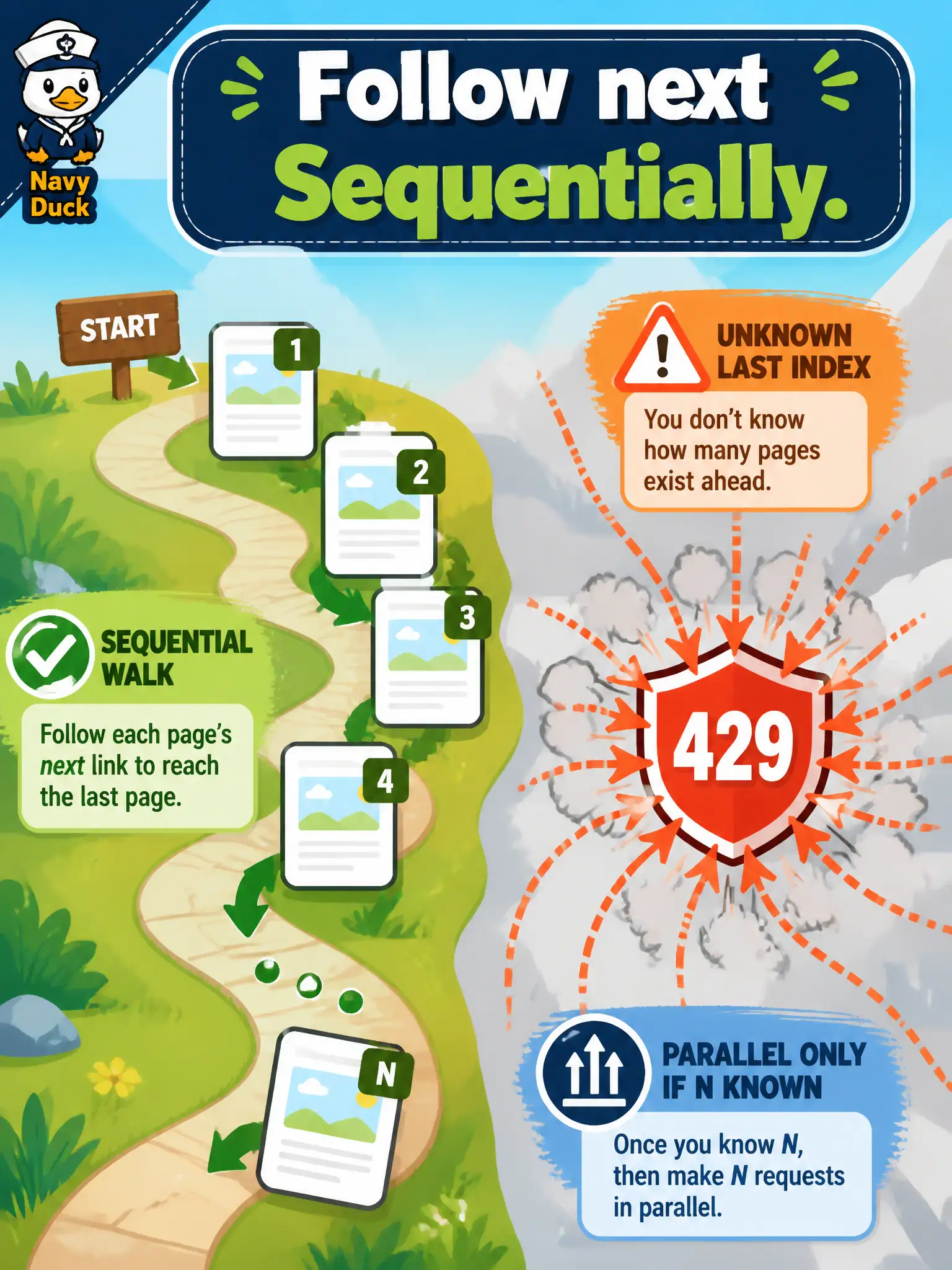
When the map only shows the next street sign, you cannot teleport to house number 50. Follow next one hop at a time. Parallel page sprays work only when the last index is known and allowed—otherwise you earn a 429.
Full Explanation
Webex membership responses that expose only a next URL give the parks department sync a singly linked path through the collection. Without a published last page index, the consumer must walk next sequentially until the API stops handing another URL. Parallel sprays of guessed page numbers assume random access the next-only contract does not provide and commonly earn HTTP 429s, empty windows, or inconsistent membership snapshots for civic space audits.
Guessing the last offset from the first page’s item count and firing parallel GETs invents an end index the response never published. Always requesting page size 1 does not unlock safe parallelism by itself and merely multiplies request count against the same limiter. Caching the first page forever and refusing to follow next freezes membership data and never completes the parks sync.
Exam caveat: parallel page fetches are only sound when the API publishes a usable last index or total and the platform allows concurrent windows; next-only Webex walks stay serial. Operational check: follow next until absent, record hop count and membership totals, and confirm client logs show no speculative page=N fan-out for this membership collection.