
The city NOC stores interface counters and hop latency keyed by metric name, timestamp, and device, mostly appending samples and running windowed queries. Which database type is the appropriate choice?
Select an answer to reveal the explanation.
Short Explanation
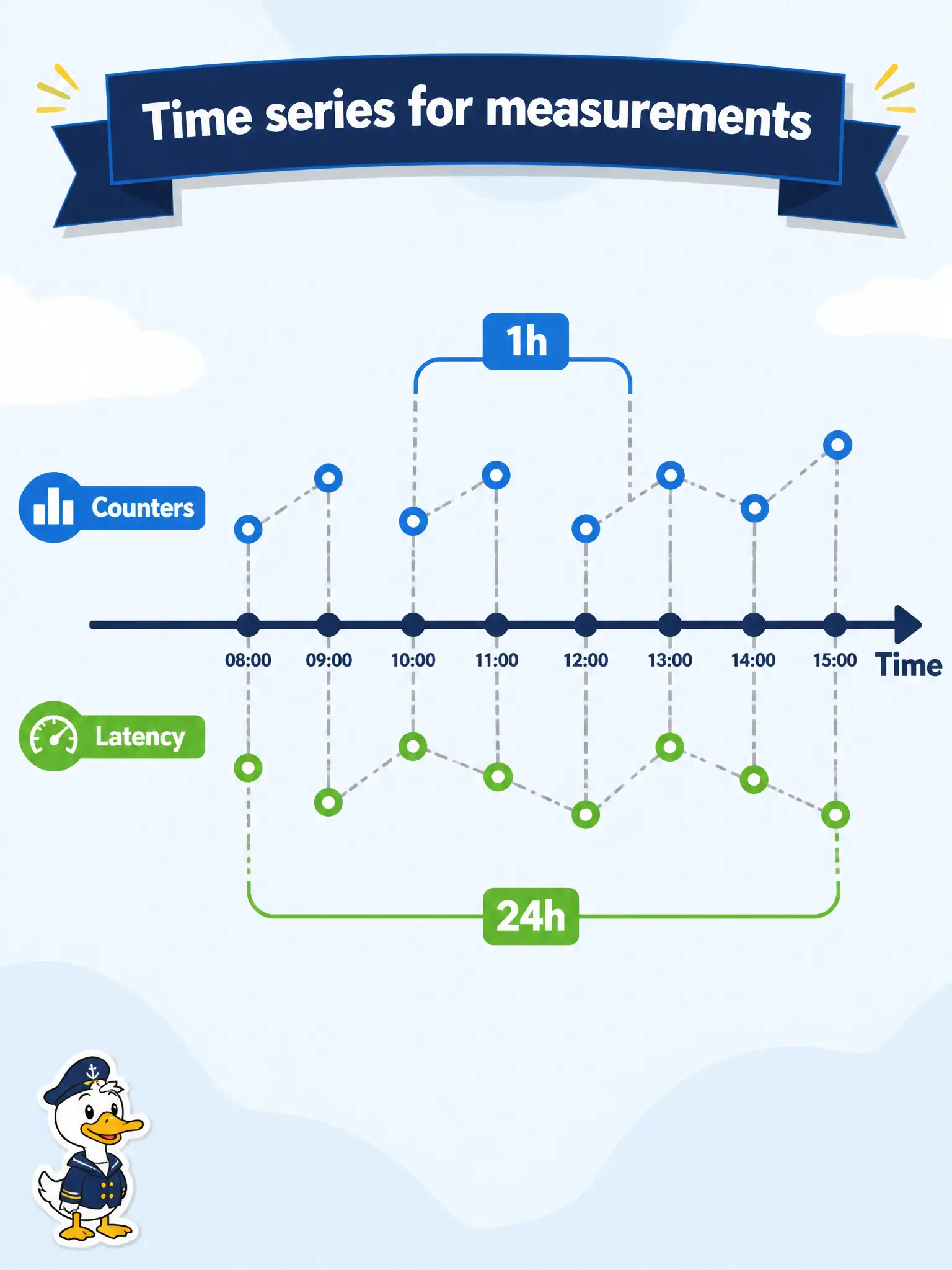
Counters and latency over time are a heartbeat tape—append, then ask “last hour / last day.” Time-series stores are built for that. Picking graph just because someone said “topology” answers the wrong question.
Full Explanation
A time-series store designed for timestamped measurements and windowed queries is the appropriate choice when the city NOC stores interface counters and hop latency keyed by metric name, timestamp, and device, mostly appending samples and running windowed queries. Counters and latency over time behave like a heartbeat tape: append continuously, then ask last hour or last day. Time-series engines optimize retention, compression, and range queries for that pattern.
A graph database solely because the stem mentioned network topology answers relationship walks, not append-and-window metric history. A relational OLTP schema whose primary workload is multi-row financial transactions optimizes for transactional integrity across business rows, not high-ingest counter streams and sliding windows. A document store whose documents are complete Catalyst Center intent trees stores configuration-shaped objects, not metric-name-plus-timestamp samples at NOC scale.
Exam caveat: time-series fit assumes the keys and windows are known—do not stuff relational inventory joins or full intent trees into a TSDB just because one chart exists. Operational check: ingest a day of interface counters and hop latency for a pilot site, run last-hour and last-day window queries, and verify retention policies drop old raw samples as designed without breaking the NOC dashboards.