
A permits portal waits for controller A, then controller B, then a local store before painting the page, and the sum of those round-trips blows the latency budget. Which design change best cuts that latency?
Select an answer to reveal the explanation.
Short Explanation
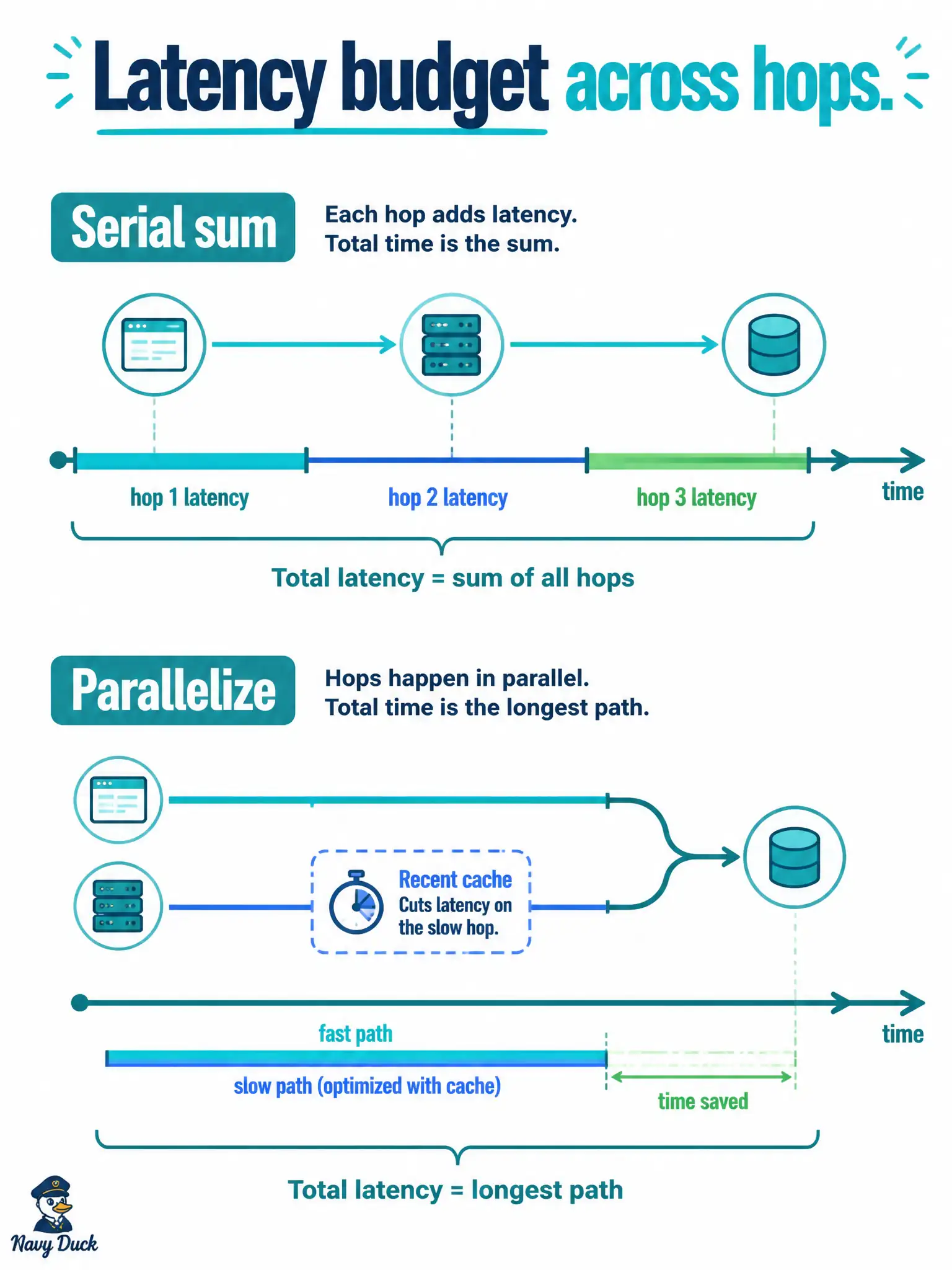
Three bus transfers in a row add up even if each ride is short. Run independent controller hops in parallel or show a fresh-enough cache for the slow one. “Make the WAN faster” alone is not a design evaluation of the latency budget.
Full Explanation
When a permits portal waits for controller A, then controller B, then a local store, latency is the sum of serial round-trips. The design fix is to parallelize independent Cisco hops and/or serve a recent cache for the slow hop so the page can meet its budget without inventing a fantasy WAN. Independent I/O should not be artificially ordered on the critical path.
Mandating a faster WAN as the only fix fails as design evaluation: circuits help, but serial chatty composition remains a software latency problem. Adding another sequential hop before render fails by lengthening the chain. Blocking the UI thread until operators manually refresh each controller fails operationally and destroys interactive performance.
Exam caveat: only parallelize hops that are truly independent; if B needs A's identifier, fetch A then fan out dependent work, and cache where freshness policy allows.
Operational check: measure p95 page time with serial versus parallel facade calls, or with a cache hit on the slow hop, and confirm the interactive objective is met without raising timeouts.
Latency budgets on civic portals are usually tens to a few hundreds of milliseconds for interactive paint; three serial controller RTTs routinely blow that. Parallelism and caching are design levers you control before ticket queues for WAN upgrades. Evaluate the call graph first: independent hops concurrently, dependent hops pipelined minimally, slow stable data served from a freshness-bounded cache.