
High-cadence subscriptions across a large civic router fleet begin filling the telemetry store within days. Which storage consideration should the team address?
Select an answer to reveal the explanation.
Short Explanation
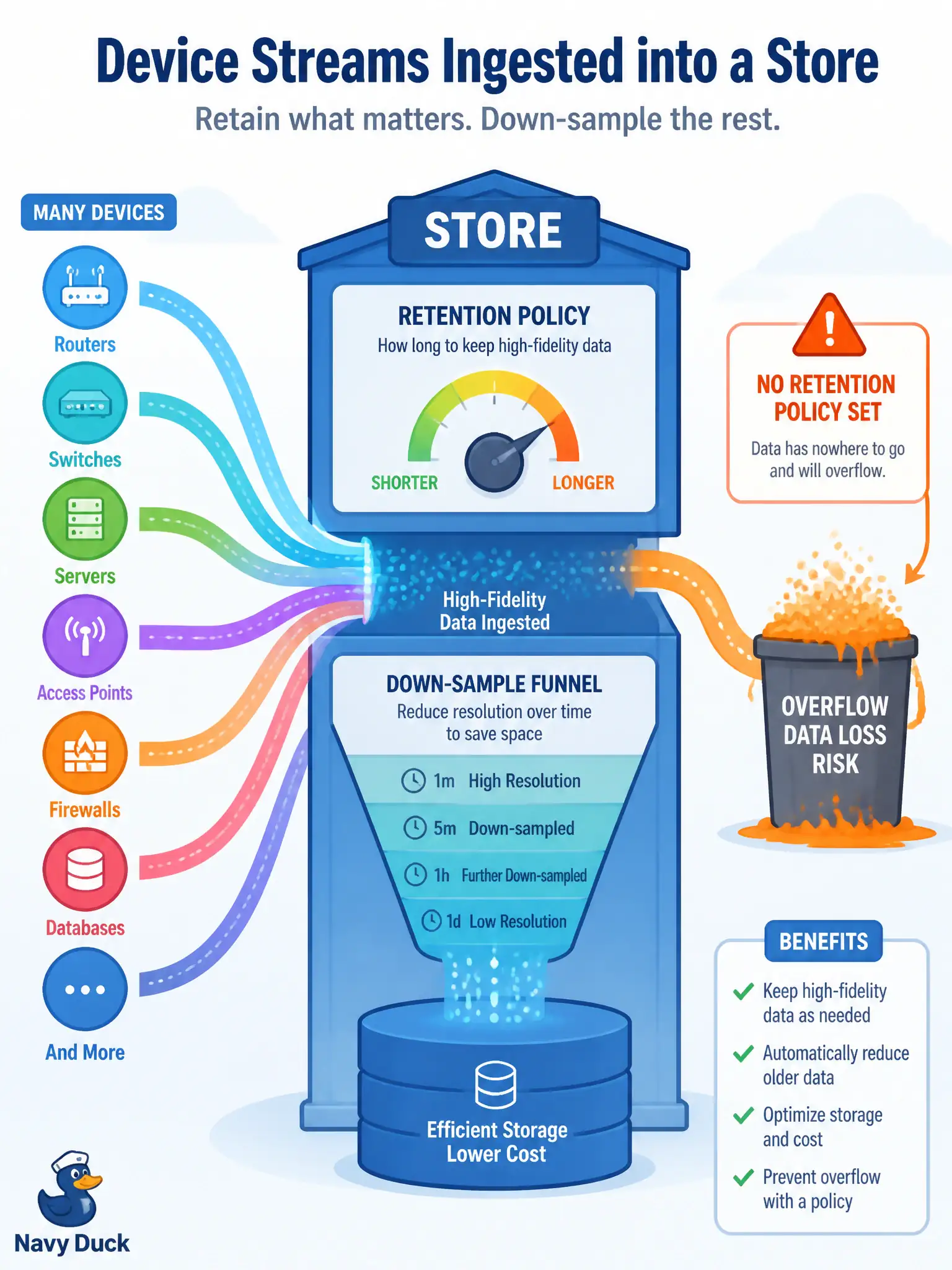
A fire hose without a drain fills the basement. High-cadence fleet telemetry needs retention and coarsening policies—not “keep everything forever.”
Full Explanation
High-cadence subscriptions across a large civic router fleet generate volume quickly. The storage consideration the team must address is defining retention and down-sample policies so that volume from those subscriptions does not overrun the store within days. Capacity planning is part of telemetry consumption design, alongside YANG path selection and cadence tuning for municipal NOC platforms that keep interface metrics for troubleshooting and capacity reports.
Increasing publication frequency on every device until the store overflows faster in the name of freshness worsens the incident instead of fixing it. Storing raw streams only on each device’s flash with infinite local retention fails centralized analysis and exhausts device storage that IOS XE needs for other functions. Ignoring volume and retaining every sample forever without down-sampling is exactly the anti-pattern that fills disks in days and slows queries.
Exam caveat: tune cadence downward for verbose paths before only growing the collector cluster; filter YANG paths so unused leaves never enter the store. Alert on ingest rate and disk headroom as day-two operational controls for the civic fleet.
Operational check: estimate samples per second × bytes × devices, set retention and down-sample windows accordingly, load-test ingest, and confirm utilization stays under the municipal threshold after the retention horizon.