
After GET client-health, how should the script display the official wireless health numbers?
Select an answer to reveal the explanation.
Short Explanation
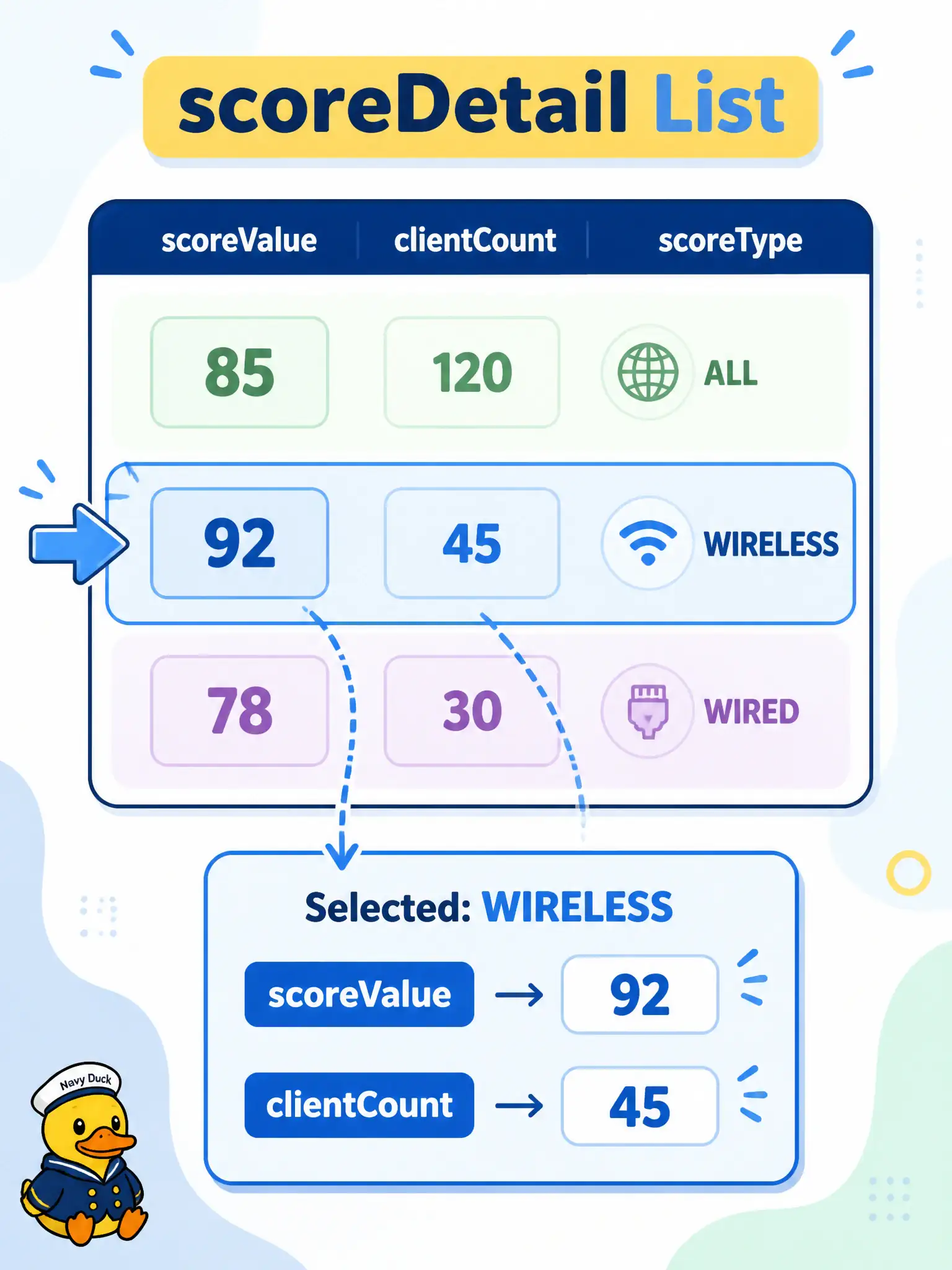
The JSON has all / wired / wireless drawers—open the wireless one and read scoreValue and clientCount, or you failed the “wireless” part of the assignment.
Full Explanation
After GET client-health, displaying official wireless health means walking scoreDetail, selecting the wireless category, and printing scoreValue and clientCount along with the child buckets the payload provides. That parse step is what turns a raw assurance document into the wireless numbers operators expect for library, transit, and parks Wi-Fi monitoring.
Printing only the wired scoreDetail object fails the wireless requirement even if wired data is valid and complete—the assignment asked for wireless health, not a wired substitute. Returning the raw HTTP status code without parsing scoreDetail fails because status alone is not health content operators can act on. Averaging site-health and network-health scores instead of reading wireless scoreDetail fails by substituting unrelated aggregates for the client-health wireless fields the Intent response already carries.
Exam caveat: scoreDetail category names and nesting can vary slightly across controller releases—write defensive selection for the wireless entry rather than hard-coding a single list index that breaks when ordering changes or an extra category appears.
Operational check: unit-test the parser against a saved client-health JSON fixture from the city’s controller, assert wireless scoreValue and clientCount extract correctly with child buckets present, and alert if the wireless category is missing so silent wired-only prints cannot pass as wireless health.