
For DEVCOR’s official FDM object task, which pair of HTTP verbs matches create and delete of network objects?
Select an answer to reveal the explanation.
Short Explanation
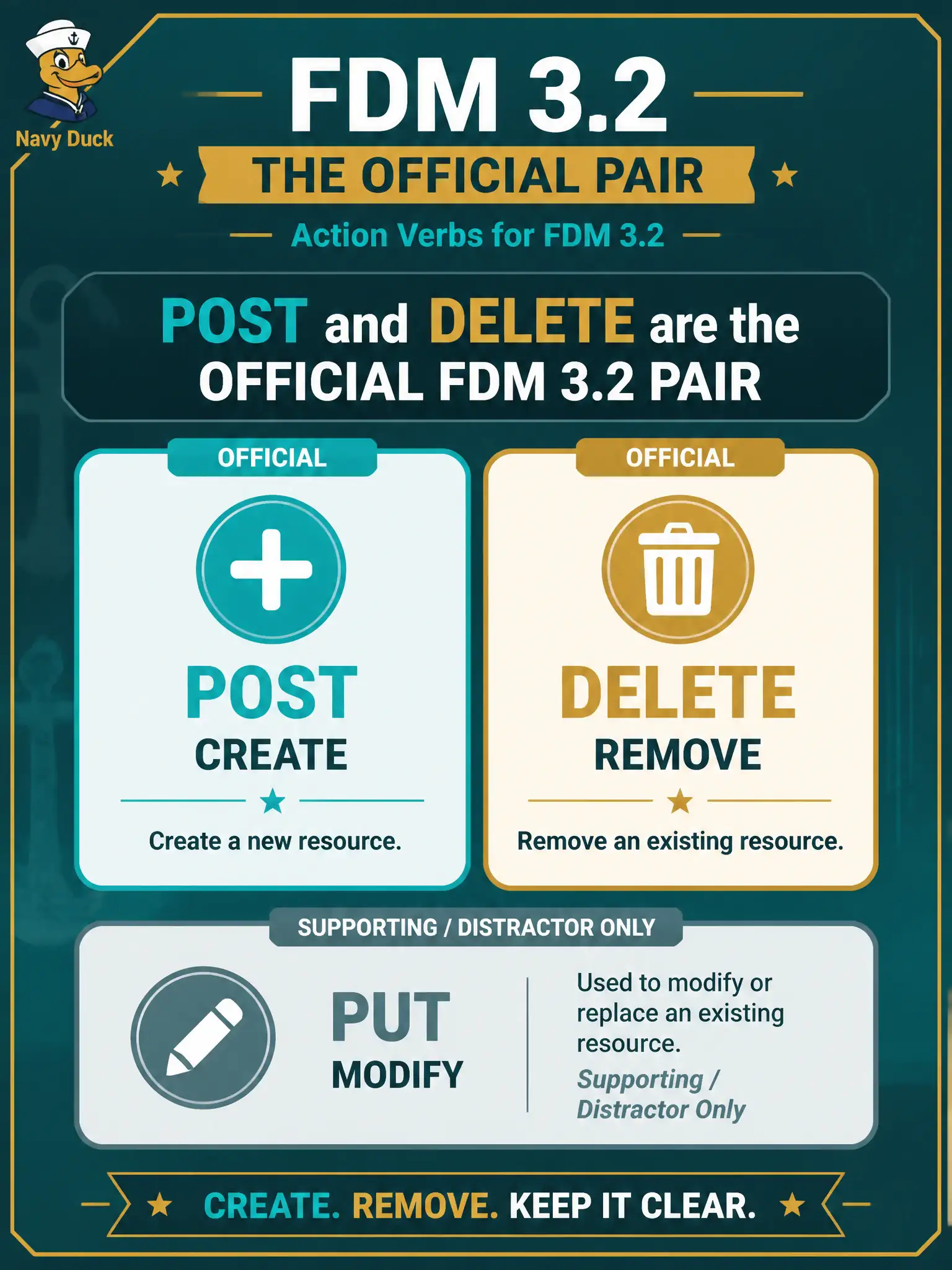
Create is POST; delete is DELETE—simple as a stamp and a shredder. PUT modifies an existing object and is supporting context, not the numbered create/delete pair.
Full Explanation
For DEVCOR’s official FDM network-object task, create and delete map cleanly to REST verbs: POST /object/networks creates a new networkobject, and DELETE /object/networks/{objId} removes an existing object by id. That pair matches resource creation and removal without overloading update verbs or inventing soft-delete flags on the create path.
Using PUT to rewrite an existing id for “create” and PATCH with a soft-delete flag for “delete” fails the numbered create/delete pair: PUT is modify-in-place for a known id, and soft-delete PATCH is not the official delete construction taught for this object resource. GET for create and HEAD for delete fail because GET only lists/reads and HEAD probes metadata—neither invents nor removes network objects. Treating only PUT /object/networks/{objId} with a full JSON body as both create and delete fails because PUT presupposes an id and does not express delete; modify is supporting context, not the create/delete pair.
Exam caveat: candidates often elevate PUT because many labs show update examples; the blueprint still separates create (POST) from delete (DELETE).
Operational check: POST a uniquely named disposable object, note its id, DELETE that id, and confirm list/GET no longer returns it—then deploy if your lab validates on the data plane.