
A city team adds a new OCI Queue subscription to an existing case-intake service. Which test investment is the cheapest that would catch publish/consume/delete bugs?
Select an answer to reveal the explanation.
Short Explanation
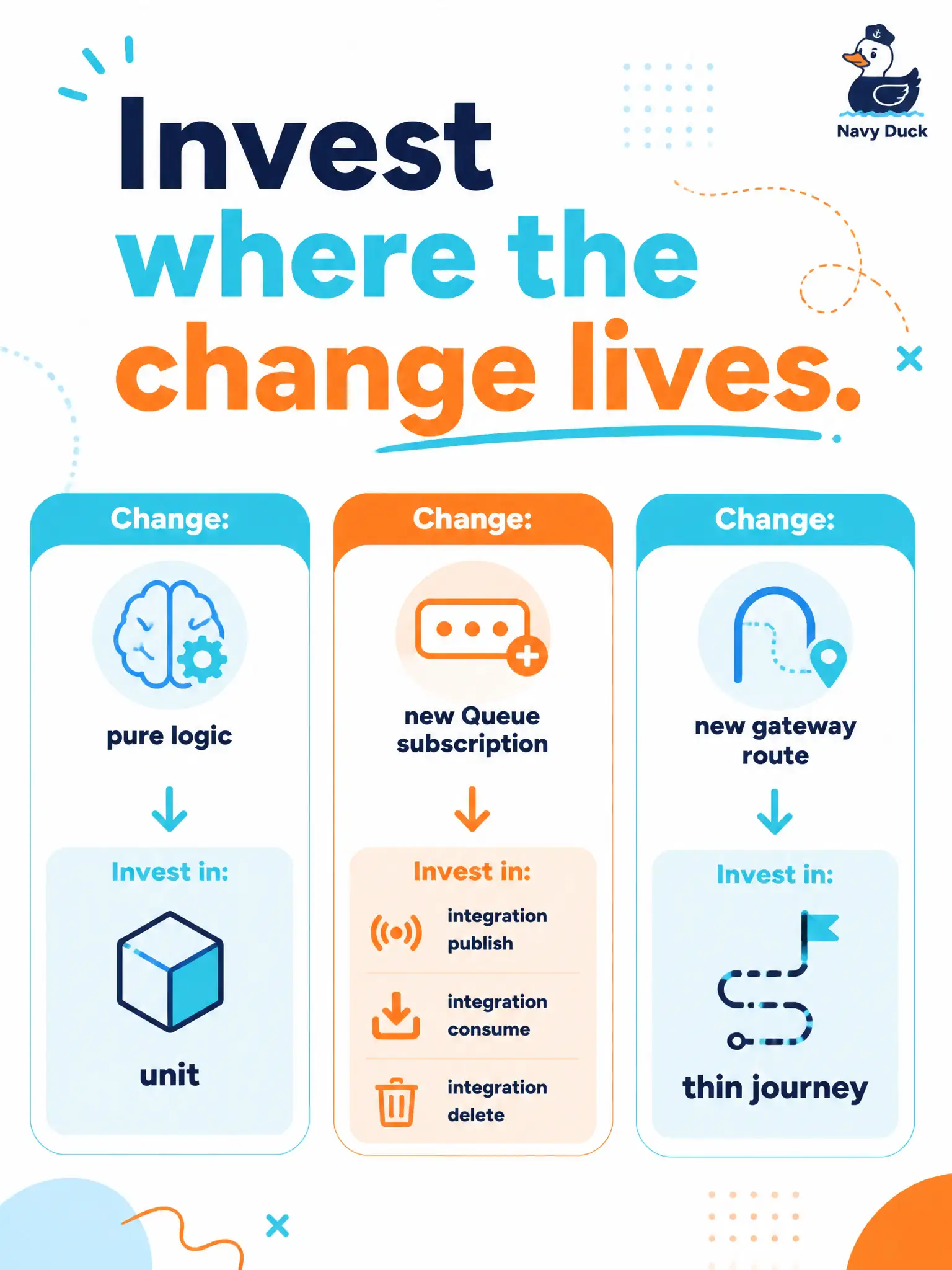
Put the cheap spotlight where the change lives. A new Queue subscription wants an integration exercise of publish/consume/delete—not a pyramid-percentage flash card.
Full Explanation
The cheapest test investment that catches publish/consume/delete bugs for a new OCI Queue subscription on case-intake is an integration test against Queue—or a faithful protocol stand-in—covering publish, GetMessages/consume, and delete, plus unit or contract coverage only where the interface moved. Put the spotlight on the new I/O path rather than on unrelated pure functions or abstract pyramid percentages. That targets the actual failure modes of a new subscription.
Adding only more unit tests of unrelated pure functions with no Queue I/O fails by concept: they never exercise the new subscription. Memorizing “70/20/10 pyramid percentages” without any Queue exercise fails because flash-card ratios are not a substitute for a failing GetMessages path. A ten-service citizen journey that never asserts GetMessages or delete fails on cost and focus—it may pass while the new subscription is broken if assertions never touch Queue.
Exam caveat: cheapest effective test follows the change—new Queue I/O → integration at that boundary. Operational check: in CI, publish a synthetic case message to the new channel, consume it with the service’s client settings, delete it, and fail the job if visibility, payload shape, or delete acknowledgment misbehaves.