
A refuse-collection Function starts failing for some ZIP codes. What ordered use of the three official tools matches Functions troubleshooting practice?
Select an answer to reveal the explanation.
Short Explanation
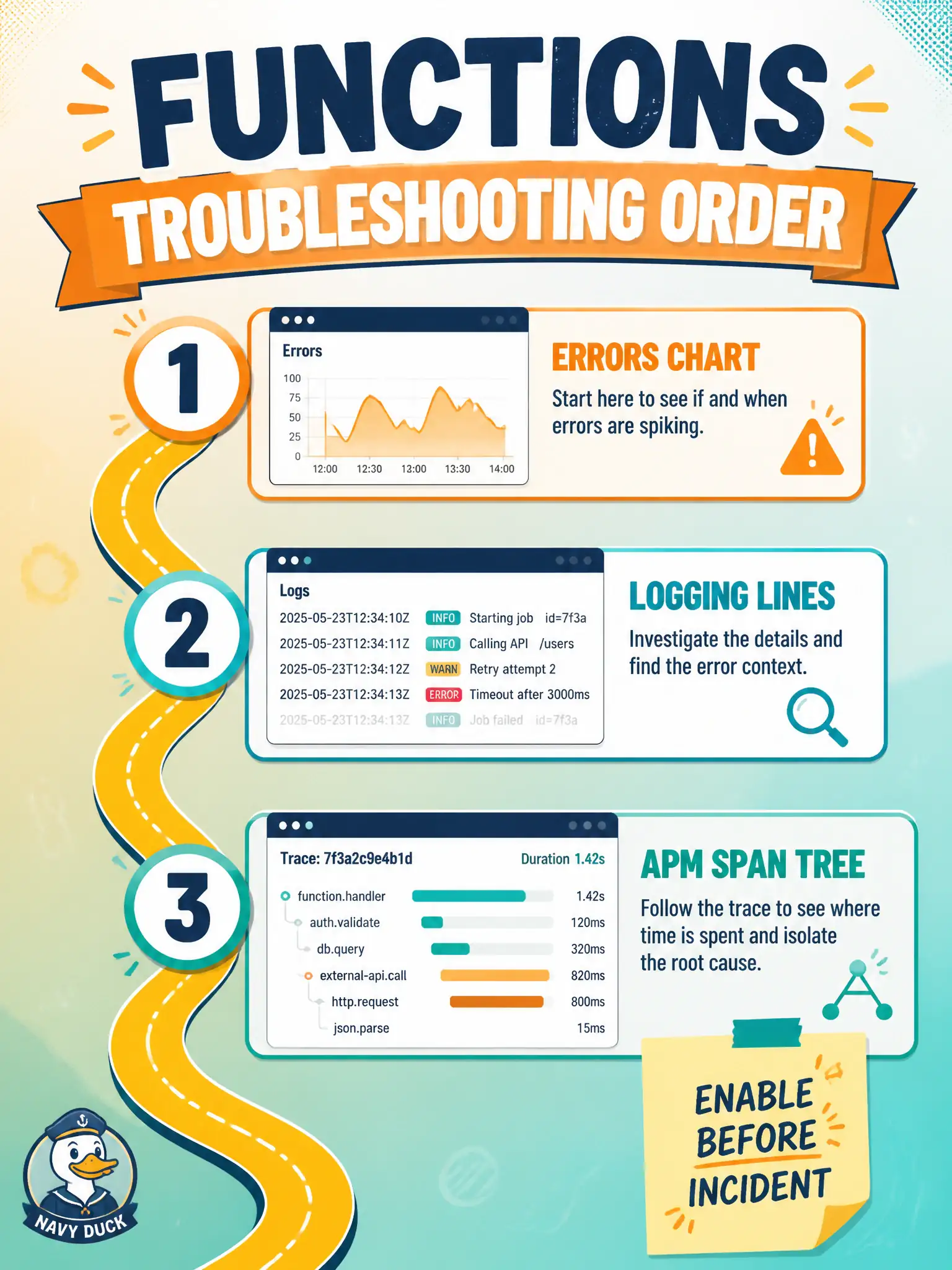
Chart the Errors metric first, read the log lines second, then walk the span tree if the failure is still a mystery. Turn Logging and tracing on before the fire if you want those trails to exist.
Full Explanation
Official Functions troubleshooting practice follows an ordered path and assumes Logging and tracing were enabled beforehand. For a refuse-collection Function failing for some ZIP codes, check the function Errors chart first (including code/message dimensions on error responses), then inspect invocation and print logs in Logging for those ZIP-related failures, then use APM span trees if the hop or dependency timing is still unclear. That order moves from coarse signal to content to distributed timing without skipping enablement.
Opening RUM session replay first, deleting metrics, and disabling Logging inverts priorities and destroys signal. Reading only Streaming alarm destinations skips function metrics that already show Errors. Jumping straight to custom Zipkin code before checking whether tracing was enabled (and before metrics/logs) burns effort on instrumentation when the Errors chart or a print line may already name the bad ZIP path.
Exam caveat: if Logging or tracing was never enabled, you cannot complete later steps during the outage—enable them on the application in calm time, not only after ZIP failures start. Operational check: open the function Errors chart for the failure window, search Logging for the ZIP and error prints, then open APM only if you still need span-level proof of which dependency failed.