
Where does a developer enable Function Invocation Logs so default invocation records appear for functions in a municipal payments Fn application?
Select an answer to reveal the explanation.
Short Explanation
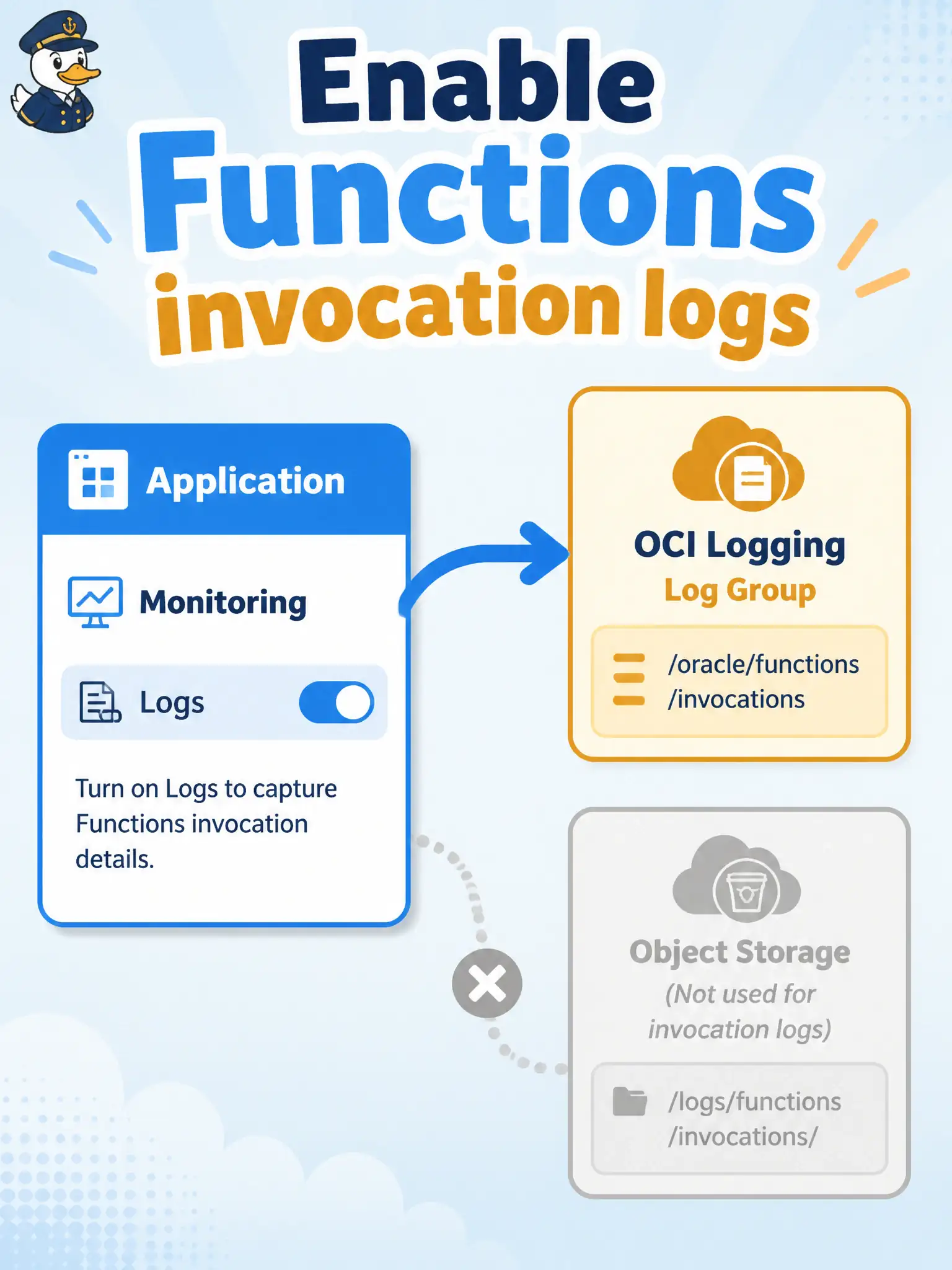
Turn invocation logging on at the Functions application; Logging is the default shelf for those records. Object Storage logging policy is a leftover path docs tell you to leave behind.
Full Explanation
Official Functions logging recommends OCI Logging as the store. You enable Function Invocation Logs on the Functions application—via the Monitoring tab’s Logs path in the Console—so default invocation records appear for functions in that municipal payments application. Enablement is an application-level Logging category action, not an image registry or Kubernetes annotation trick.
Enabling "only on each Docker image in OCIR before any deploy" does not turn on Functions service invocation logs; OCIR tags and layers are unrelated to the Logging category switch. Setting an Object Storage logging policy as the default path contradicts current docs, which treat that Object Storage route as a leftover path to leave behind in favor of Logging. Putting enablement only inside an OKE Deployment manifest annotation targets Kubernetes workloads, not Oracle Functions applications—Fn apps are not configured that way for invocation logs.
Exam caveat: application-level enablement covers functions in that app; custom diagnostic content still depends on handler output and optional JSON line format settings. Operational check: enable Invocation Logs on the payments Fn application into a log group, invoke a function, and confirm default invocation records appear in Logging before chasing image or OKE annotation changes.