
A library IT developer creates an Events rule so Object Storage object creates can start processing. What should be the primary filter condition in the official create-rule flow?
Select an answer to reveal the explanation.
Short Explanation
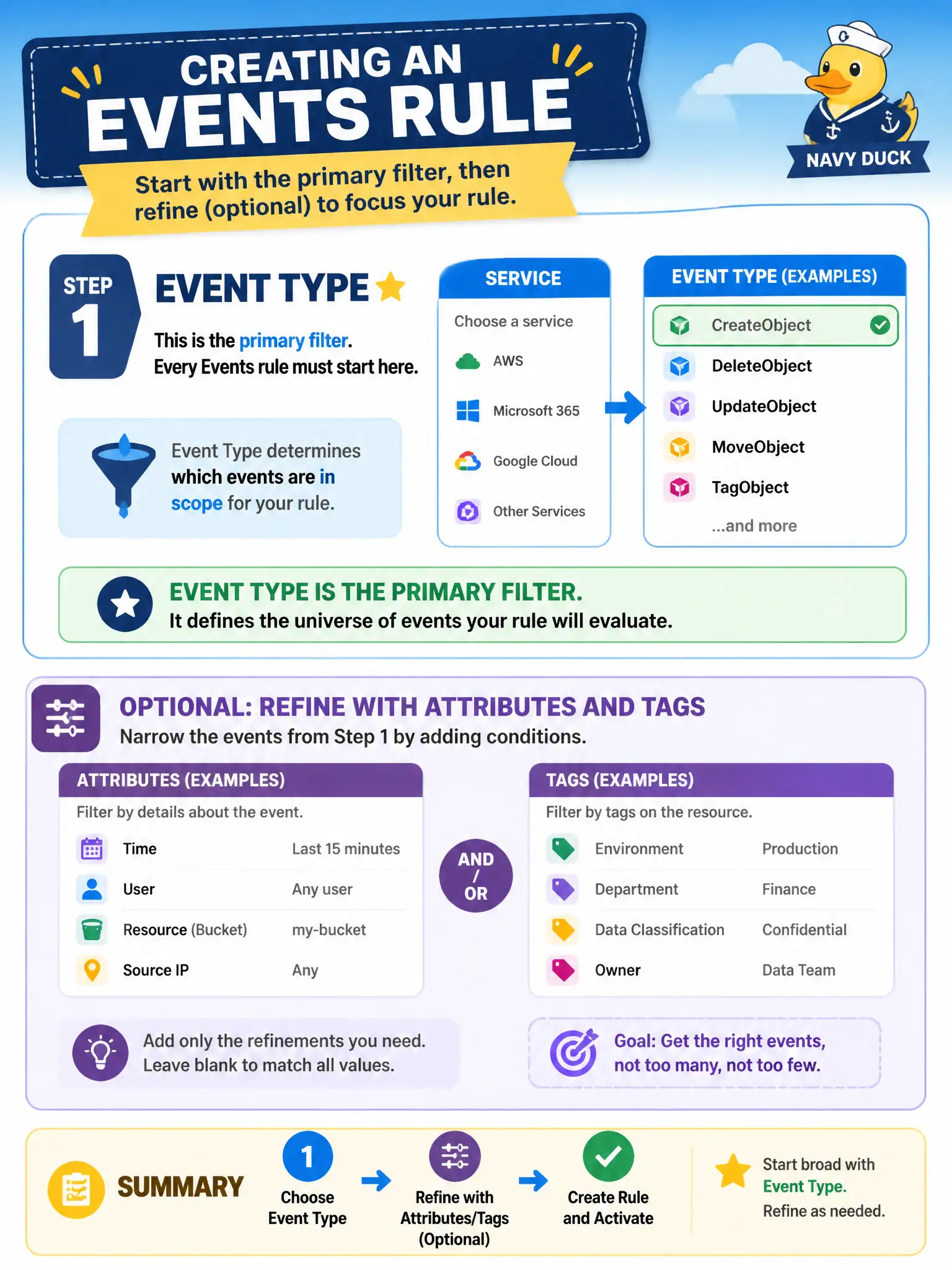
Start with Event Type: name the service that emits and pick the specific types you care about (for example object create). “Any change in the whole tenancy” floods your Function; tags and attributes refine later.
Full Explanation
In the official create-rule flow for the library IT developer, the primary filter condition is Event Type: select the emitting service (for example Object Storage) and choose one or more of that service’s documented event types (such as create object). That condition is the first, required narrowing step so the rule only considers emissions of the intended kind before optional attribute or tag refinements further scope matches. Matching every change anywhere in the tenancy so a Function never misses an emission is operationally unsafe and conceptually wrong—Events is designed around selective filters, and an unbound rule floods actions with unrelated CloudEvents. Filtering only by free-form tags while skipping service and event type omits the primary Event Type condition the create-rule flow expects; tags refine, they do not replace, typed emissions. Binding the rule exclusively to a Streaming partition key equal to the bucket OCID confuses Streaming consumer partitioning with Events rule filters, which operate on CloudEvent type and attribute fields, not Kafka partition keys. Exam caveat: after Event Type, you usually still need attribute conditions (compartment, bucket name, and similar) so every create-object in the tenancy does not invoke your Function. Operational check: in the console or API, create a rule whose first condition is Event Type for Object Storage create-object, deliver to a test stream, then upload to an emit-enabled bucket and confirm the event type string in the payload matches what you selected.