
Which set lists documented ways to invoke an OCI Function?
Select an answer to reveal the explanation.
Short Explanation
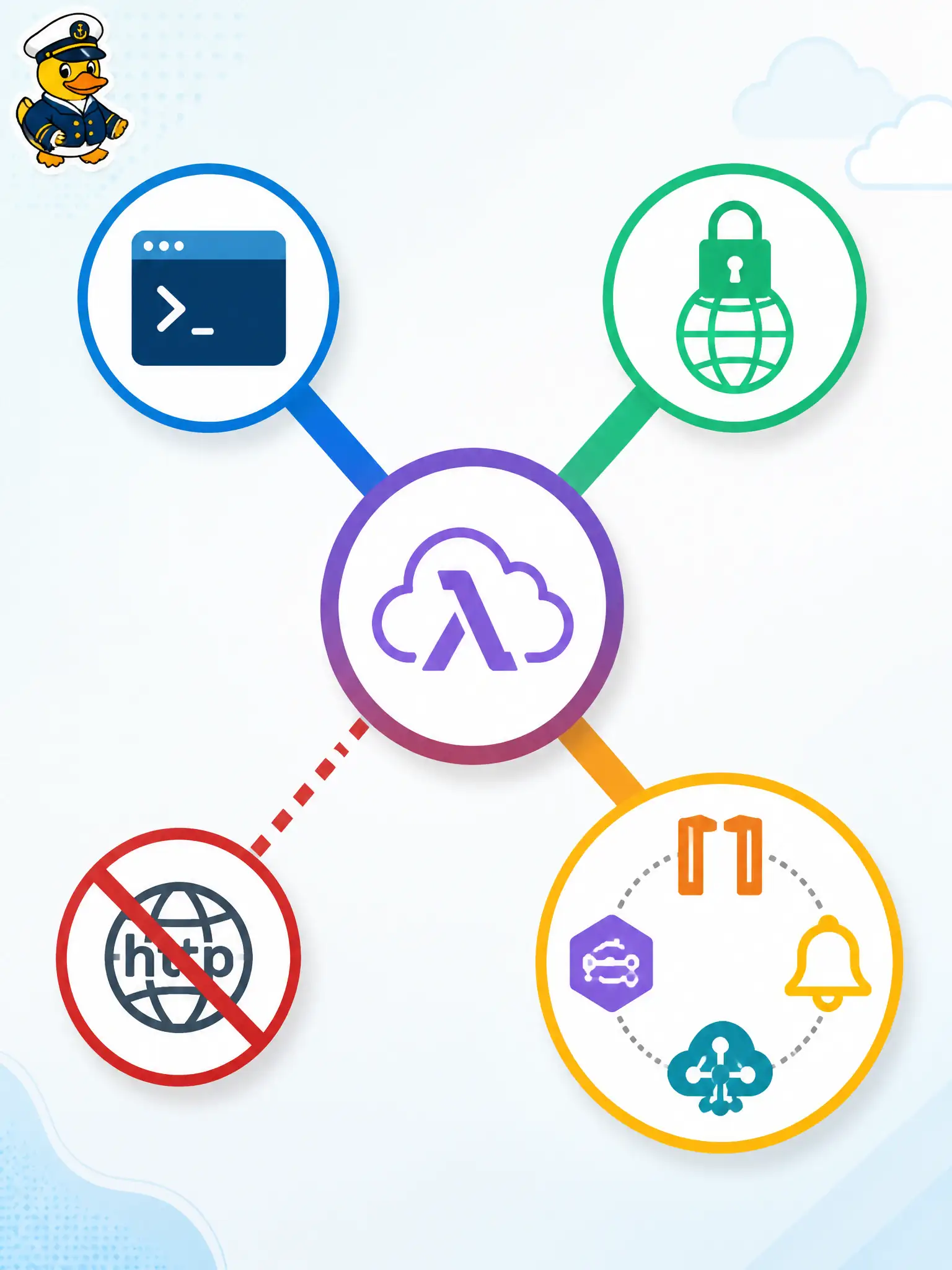
You can ring the doorbell three ways: the fn CLI, a signed HTTPS call to the invoke endpoint, or another OCI service that is allowed to call Functions. There is no magic unsigned open HTTP trigger.
Full Explanation
Documented ways to invoke an OCI Function include fn invoke, a signed HTTPS request to the function’s invoke endpoint, or an OCI service acting as a caller such as API Gateway, Events, Notifications, or Connector Hub. Those paths cover developer CLI testing, direct authenticated HTTPS, and event-driven municipal integrations. Supporting services remain callers into Functions, not a replacement for the invoke model.
Unsigned anonymous HTTP only with no CLI support fails by concept because Functions invoke is authenticated/signed and the CLI is a first-class invoke path. SQL triggers inside Autonomous Database exclusively fails because database triggers are not the sole or defining invoke mechanism for Functions. Using kubectl exec into a hidden Functions sidecar on every node fails because Functions is not invoked by exec’ing sidecars on OKE workers; that myth mixes Kubernetes ops with FaaS invoke.
Exam caveat: which caller you choose still requires IAM policies allowing that principal to invoke the function—listing a service name is not the same as granting invoke. Operational check: invoke with fn invoke for a smoke test, call the signed HTTPS endpoint shown by fn inspect function, then wire one OCI caller (for example API Gateway) and confirm logs show the civic function executing.