
A parks department wants small event-driven handlers that run only when invoked, without managing worker shapes or patching guest OS. Which OCI approach matches that model?
Select an answer to reveal the explanation.
Short Explanation
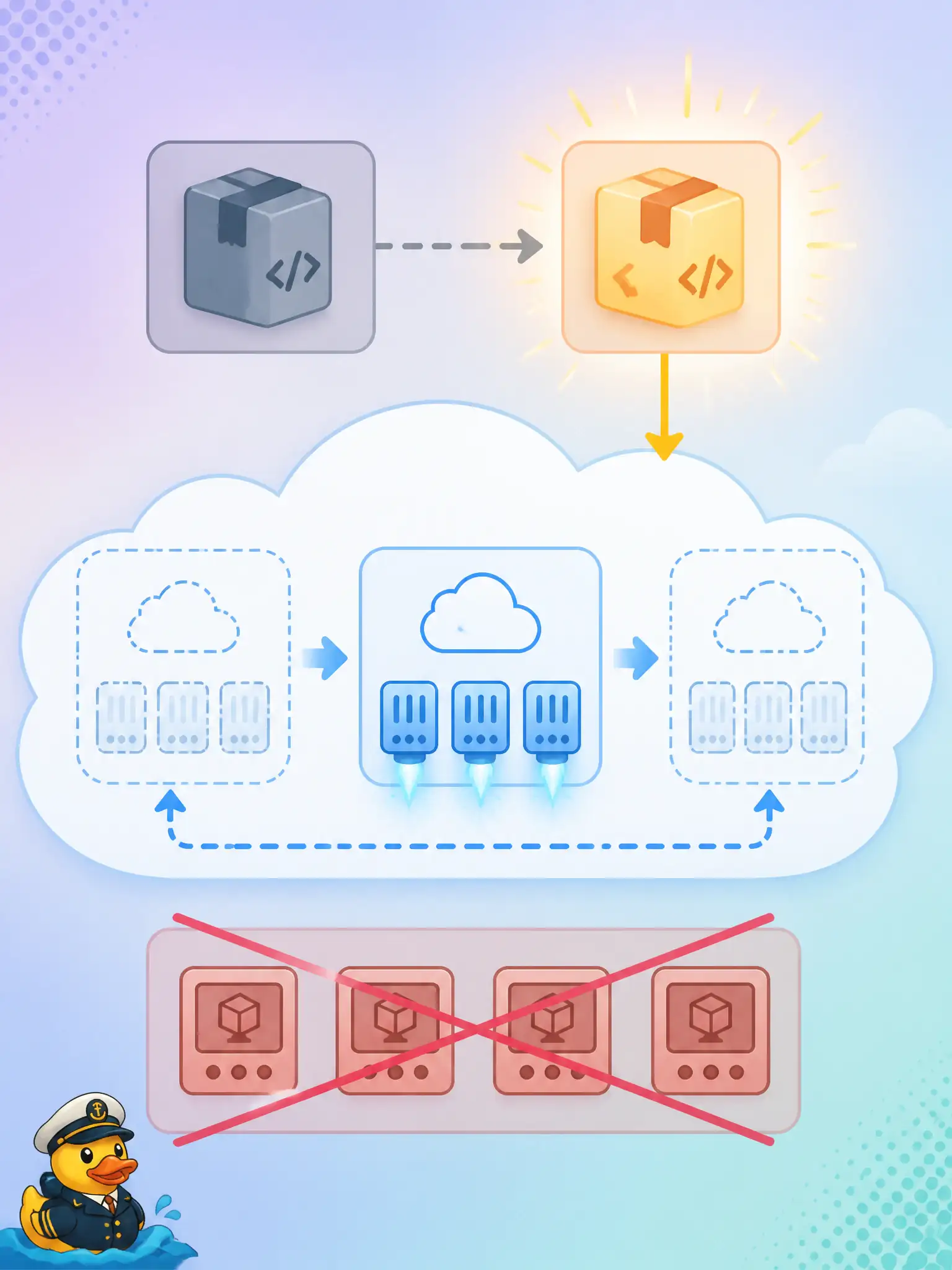
OCI Functions is the on-demand workshop light: it turns on when someone needs the tool and you pay for what ran. You ship the code unit; you do not nurse a cluster just so the handler exists.
Full Explanation
When a parks department wants small event-driven handlers that run only when invoked, without managing worker shapes or patching guest OS, OCI Functions is the matching model. You deploy a small code unit; the service provisions execution capacity on demand, runs the handler, and billing follows what executed. Operators do not size Compute shapes, patch a guest OS fleet, or keep idle workers warm merely so the handler exists—ideal for sporadic civic event hooks.
Provisioning a fixed pool of Compute instances and keeping them warm for every handler fails by concept because that is always-on infrastructure management, including patching and capacity planning, which the parks team explicitly wants to avoid. Creating an OKE Deployment with a minimum of three always-on replicas per handler fails because Kubernetes Deployments keep processes running continuously; you still operate a cluster and pay for idle replicas. Placing each handler on a dedicated Bare Metal host sized for peak load fails as extreme over-provisioning and operational burden for tiny event-driven units.
Exam caveat: Functions still need an application (subnets, config), IAM policies, and an image in OCIR—serverless removes shape babysitting, not identity or networking setup. Operational check: deploy a hello handler to a Functions application, invoke it once, confirm no dedicated Compute instance was created for that invoke, and review that idle time does not require a warm municipal VM pool.