
Building-inspection APIs need worker VMs the team can shape and patch themselves on OKE. Which node type matches that responsibility model?
Select an answer to reveal the explanation.
Short Explanation
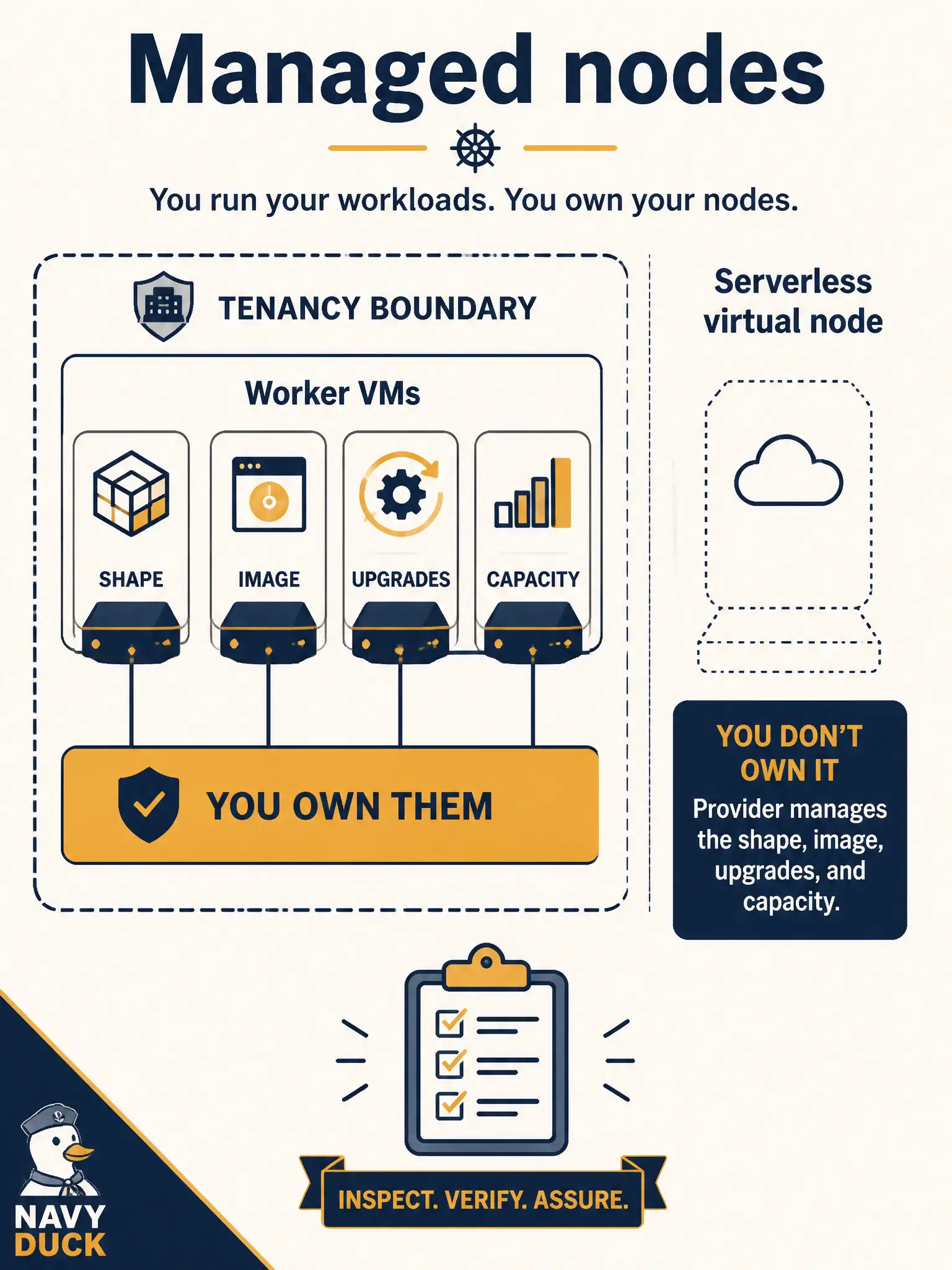
Managed nodes are workers you own: instances in your tenancy, your shape and OKE worker image choice, your upgrade and capacity burden. Flexibility with node operations attached—right for teams that need that control on a building-inspection API.
Full Explanation
Managed nodes are Compute instances in your tenancy that join the OKE cluster as workers you shape, image-select, patch, and capacity-plan. That responsibility model matches building-inspection APIs that need worker VMs the team can configure and upgrade themselves—flexibility with explicit node operations ownership. Virtual nodes only is wrong when the requirement is worker VMs you shape and patch. Virtual nodes deliberately remove worker-instance management; saying managed nodes never allow choosing a shape is also false—managed pools are where shape and image choice live. API Gateway deployments front HTTP APIs; they do not replace Kubernetes worker nodes for running Pods. Gateway is a traffic entry product, not an OKE node type for hosting inspection-API containers. Oracle Functions is a serverless functions platform. Functions do not mean 'Functions always provision OKE worker VMs you patch'—that conflates products. Choosing Functions does not satisfy an OKE managed-node ownership model. Exam caveat: managed nodes require ongoing worker image patching and capacity planning—teams that want zero worker VM ops should consider virtual nodes instead, accepting virtual-node feature constraints. Operational check: create or inspect a managed node pool with the intended shape and OKE worker image, confirm nodes Ready in the cluster, deploy the inspection API, and verify you can patch/cycle workers through pool operations.