
After applying a Service for the tax-assessor API, kubectl reports no endpoints even though Pods are running. What binding mechanism should the team verify first?
Select an answer to reveal the explanation.
Short Explanation
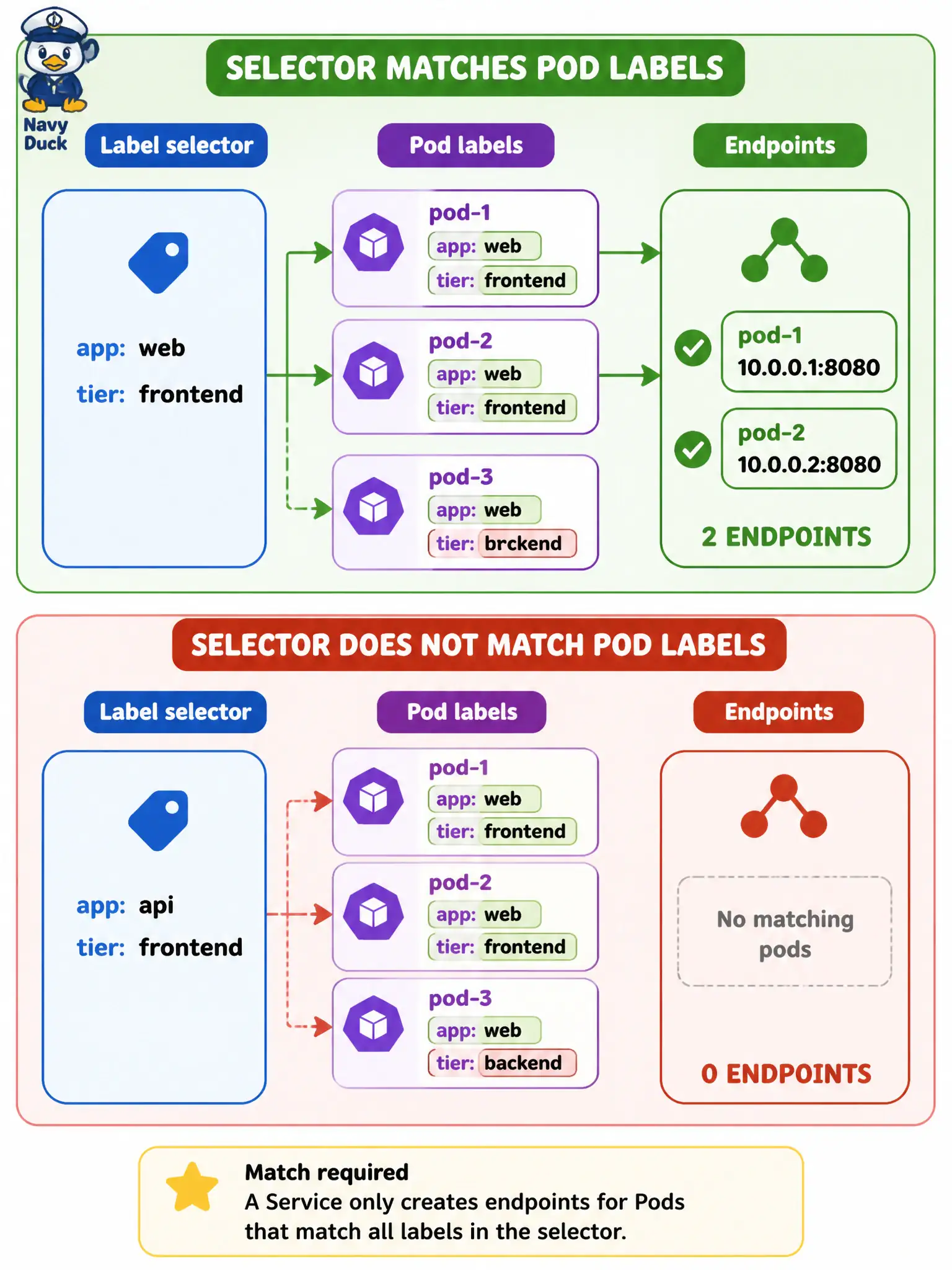
Services and Deployments find Pods by label selectors, like matching luggage tags—not by hoping the Pod’s name equals the Service name. Mismatched labels are the classic empty-endpoints surprise.
Full Explanation
When kubectl reports no endpoints for the tax-assessor API Service even though Pods are running, the first binding to verify is label selection: the Service’s selector must match labels on the Pods. Controllers and Services find Pods by selectors, not by requiring the Pod object name to equal the Service name character for character. Empty endpoints almost always mean mismatched label keys or values, the wrong namespace, or Pods that exist but are not Ready yet. Demanding exact equality between every Pod name and the Service name misunderstands generated Pod names from ReplicaSets and Deployments. OCIR deleting image tags might prevent new pulls on recreate but does not explain already-running Pods paired with an empty Service endpoint list. Having no namespaces at all is neither required nor desirable; selection still works inside a namespace when labels align. Exam caveat: selectors can match while endpoints stay empty if readiness fails—so after fixing labels, confirm Pods are Ready before chasing CNI or firewall issues. Operational check: kubectl get pods --show-labels, compare to the Service selector, fix template labels or the selector, then confirm endpoints or EndpointSlices populate with Pod IPs.