
Inspectors’ dispatch workloads run on an OKE cluster. How should developers manage those workloads day to day?
Select an answer to reveal the explanation.
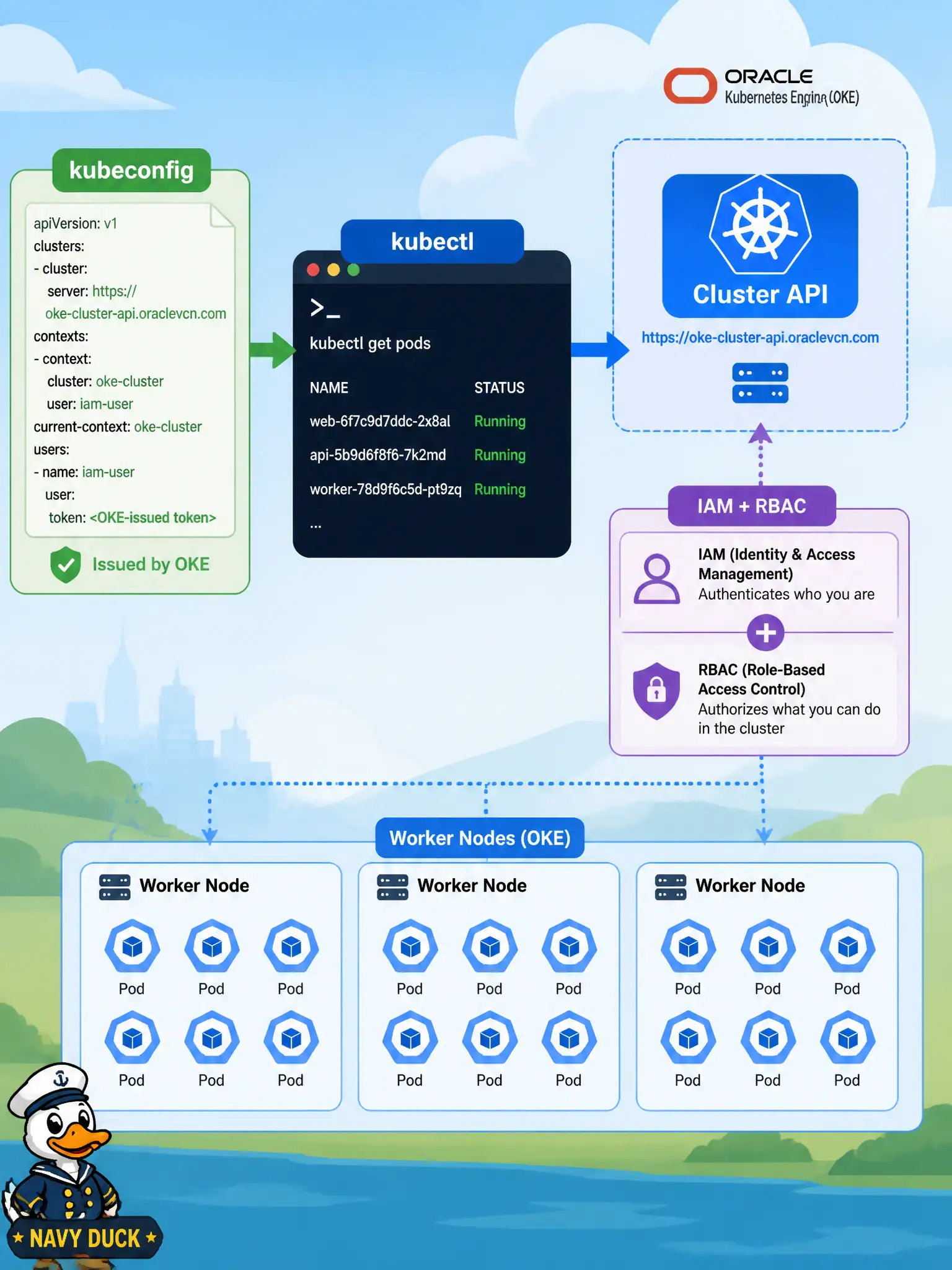
Short Explanation
OKE hands you a kubeconfig; kubectl talks to that cluster’s API. That is the developer path—not SSH into workers to start apps. IAM plus Kubernetes RBAC still gate who can do what.
Full Explanation
Day-to-day management of inspectors’ dispatch workloads on OKE goes through kubectl and the Kubernetes API using the kubeconfig OKE issues for that cluster’s API endpoint, gated by IAM and Kubernetes RBAC. Developers declare and observe desired state via the API rather than logging into workers to start OS-level application services. SSH to each worker and systemctl start abandons orchestration, creates unreproducible host state, and fights controllers that will reconcile against declared objects. Pushing images only to Object Storage and waiting for workers to poll zip files skips OCIR pull semantics, image digests, and the Kubernetes schedule. Editing /etc/hosts on every node instead of using cluster credentials does not authenticate to the API, does not authorize actions, and does not deploy workloads. Exam caveat: kubeconfig access is necessary but not sufficient—IAM must allow you to retrieve or use credentials, and Kubernetes RBAC must authorize the verbs you need on the target namespaces and resources. Operational check: download kubeconfig from OKE, run kubectl auth can-i create deployments in the workload namespace, apply a change, and confirm Pods update without any worker SSH session.