
Public-works inspectors need a new image of the field-notes API with no Saturday outage. Which orchestration role updates replicas so clients keep working under the same service name?
Select an answer to reveal the explanation.
Short Explanation
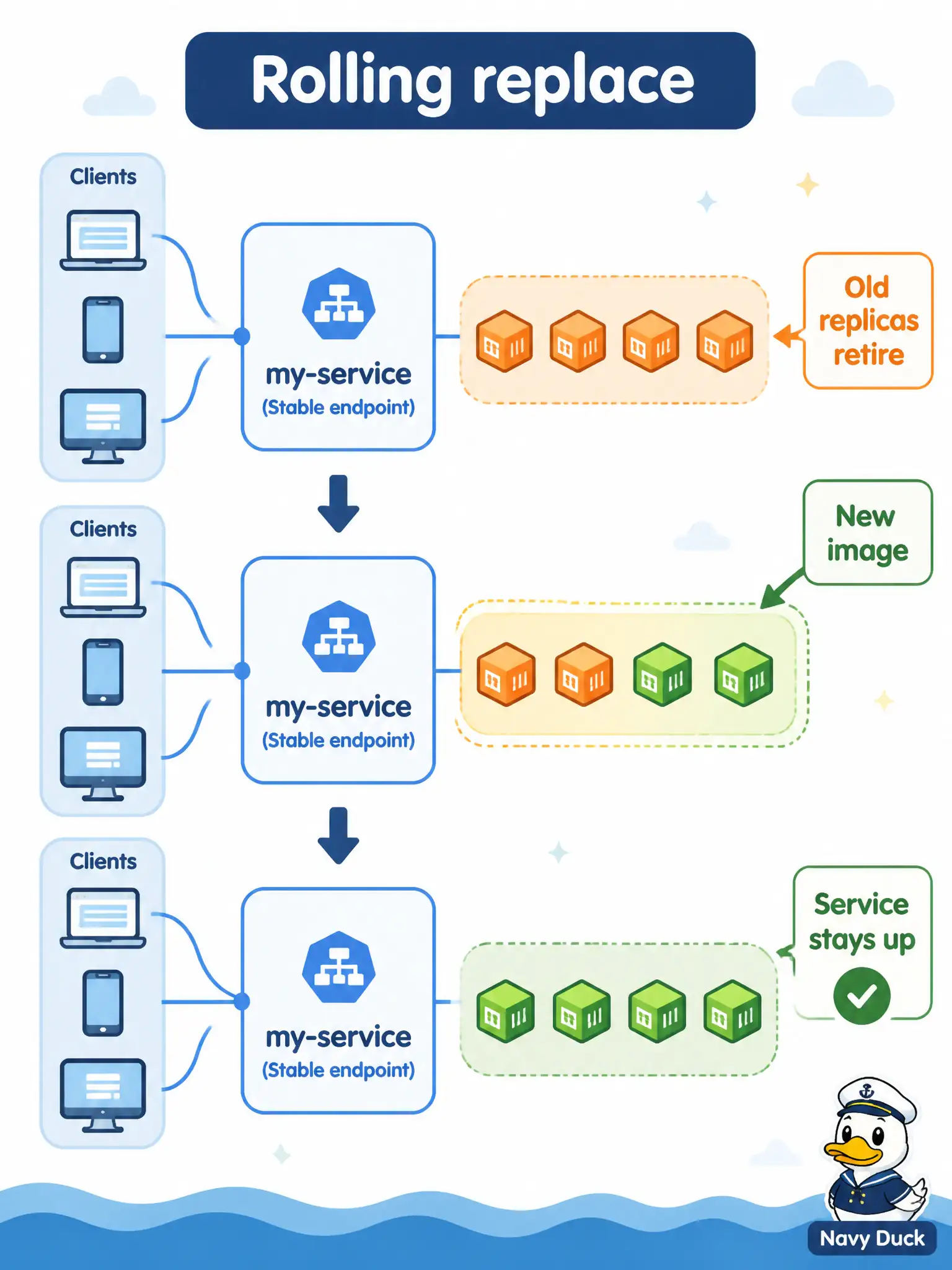
Rolling replace is like swapping train cars while the train stays on the track. New replicas come up, old ones leave, and the service name keeps answering. A stop-the-world Saturday docker restart is what orchestration is meant to retire.
Full Explanation
Updating the field-notes API image without a Saturday outage is a rolling replacement concern: start new replicas with the new image, wait until they are Ready, then retire old replicas while the Service continues to select healthy members under the same name. Clients keep calling the stable service; membership shifts gradually from old to new without a hard cutover window. Stopping every container and docker running the new image in a maintenance window is a big-bang outage—inspectors lose the API for the whole cutover and undo the value of orchestration. Deleting the cluster and restoring from weekend backup is disaster-recovery theater for an image bump; it maximizes downtime, data risk, and operational blast radius. Changing only the OCIR tag in documentation leaves running Pods on the old digest, so production never receives the new image no matter how accurate the wiki looks. Exam caveat: rolling updates need a Pod template change on a controller (typically a Deployment), adequate maxSurge/maxUnavailable settings, and readiness probes so traffic does not hit half-booted replicas. Operational check: watch ReplicaSets during apply—new set scales up, old scales down—confirm Service endpoints always include Ready Pods, and verify the running image digest matches the intended tag without a full cluster recreate.