
Operators declare three healthy replicas of a licensing API image. What posture distinguishes an orchestrator from a human start/stop runbook?
Select an answer to reveal the explanation.
Short Explanation
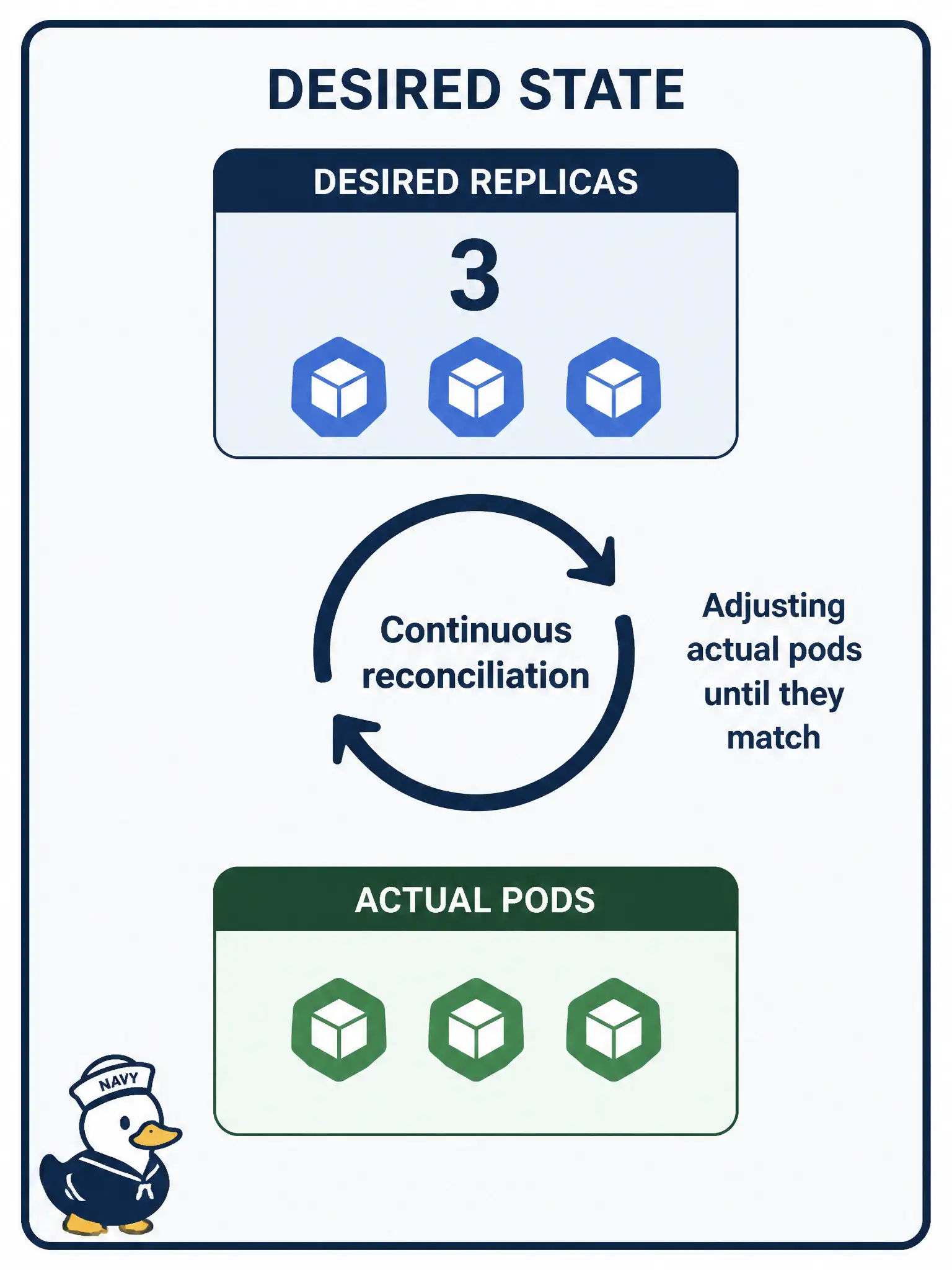
You declare three healthy replicas; the orchestrator keeps comparing the world to that wish and fixes the drift. A human runbook of start/stop commands is the opposite posture.
Full Explanation
An orchestrator’s distinguishing posture is continuous reconciliation: operators declare three healthy replicas of the licensing API, and the control plane repeatedly compares cluster reality to that declaration, creating, replacing, or retiring instances until the observed state matches. Humans may still change the declaration, but they do not manually chase every crashed task; the orchestrator owns drift correction. That closed loop is what separates orchestration from a start/stop runbook.
Running each container exactly once and then disabling further actions is a batch/one-shot mindset, not replica maintenance. Claiming humans continuously reconcile while the orchestrator only prints the desired count reverses the responsibilities. Saying desired state is ignored and the orchestrator only executes imperative SSH checklists describes automation theater, not declarative orchestration.
Exam caveat: reconciliation needs correct readiness/liveness semantics—otherwise the control plane may keep a Ready count that does not reflect true serving capacity. Operational check: terminate one licensing API pod (or container instance) deliberately and confirm the orchestrator creates a replacement until three healthy replicas are restored without an operator running a manual start checklist.