
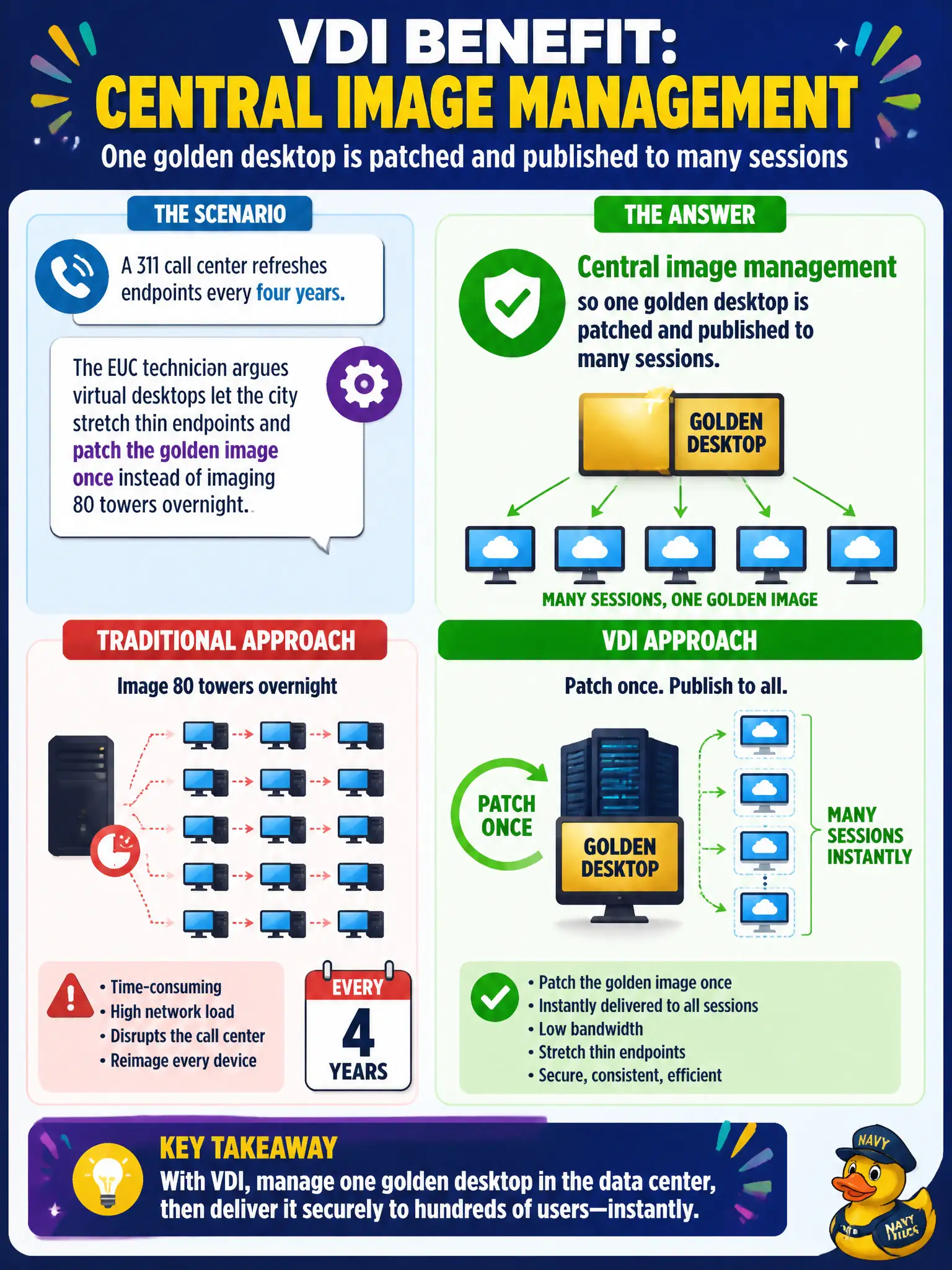
A 311 call center refreshes endpoints every four years. The EUC technician argues virtual desktops let the city stretch thin endpoints and patch the golden image once instead of imaging 80 towers overnight. Which VDI benefit is the technician describing?
Select an answer to reveal the explanation.
Short Explanation
Patching 80 towers is like restocking 80 vending machines by hand. VDI is one warehouse image: fix the golden desktop once and every 311 session drinks from that same well.
Full Explanation
The technician describes central image management: patch one golden 311 desktop and publish it to many sessions instead of imaging eighty towers overnight. In municipal EUC terms, treat the endpoint as a window into city systems when the architecture says so, not as the system of record for the files or apps in the stem. Distractor concept: Saying each thin endpoint still needs its own overnight-patched local Windows image rejects the golden-image model VDI provides. Distractor concept: Horizon Cloud Control Plane does not automatically replace every 311 handset; hardware refresh is not the benefit described. Distractor concept: NSX Distributed Firewall does not patch Windows images inside tower BIOS firmware. Exam caveat: Do not confuse microsegmentation products with desktop image lifecycle when the stem asks about patching once and publishing many. Operational check: Validate the pool parent image, publish the patched golden desktop, spot-check sessions, and retire overnight imaging of eighty physical towers as the primary patch path. Record the chosen control and the rejected failure modes in the civic change ticket or runbook so on-call staff and auditors share the same rationale after the next maintenance window. Re-validate after personnel or image changes that the same control still meets the city's continuity, security, and support expectations for this service.