
A county human services department needs a contractor to design and operate a complex case-management program where staffing qualifications, client intake methodology, and transition planning matter as much as cost. Which solicitation method should the buyer select?
Select an answer to reveal the explanation.
Short Explanation
When you are buying a complex human service rather than a box of identical bolts, the cheapest price tag rarely tells the whole story. You need a competitive process that weighs methodology and staffing alongside cost. The trap is forcing a qualitative service into a low-bid-only box.
Full Explanation
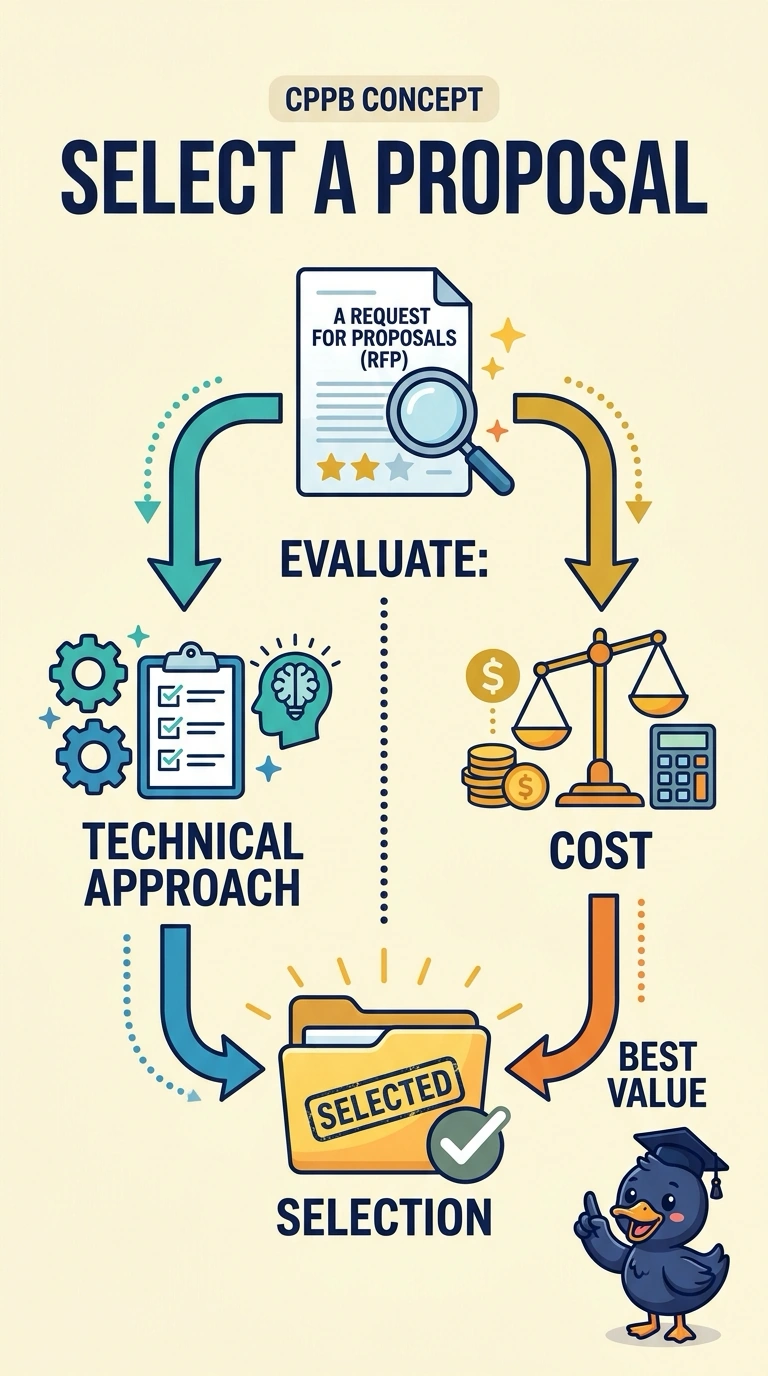
Competitive sealed proposals allow an agency to compare different technical approaches, staffing models, and quality commitments before negotiating best value. Selecting A Request for Proposals evaluating technical approach and cost lets the evaluation committee score qualifications, intake methodology, and transition plans using published weighted criteria alongside price. Choosing An Invitation for Bids awarded strictly to the lowest responsive price works only when specifications are exact and uniform, which fails when service delivery methods vary across providers. Using A reverse auction conducted among pre-registered service providers focuses purely on driving down unit price for standardized items and cannot evaluate qualitative program design. Relying on A sole-source justification based on departmental staff preference improperly bypasses competition when multiple qualified providers exist. Caveat: an RFP still requires clear, measurable evaluation criteria and published weights in the solicitation so scoring remains objective and defensible. Operational check: confirm with program stakeholders that technical criteria, relative weights, and cost evaluation formulas are finalized and approved before publishing the RFP.
Prefer to study offline? Printable PDF study book + test engine ($7.50, unofficial). These questions stay free here.