
A state university is conducting an RFP for a campus learning management system and invites the three top-ranked proposers to give live software demonstrations. How should the buyer structure these sessions to maintain a fair and defensible evaluation?
Select an answer to reveal the explanation.
Short Explanation
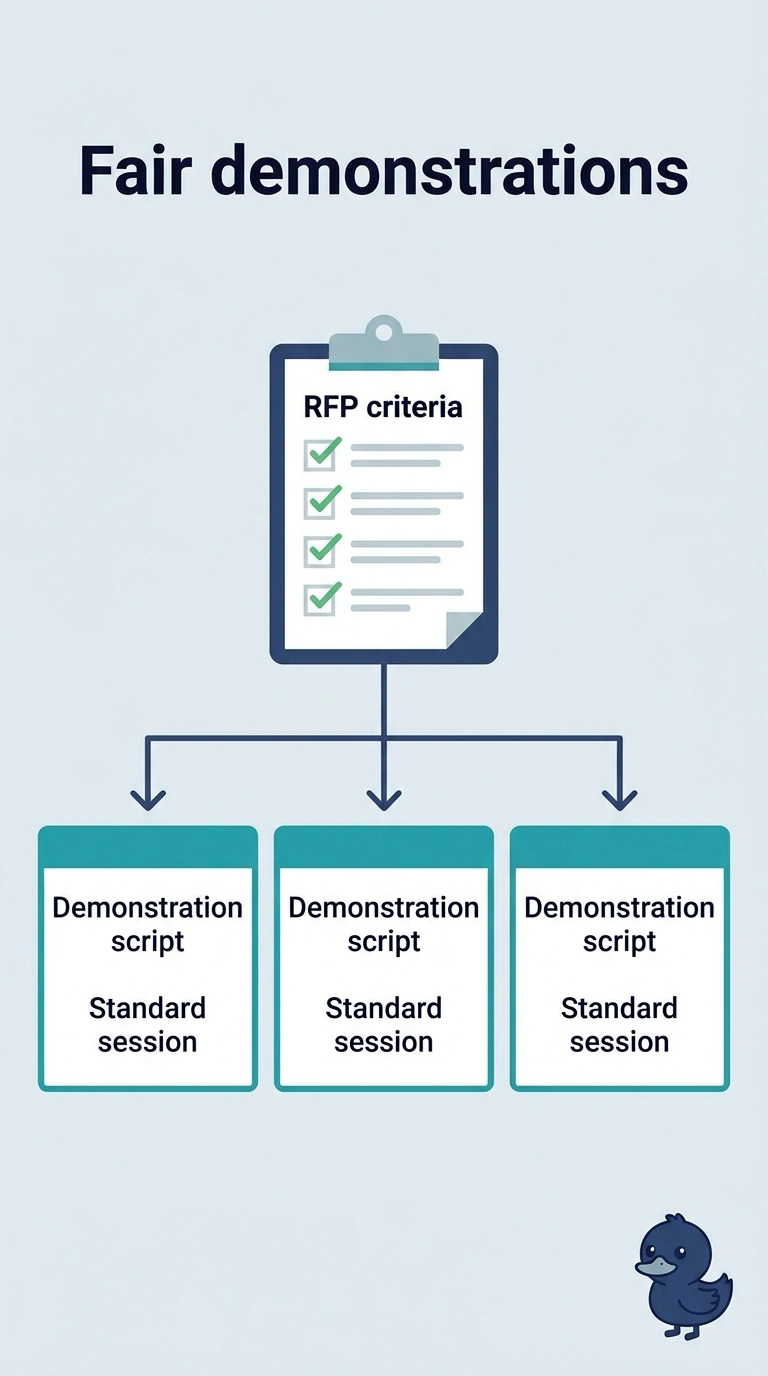
Think of RFP demonstrations like a standardized driving test—you test every finalist on the same course rather than letting each vendor pick its favorite scenic route. The trap is allowing unstructured sales pitches or letting flashy demos override written proposals, which invites bias and bid protests.
Full Explanation
Live demonstrations verify whether proposed capabilities actually work as described, provided every shortlisted offeror is evaluated under identical conditions. Choosing to use a standardized demonstration script tied to published RFP criteria ensures evaluators test the same core workflows across all finalists and document objective observations linked to the solicitation's scoring matrix. Choosing to allow each vendor to present an open-ended sales pitch of its newest features turns evaluation into an apples-to-oranges marketing showcase and may introduce unstated criteria. Choosing to invite only the lowest-priced proposer to demonstrate while skipping higher-priced firms violates equal treatment of offerors in the competitive range. Choosing to ask evaluators to discard their written proposal scores and re-rank solely on presentation polish ignores binding technical commitments made in the written submission. As a caveat, any clarifications or functional commitments made during demonstrations should be confirmed in writing if they affect contract terms. Operationally, distribute identical agenda times and test scenarios in advance, record evaluator attendance, and retain completed scoring sheets in the solicitation file.
Prefer to study offline? Printable PDF study book + test engine ($7.50, unofficial). These questions stay free here.