
A state transit agency enters competitive discussions with three shortlisted proposers for a complex fare-collection system RFP. How should the buyer conduct these discussions to maintain fair competition?
Select an answer to reveal the explanation.
Short Explanation
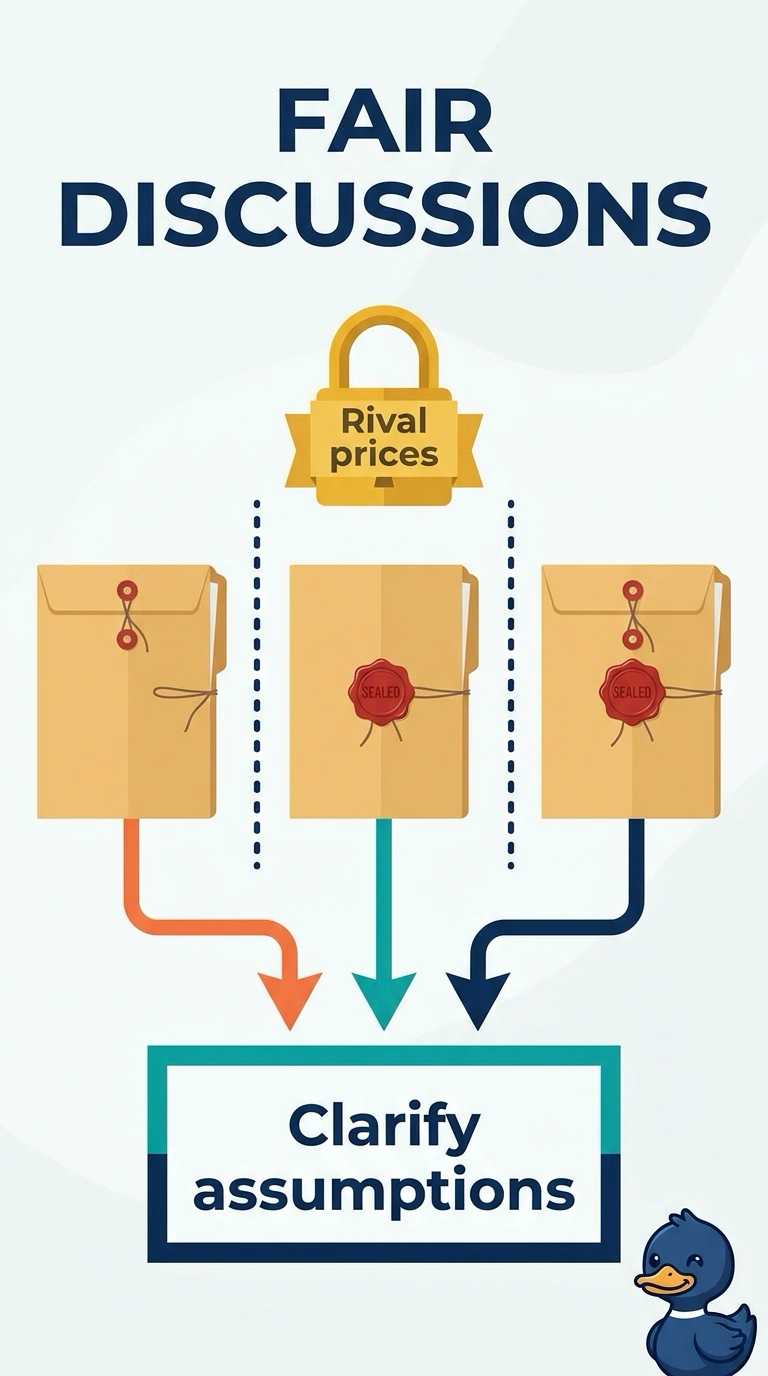
You can use discussions to clarify each proposer’s own assumptions while protecting the fairness of the competition. Keep rival designs and prices confidential; sharing them or making proposals identical undermines fair competition.
Full Explanation
Clarifying each proposer’s own assumptions without revealing rival designs or prices preserves the integrity of competitive discussions. You can address ambiguities and weaknesses specific to each offer while protecting proprietary concepts, allowing offerors to submit informed Best and Final Offers on equal footing. Giving every shortlisted proposer the same list of preferred features taken from the leading proposal, even without naming that firm, still improperly transfers one offeror’s ideas to rivals and constitutes technical transfusion. Telling each proposer only whether its price sits above or below the midpoint of prices already received still discloses competitor-derived pricing and encourages auctioning rather than independent pricing. Rewriting every proposer’s technical approach so all proposals look identical is improper technical leveling, eliminating meaningful differentiation among offerors. As an exam caveat, buyers may still identify where an individual proposal fails to meet a stated solicitation requirement so the vendor can cure the deficiency. As a practical check, prepare written discussion agendas tailored to each offeror and brief the evaluation team beforehand on strict non-disclosure boundaries.
Prefer to study offline? Printable PDF study book + test engine ($7.50, unofficial). These questions stay free here.