
A state parks department issues a properly advertised Invitation for Bids for trail bridge fabrication, and only one supplier submits a sealed bid by the deadline. Which action should the buyer take before recommending contract award?
Select an answer to reveal the explanation.
Short Explanation
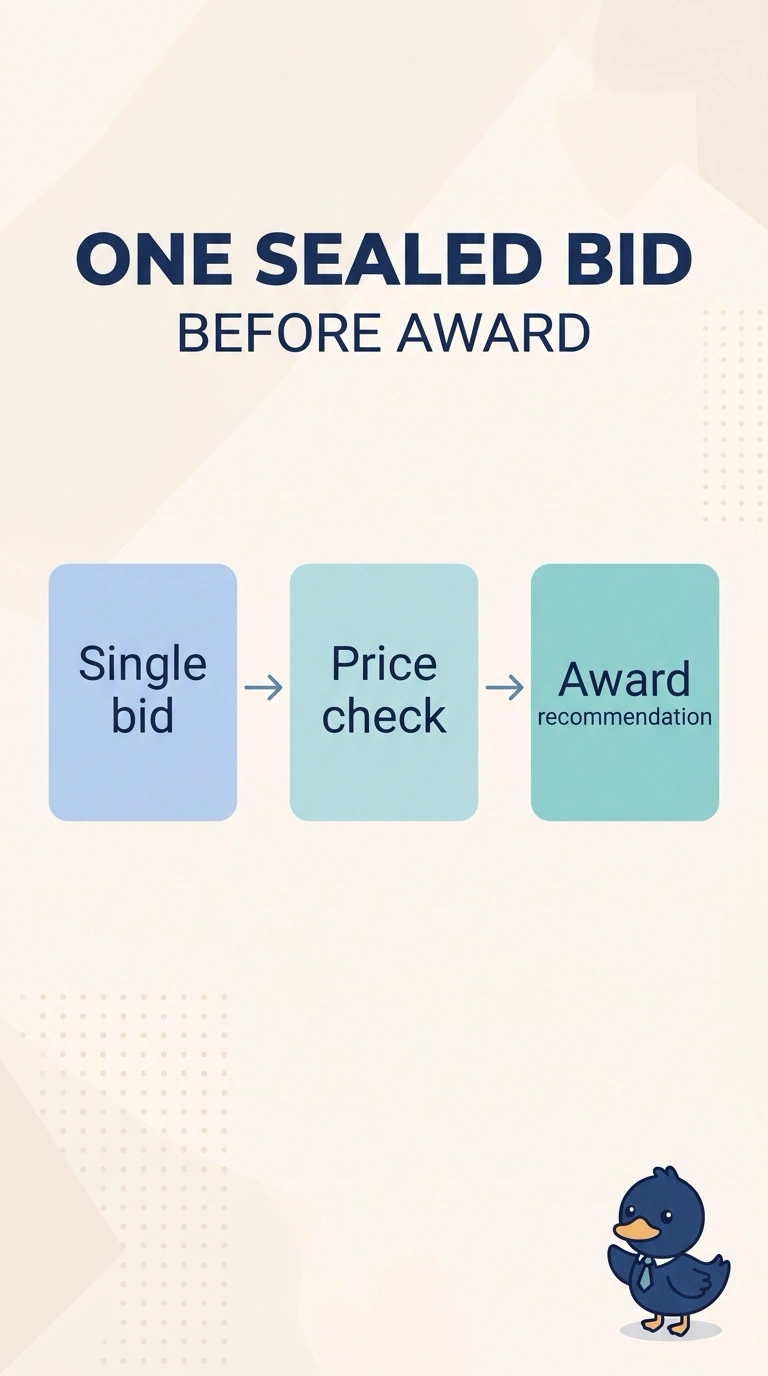
Receiving just one bid can feel like a failed competition, but your job is to test whether the market spoke fairly before hitting reset. The trap is assuming a single response automatically forces cancellation or allows sealed-bid negotiation, when you first need to confirm adequate notice and a fair, reasonable price.
Full Explanation
When a competitive Invitation for Bids yields only one submission, the buyer must verify fair competition and pricing, so the right step is to Verify solicitation adequacy and document price reasonableness through market or cost analysis. If the notice reached qualified vendors without restrictive specifications and pricing aligns with benchmarks, an award can proceed defensibly. Choosing to Cancel the solicitation immediately and re-advertise with a lowered minimum experience requirement wastes time and erodes bidder trust when the original specs were sound. Attempting to Negotiate a lower lump-sum price directly with the sole bidder before recommending award violates sealed-bidding rules against pre-award price negotiation. Deciding to Convert the procurement to a sole-source award and request a cost proposal from that bidder misclassifies a competitive solicitation and improperly restarts the process instead of completing adequacy and price-reasonableness review. As a caveat, if outreach shows prospective bidders were deterred by an ambiguity or narrow spec, cancel and resolicit. For an operational check, review the vendor notification log, compare the bid to the independent estimate, and file a written price-reasonableness determination.
Prefer to study offline? Printable PDF study book + test engine ($7.50, unofficial). These questions stay free here.