
A small municipality's local purchasing ordinance allows informal quotes up to 50,000 dollars, but a state infrastructure grant funding a 35,000-dollar culvert project requires formal sealed bidding above 25,000 dollars. Which procurement rule must the buyer follow?
Select an answer to reveal the explanation.
Short Explanation
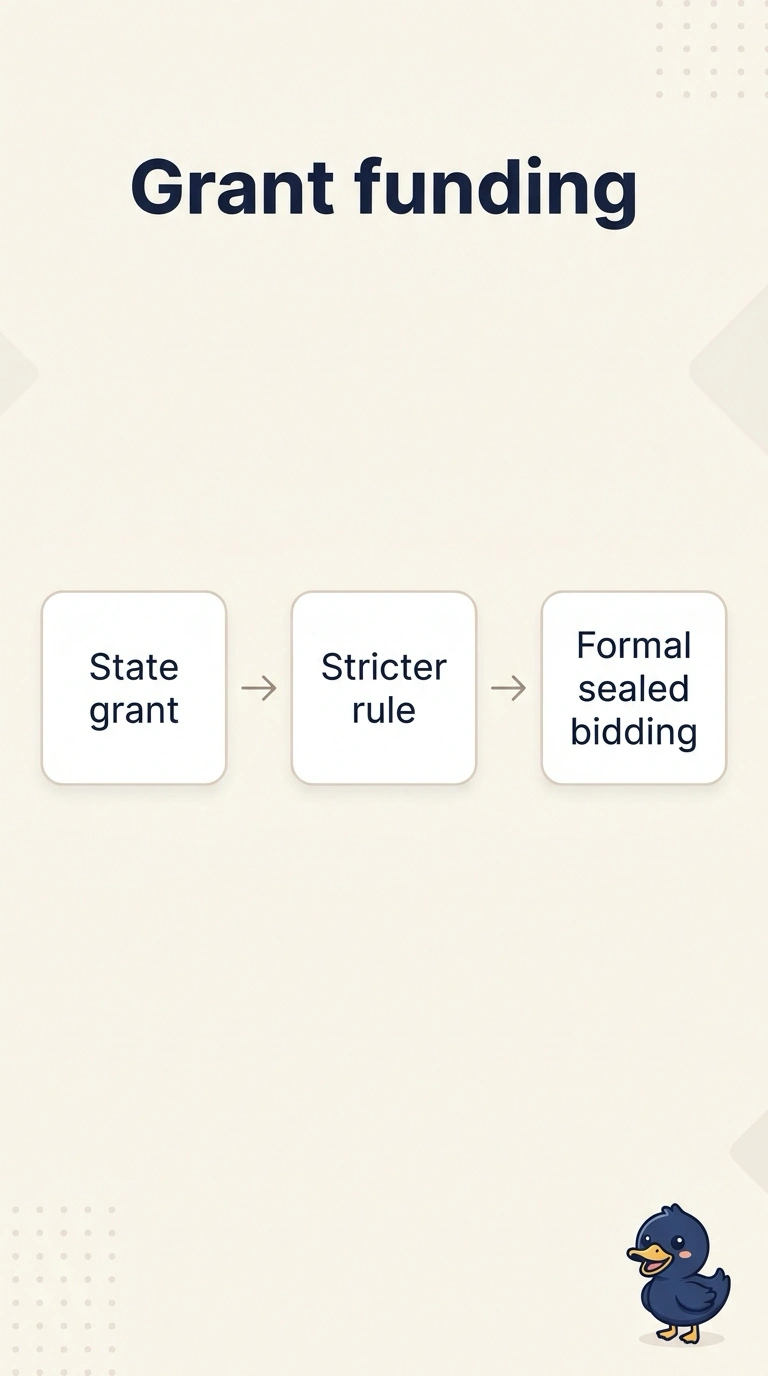
When two sets of rules apply to the same public dollar, the tougher standard wins every time. You protect grant eligibility by following the stricter state sealed-bidding requirement. The trap is assuming your local ordinance overrides conditions attached to outside grant funding.
Full Explanation
Public entities accepting intergovernmental grant funds must satisfy both local law and the grantor's conditions, meaning the more restrictive threshold governs. Choosing to Follow the stricter state grant rule requiring formal sealed bidding satisfies both the municipal ordinance and the state grant terms, preserving reimbursement eligibility. Opting to Apply the local municipal ordinance allowing informal quotes up to 50,000 dollars violates the grant's 25,000-dollar formal bidding condition and risks disallowed costs or clawbacks. Choosing to Split the culvert purchase into two smaller orders under 25,000 dollars constitutes unauthorized bid splitting to evade competitive thresholds. Relying on a move to Request a verbal waiver from the municipal finance director to skip bidding fails because local officials cannot waive mandatory state grant requirements. Caveat: always review grant agreements before drafting specifications, as external funding often adds advertising, domestic-preference, or reporting rules beyond dollar thresholds. Operational check: compare local, state, and grant thresholds in a written checklist at requisition intake and attach the grant agreement's procurement terms to the solicitation file.
Prefer to study offline? Printable PDF study book + test engine ($7.50, unofficial). These questions stay free here.