
A special utility district's board asks the procurement manager to execute a fifteen-year revenue-sharing agreement with a private telecom firm to monetize district water-tower sites, a contract structure the district has never used before. What must the procurement manager verify first?
Select an answer to reveal the explanation.
Short Explanation
Before you build a fancy new bridge, you have to check whether you actually own the riverbank. The trap is jumping straight into drafting or market outreach when public agencies only possess the contracting powers granted to them by law.
Full Explanation
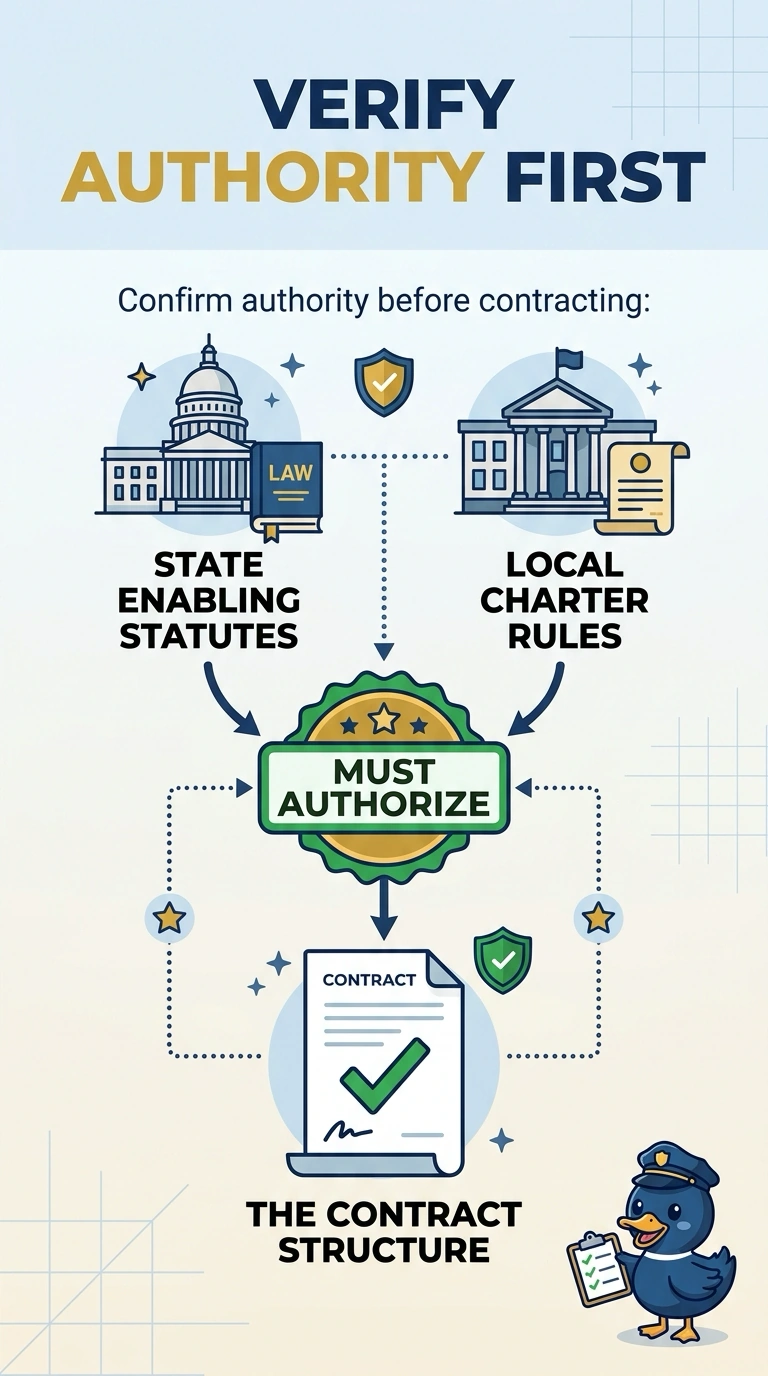
Public procurement bodies operate under delegated legal authority, so choosing to Confirm that state enabling statutes and local charter rules authorize the contract structure ensures the district does not execute an ultra vires agreement that is legally void and unenforceable. Choosing to Draft a standard firm-fixed-price solicitation using a neighboring city's template overlooks that a neighboring municipality may operate under a different statutory charter with broader home-rule powers. Choosing to Issue a Request for Information to measure private telecom vendor interest wastes staff and vendor time if the district lacks legal authority to grant long-term site leases or share revenue. Choosing to Negotiate revenue-sharing percentages directly with the board's preferred carrier compounds the legal-authority problem by bypassing competitive procurement rules entirely. As a caveat, enabling statutes and term-length caps vary widely across states and special districts, so board enthusiasm never substitutes for legal authority. Operationally, obtain a written legal review from agency counsel citing the specific statutory authority, maximum contract duration, and competitive requirements before drafting any solicitation.
Prefer to study offline? Printable PDF study book + test engine ($7.50, unofficial). These questions stay free here.