
While reconciling departmental invoices, a city buyer discovers payments made to a consulting firm whose mailing address is a vacant lot and whose deliverables cannot be located by any program manager. What should the buyer do first?
Select an answer to reveal the explanation.
Short Explanation
When you spot footprints leading to an empty lot, you do not shout into the woods to ask who is there. Your trap is tipping off a potential fraudster or internal accomplice by confronting them or erasing records before investigators can trace the money.
Full Explanation
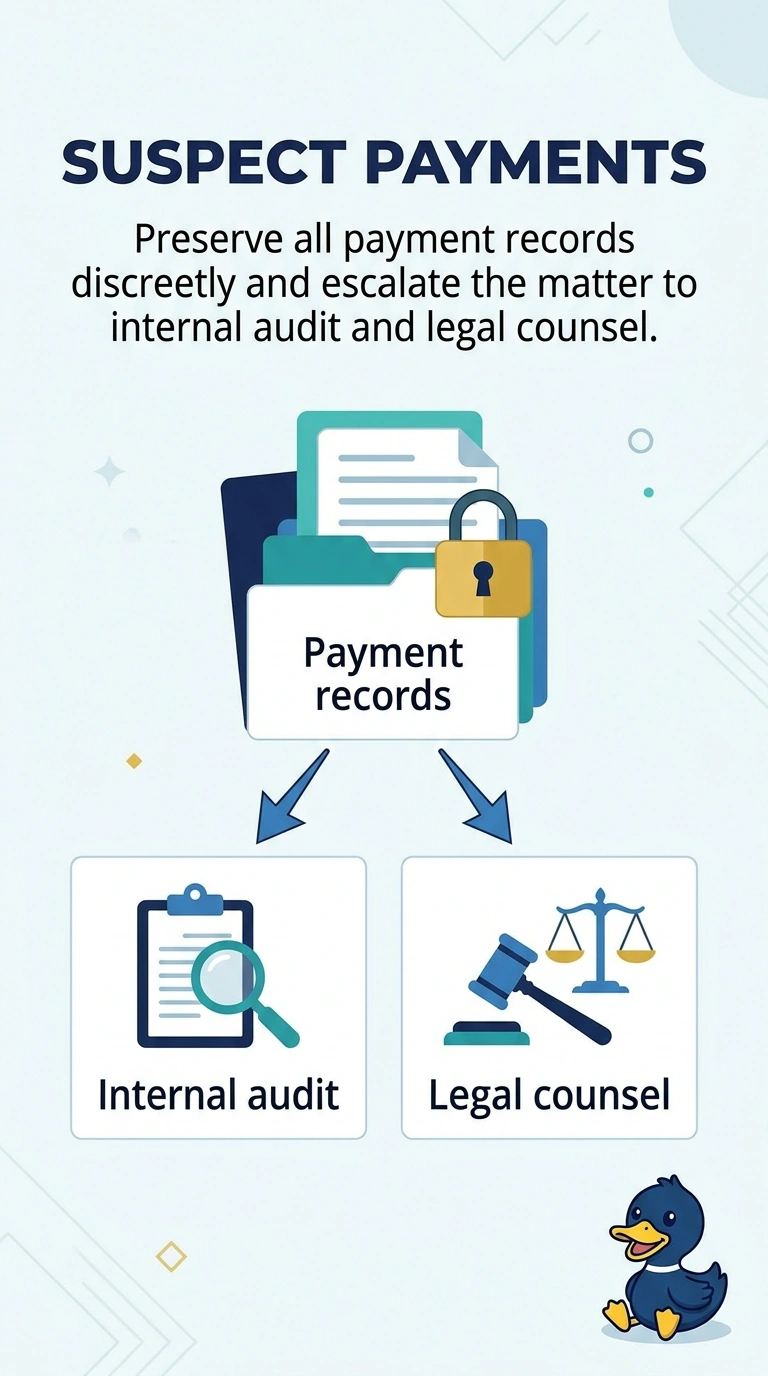
Choosing to Preserve all payment records discreetly and escalate the matter to internal audit and legal counsel protects the integrity of a potential fraud investigation and preserves chain of custody over invoices, vendor-setup forms, and approval logs. Choosing to Call the vendor directly to request replacement deliverables and settle the account for immediate closure alerts the suspect and gives them an opportunity to fabricate documents or destroy evidence. Choosing to Remove the firm's open invoices from the shared drive and tell accounts payable to stop future checks pulls evidence off the shared drive and acts before audit, which can tip off a participant and weakens the record while bypassing authorized controls for payment holds. Choosing to Ask the approving department manager to explain why the invoices were signed off could inadvertently tip off an internal participant if collusion is involved. As a caveat, buyers are responsible for spotting red flags and safeguarding evidence rather than conducting criminal investigations themselves. Operationally, export read-only copies of the vendor master file, purchase orders, and payment approvals into a restricted folder and submit a confidential referral to internal audit immediately.
Prefer to study offline? Printable PDF study book + test engine ($7.50, unofficial). These questions stay free here.