
While reviewing three sealed bids for a county street-sweeping contract, a buyer notices that two competing firms listed the exact same street address, registered agent, and identical typographical errors on their bid forms. What should the buyer do next?
Select an answer to reveal the explanation.
Short Explanation
When two supposedly rival bids look like twins, your radar should go straight up! The common trap is either confronting the vendors yourself or brushing it off as a coincidence when the price looks good.
Full Explanation
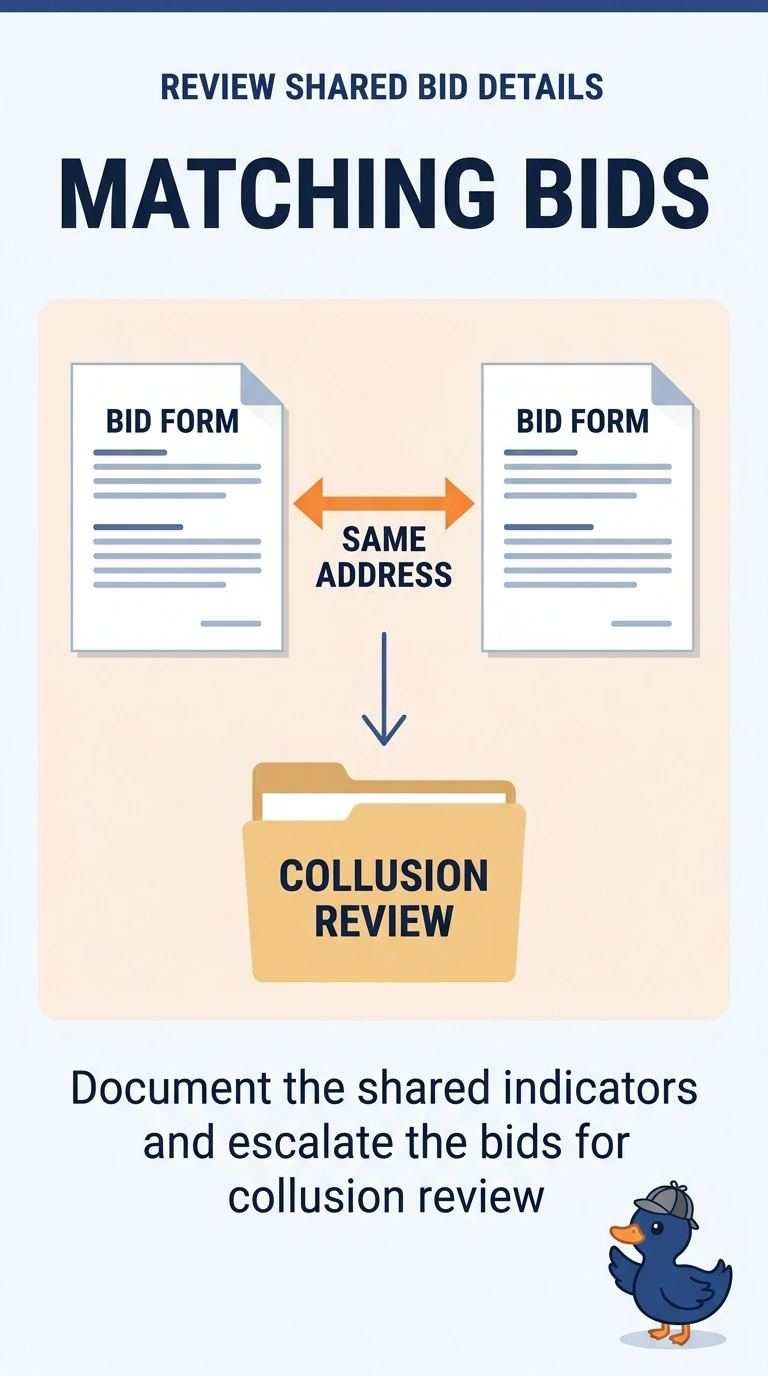
Identical addresses, shared registered agents, and matching typographical errors are classic indicators of complementary or cover bidding, so the buyer must Document the shared indicators and escalate the bids for collusion review through legal counsel and appropriate enforcement authorities. Preserving the original envelopes, bid forms, and metadata protects the evidentiary chain without tipping off the suspected firms. Choosing to Reject both bids as non-responsive for sharing a registered agent and award to the remaining bidder treats suspicion as a responsiveness defect, when shared indicators alone do not establish non-responsiveness and require investigation rather than immediate award. Deciding to Contact both firms by telephone to ask whether they intended to submit a joint venture bid alerts potential wrongdoers and allows them to fabricate explanations or alter records. Choosing to Award the contract to the lower of the two bids if its unit pricing falls below the estimate ignores potential antitrust violations that undermine fair competition. Note that shared indicators alone do not prove guilt, so procurement staff investigate and escalate rather than adjudicate fraud themselves. As an operational check, preserve all physical and electronic bid artifacts in a restricted folder and log the exact date and observations in the solicitation file.
Prefer to study offline? Printable PDF study book + test engine ($7.50, unofficial). These questions stay free here.