
While reviewing monthly invoices on a state university's facilities maintenance contract, a buyer discovers repeated billing for preventive inspections at a building that was closed and demolished six months earlier. Which compliance action should the buyer take first?
Select an answer to reveal the explanation.
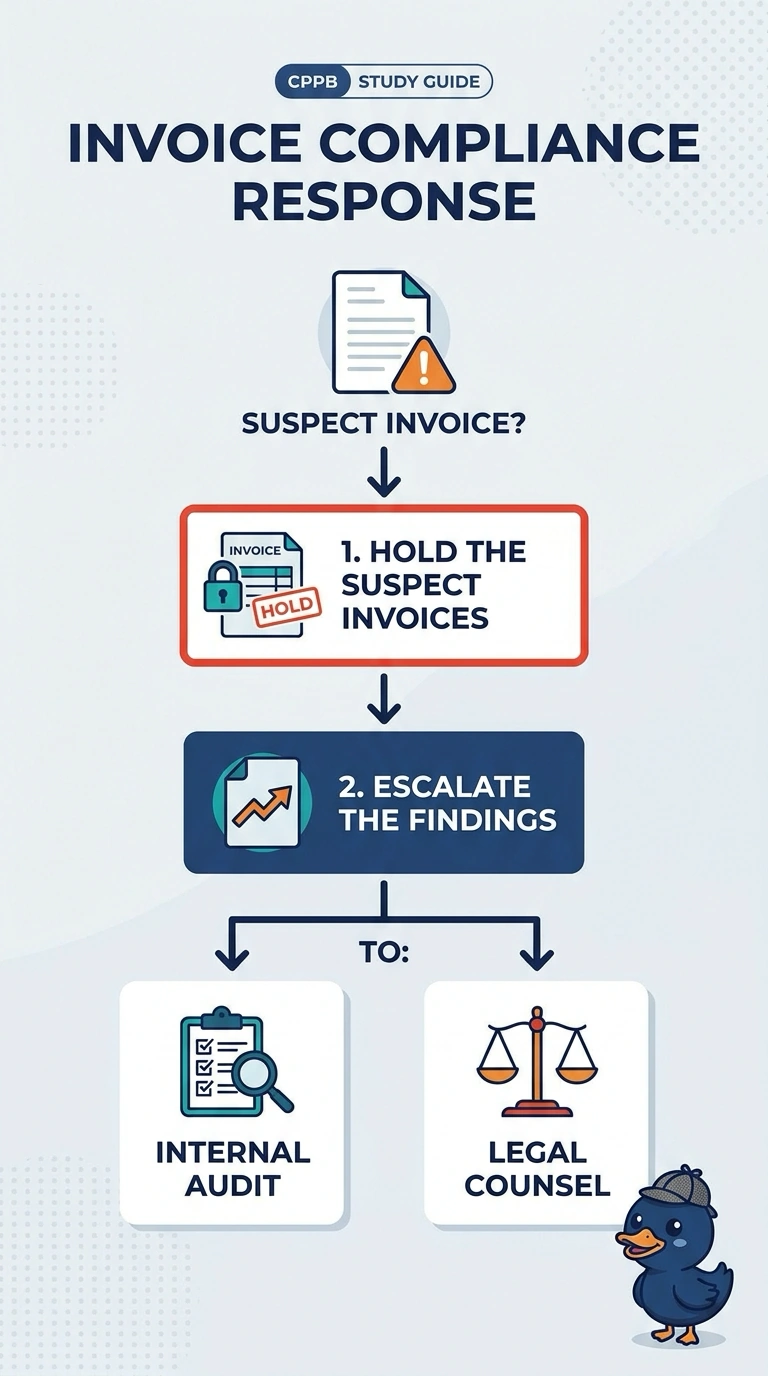
Short Explanation
Billing for work on a demolished building isn't a harmless typo—it's a classic red flag for false claims. You need to freeze the suspect invoices and escalate immediately to audit and legal counsel, rather than tipping off the vendor informally or quietly trimming the bill.
Full Explanation
When invoice evidence points to potential false billing, the buyer should Place a hold on the suspect invoices and escalate the findings to internal audit and legal counsel. Freezing payment protects public funds immediately while preserving evidence and allowing trained investigators to determine whether the discrepancy stems from systemic billing fraud or an administrative error. Choosing to Quietly deduct the disputed charges and renew the contract for another year conceals potential misconduct and leaves the institution exposed to ongoing overbilling. Deciding to Alert the contractor's account manager informally before notifying auditors risks tipping off wrongdoers and compromising an investigation or record preservation. Opting to Pay the invoices and recover any overbilling in a year-end reconciliation with the contractor knowingly disburses public funds for unperformed work and delays accountability, violating fiduciary duty. As a caveat, avoid making accusations of fraud directly to the vendor before legal and audit teams review the supporting records. For an operational check, compile the invoices, demolition dates, and work-order logs into a secure case file for the audit referral.
Prefer to study offline? Printable PDF study book + test engine ($7.50, unofficial). These questions stay free here.