
A state university needs ongoing laboratory calibration gases over a three-year period, cannot predict exact annual cylinder volumes, and wants firm unit prices from a single supplier without committing to a fixed cylinder count. Which contract type best fits this pre-solicitation plan?
Select an answer to reveal the explanation.
Short Explanation
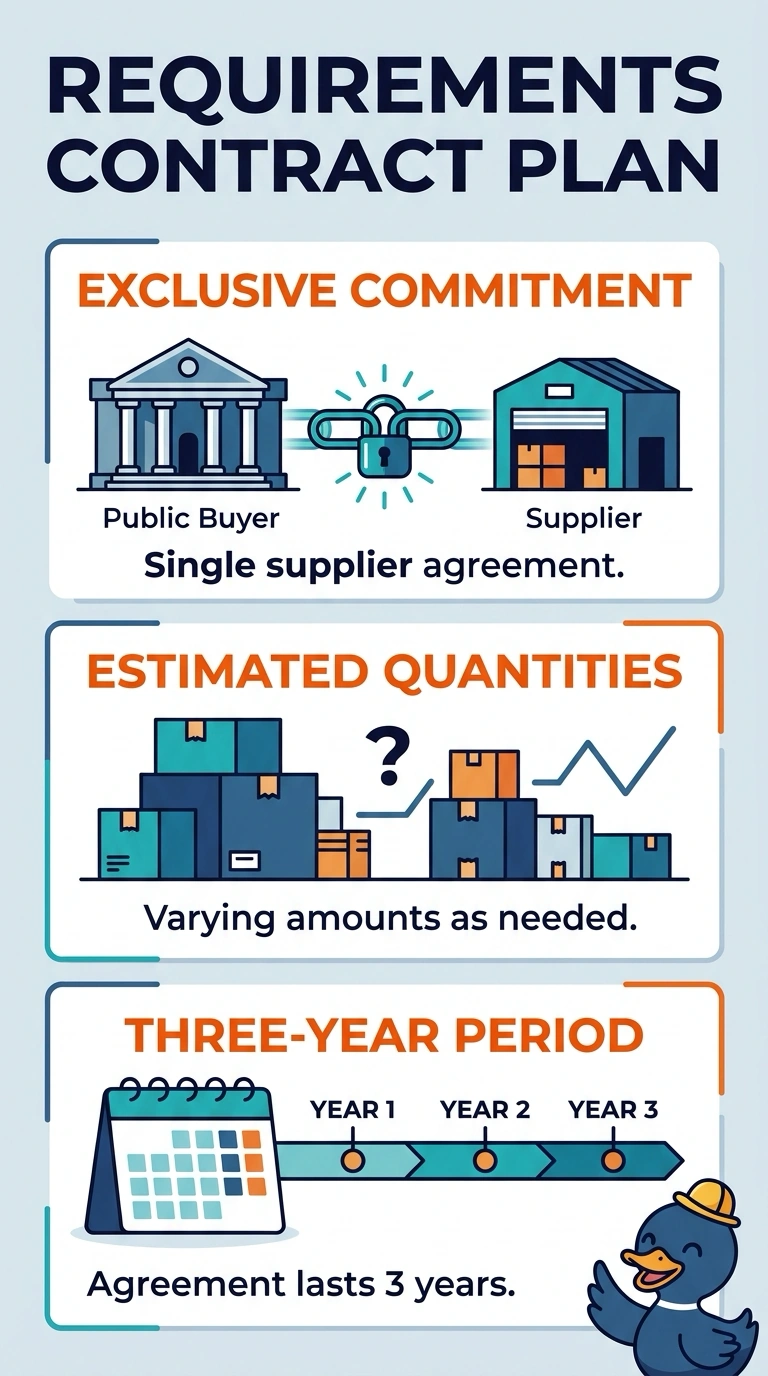
A requirements contract is like agreeing to buy all your household groceries from one store for a year in exchange for a member discount, even though your exact weekly list varies. When you know you will use one exclusive supplier but cannot lock in exact volumes, this structure balances flexibility with pricing leverage. The trap is picking a definite-quantity or lump-sum contract that forces you to pay for unused inventory.
Full Explanation
When an agency cannot forecast exact order quantities yet intends to purchase all actual needs from one contractor, the appropriate choice is A requirements contract specifying estimated quantities and an exclusive commitment. Providing realistic historical estimates helps bidders price unit rates accurately while obligating the agency to order its actual requirements exclusively from the awardee during the term. You should not use A definite-quantity contract obligating the university to buy an exact fixed cylinder count, because uncertain lab demand could leave the university paying for unneeded cylinders or facing shortages. Similarly, A firm-fixed-price lump-sum contract covering one upfront bulk delivery of all gases fails because storing three years of pressurized gases creates safety, shelf-life, and warehousing problems. Choosing A time-and-materials contract billed by technician hours and actual cylinder market cost is also inappropriate because standardized calibration gases have measurable unit prices and do not warrant open-ended labor billing. As a caveat, verify that the solicitation clearly states estimates are non-binding and checks any statutory multi-year funding rules. Operationally, compile three years of departmental usage history before finalizing the solicitation's estimated quantity schedule.
Prefer to study offline? Printable PDF study book + test engine ($7.50, unofficial). These questions stay free here.