
A regional transit authority is planning a major bus-tire Invitation for Bids and wants neighboring municipal fleets to be able to purchase from the resulting contract later without running separate bids. What should the buyer incorporate during pre-solicitation planning?
Select an answer to reveal the explanation.
Short Explanation
Inviting neighbors to share a contract after bids open is like adding extra guests to a catered wedding after the chef already quoted the price—your vendor never priced that extra volume. Plan cooperative access up front so bidders can factor regional demand into their pricing.
Full Explanation
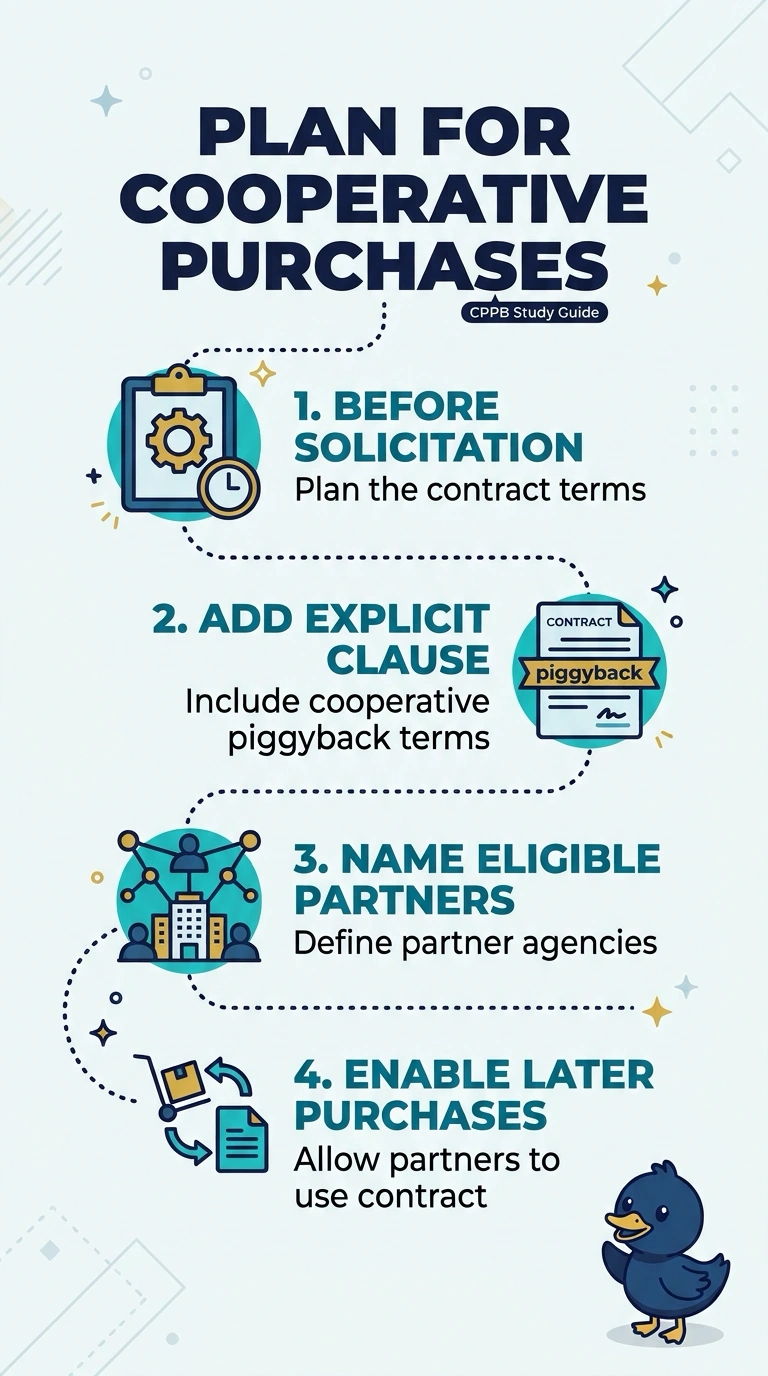
Cooperative purchasing works lawfully only when prospective bidders know the potential scope and participating entities before submitting offers. Including An explicit cooperative piggyback clause defining eligible partner agencies in the original solicitation puts all suppliers on equal notice, lets them price volume commitments accurately, and establishes the legal authority for other jurisdictions to use the contract. Relying on A post-award amendment adding new agencies after bids open is an improper material expansion of scope that bypasses competition for the added volume. Depending on A verbal understanding with the winning bidder at kickoff creates an unenforceable side agreement that violates public-notice and transparency standards. Circulating An informal referral list of neighboring fleet managers gives outside agencies no contractual right to the bid pricing or terms. As a caveat, piggybacking still requires each participating agency to verify that its own statutes and governing policies authorize cooperative use and that the lead agency's solicitation followed competitive rules. As an operational check, confirm that estimated partner volumes, geographic delivery zones, and vendor opt-in terms are stated clearly in the draft solicitation before advertisement.
Prefer to study offline? Printable PDF study book + test engine ($7.50, unofficial). These questions stay free here.