
A school district's draft Invitation for Bids for 15,000 dollars of standard classroom copy paper includes a mandatory 10 percent bid bond and a 100 percent performance bond, matching the district's construction template. What should the buyer adjust during pre-solicitation review?
Select an answer to reveal the explanation.
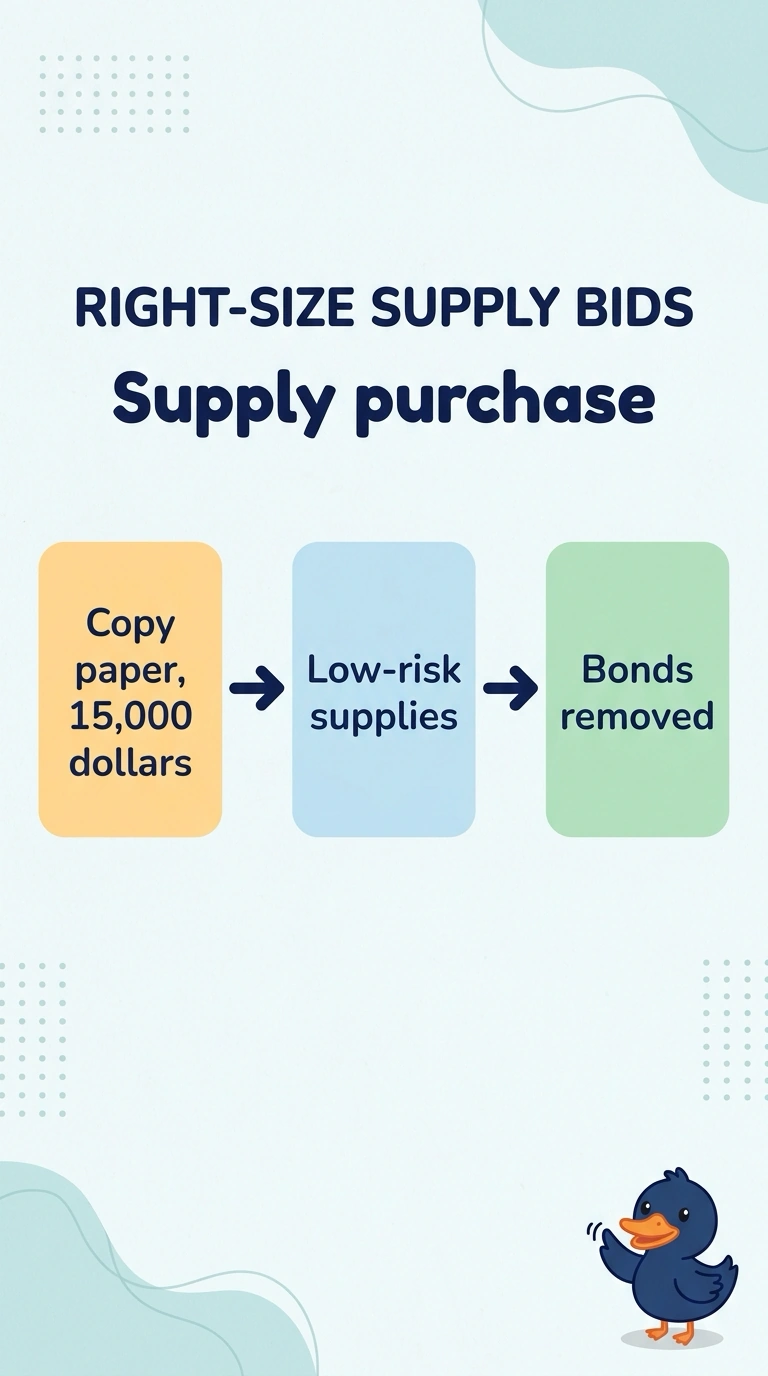
Short Explanation
Using construction-sized bonds to buy copy paper is like hiring an armored truck to deliver a pizza. You want bonding when contractor default would leave an unfinished building or unpaid subcontractors, not on off-the-shelf supplies paid after delivery. The trap is copying boilerplate templates without weighing risk, which drives up prices and shuts out smaller vendors.
Full Explanation
Effective risk management during pre-solicitation planning matches financial safeguards to actual exposure. Choosing to Remove the bid and performance bonds for this routine, low-risk supply purchase eliminates surety fees that suppliers pass directly into bid prices and lowers barriers for qualified small businesses, since payment occurs only after conforming paper is delivered and inspected. Choosing to Reduce the bid bond to 5 percent to lower bidder costs while keeping financial protection still imposes an unnecessary surety cost and compliance hurdle without addressing any real delivery risk for off-the-shelf goods. Choosing to Replace both bonds with a commercial general liability limit equal to the district's usual supply-contract minimum still imposes an unnecessary cost and compliance hurdle for a low-risk, pay-after-delivery supply where there is minimal third-party injury or property damage exposure. Choosing to Keep both bonds unchanged because the district's construction template has been approved by legal counsel prioritizes template convenience over sound market strategy and fiscal stewardship. One caveat is that if state statute or local ordinance mandates bonding above a specific dollar threshold, statutory requirements control. As an operational check, review each draft solicitation's risk profile—considering delivery timing, market availability, and payment-after-acceptance—before retaining surety clauses.
Prefer to study offline? Printable PDF study book + test engine ($7.50, unofficial). These questions stay free here.