
A public university's facilities division is considering switching from stocking janitorial and electrical consumables in its central warehouse to a just-in-time vendor delivery model. Which pre-solicitation trade-off should the buyer evaluate?
Select an answer to reveal the explanation.
Short Explanation
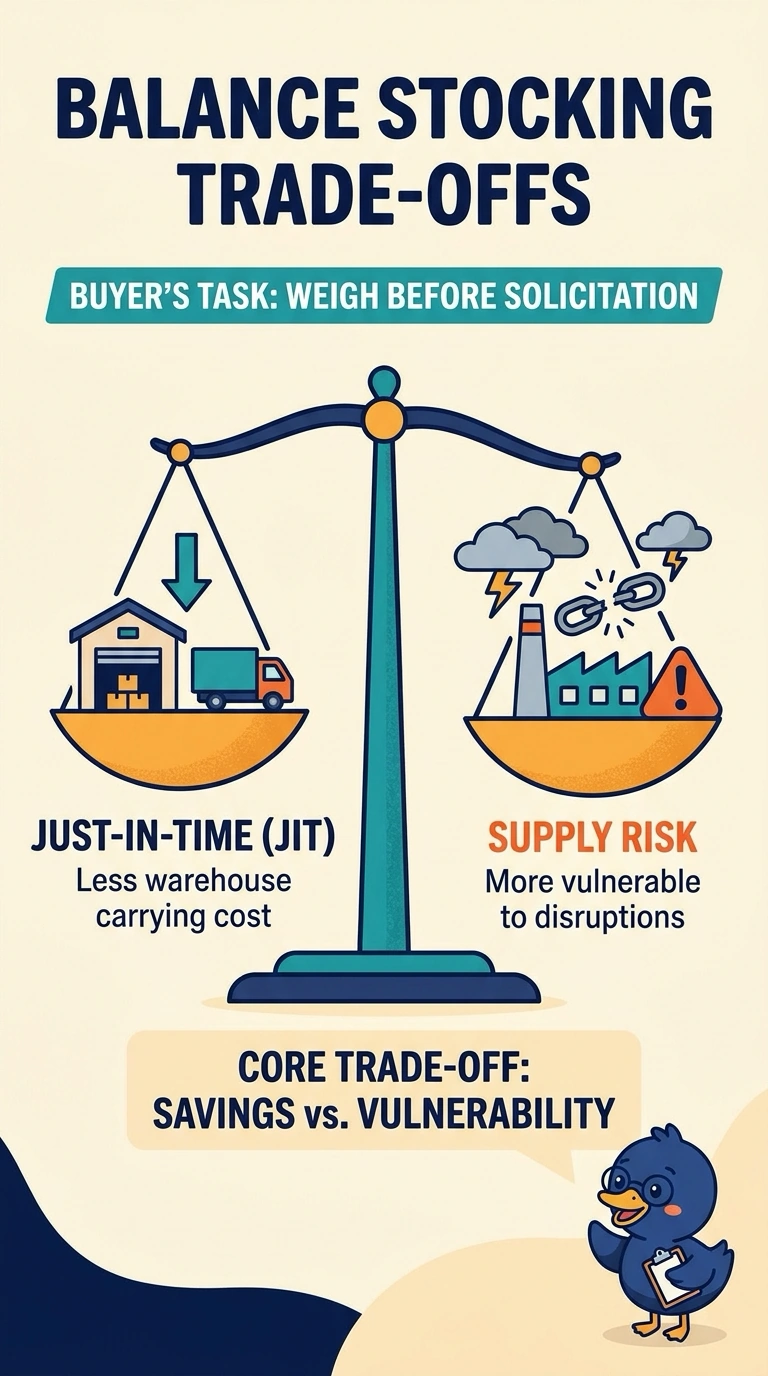
Just-in-time delivery frees up your shelves, but it also means you are one snowstorm away from an empty closet. Your trap is focusing only on warehouse savings while forgetting to measure how badly a delayed truck would hurt campus operations.
Full Explanation
Choosing to Weigh reduced warehouse carrying costs against higher vulnerability to supply disruptions addresses the core logistics trade-off between freeing capital and floor space versus relying on uninterrupted supplier fulfillment. Choosing to Eliminate safety stock for critical items to maximize the warehouse space freed exposes essential campus operations to immediate stockouts if deliveries slip, since critical items by definition require buffer protection. Choosing to Select just-in-time delivery mainly to avoid conducting annual physical inventory counts confuses an administrative convenience with a sound supply-chain strategy, letting inventory counting drive sourcing risk. Choosing to Require vendors to lease an off-campus storage facility at their own expense imposes an unrealistic cost burden that inflates bid prices and deters competition. As a caveat, just-in-time arrangements work best for standardized, readily available items with reliable local distribution rather than specialized or emergency-response supplies. Operationally, segment consumables by criticality and lead-time volatility, keeping modest buffer stock for essential items while testing vendor-managed delivery on high-turnover standard supplies.
Prefer to study offline? Printable PDF study book + test engine ($7.50, unofficial). These questions stay free here.