
A school district needs 500 identical desktop computers delivered and imaged to a precise technical specification within 60 days, with no anticipated design changes. Which contract type best aligns cost risk with the vendor?
Select an answer to reveal the explanation.
Short Explanation
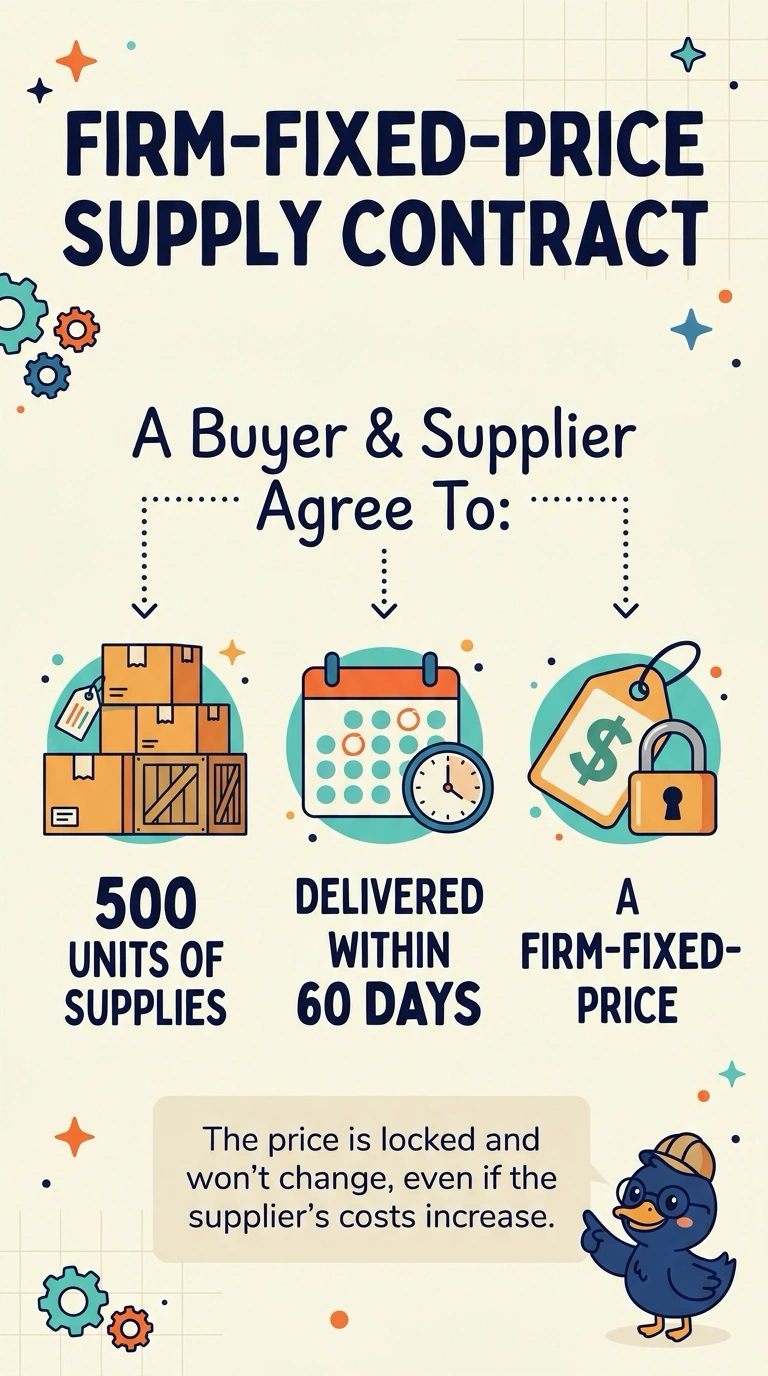
When you know exactly what you are buying and when it needs to arrive, a fixed price puts the cost-overrun risk squarely on the seller. The trap is picking an open-ended time or cost contract when the scope is already crystal clear, which invites unnecessary billing. Lock in a firm fixed price whenever specifications are stable.
Full Explanation
When quantities, technical specifications, and delivery schedules are well-defined and stable, A firm-fixed-price supply contract places maximum cost risk and performance responsibility on the contractor while giving the district budget certainty. The vendor commits to delivering all 500 imaged units for an agreed total price regardless of internal labor or supply fluctuations. Using A cost-plus-percentage-of-cost agreement is generally prohibited in public procurement and federal grants because it rewards the contractor with higher profit when costs rise. Selecting A time-and-materials labor-hour contract is appropriate only when the extent or duration of work cannot be estimated accurately in advance, and it shifts efficiency risk onto the agency. Choosing An indefinite-quantity blanket agreement is designed for recurring, uncertain order volumes over time rather than a single, defined batch of 500 units. Keep in mind that a fixed-price contract still depends on clear, unambiguous specifications; post-award scope changes by the district will trigger price adjustments. As an operational check, confirm that imaging standards, delivery locations, and acceptance testing criteria are finalized in the solicitation before locking in fixed pricing.
Prefer to study offline? Printable PDF study book + test engine ($7.50, unofficial). These questions stay free here.