
Several city department directors frequently bypass central purchasing procedures because they are unsure what documentation is required at requisition intake or how long solicitations take. Which leadership initiative best builds mutual accountability and realistic expectations?
Select an answer to reveal the explanation.
Short Explanation
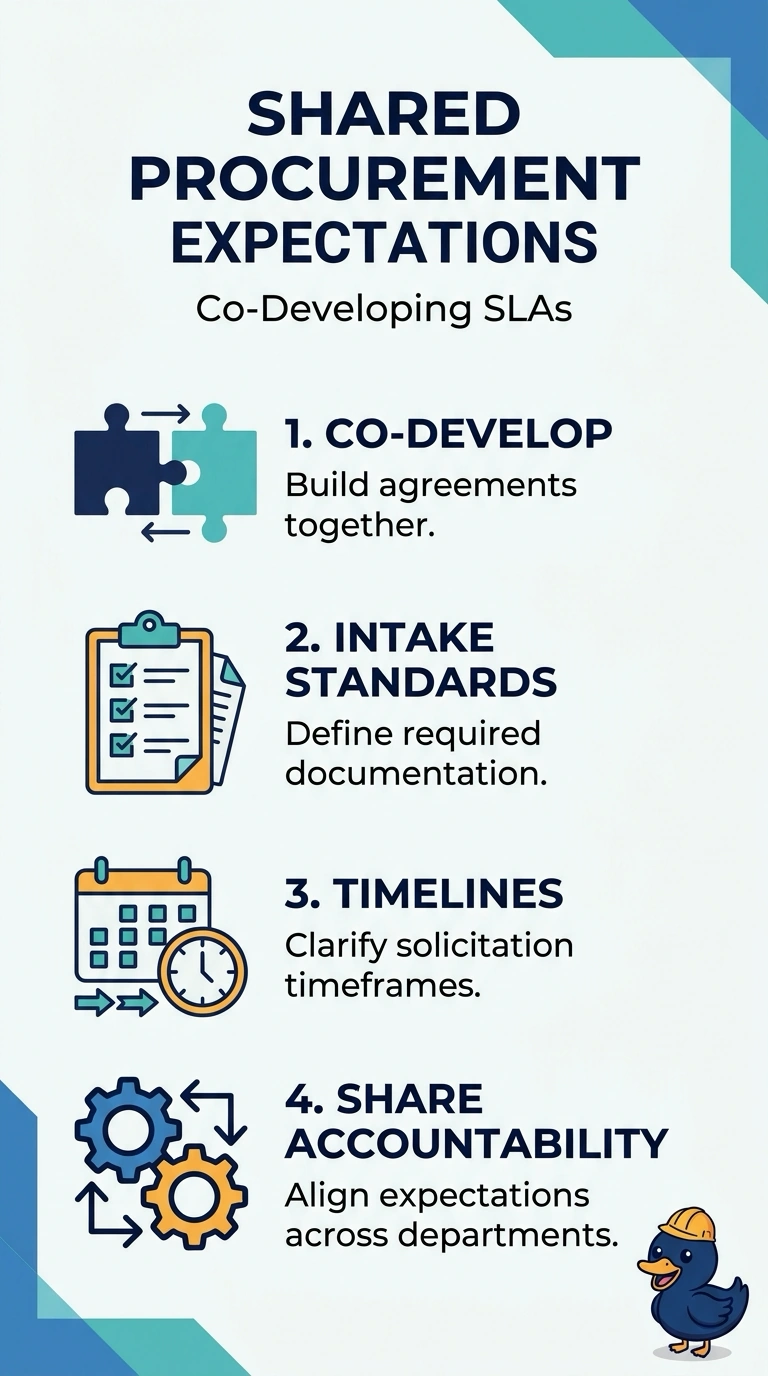
When user departments treat procurement like a black box, you end up fielding frustrated calls and rushed workarounds. Co-developing procurement service-level agreements defining intake standards and timelines gives your internal clients clear rules of the road and predictable turnaround targets. The trap is trying to fix communication gaps with punitive deferrals or by skipping scope reviews for routine buys.
Full Explanation
Co-developing procurement service-level agreements defining intake standards and timelines transforms unclear expectations into a shared operational commitment between buyers and user departments. When departments know exactly what a complete requisition package requires and how long formal vs. informal solicitations take, they can plan projects realistically instead of bypassing controls. Asking departments to estimate solicitation timelines from past experience while buyer workload metrics stay internal leaves internal stakeholders in the dark and reinforces perceptions that purchasing delays are arbitrary. Eliminating intake scope reviews for routine requisitions so they move to advertisement unchanged invites ambiguous specifications, vendor questions, and costly post-award change orders. Penalizing late departmental requests by deferring those purchases to the next quarter damages cross-departmental trust and encourages further workarounds rather than collaborative planning. As a caveat, published turnaround targets should distinguish between routine purchases and complex solicitations that depend on legal review or board calendars. As an operational check, review intake completeness rates and cycle-time adherence quarterly with department liaisons to refine bottlenecks together.
Prefer to study offline? Printable PDF study book + test engine ($7.50, unofficial). These questions stay free here.